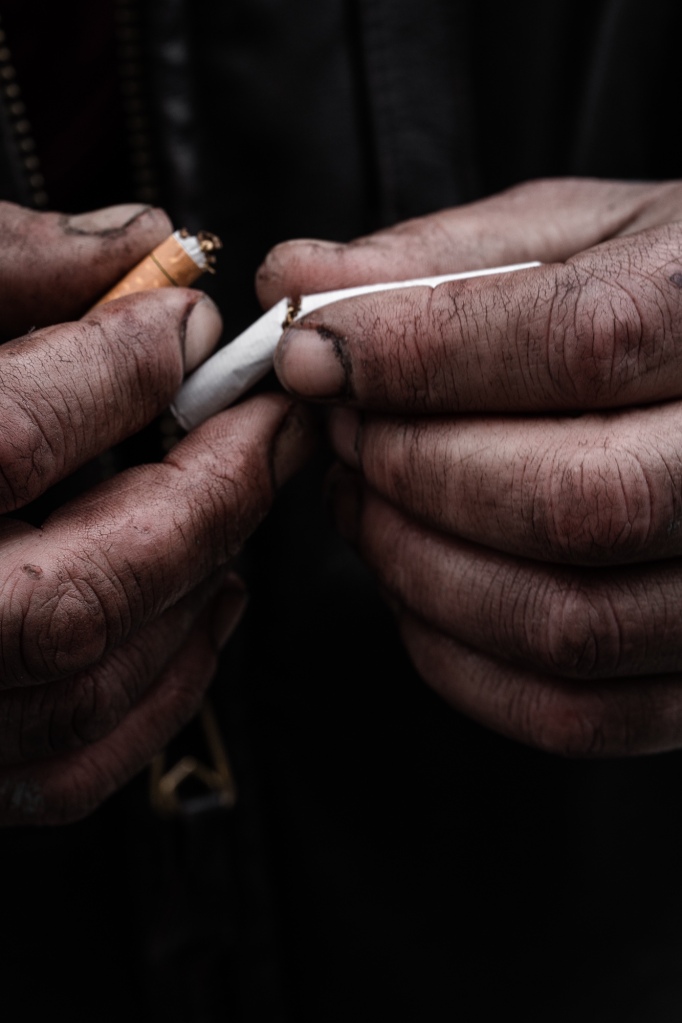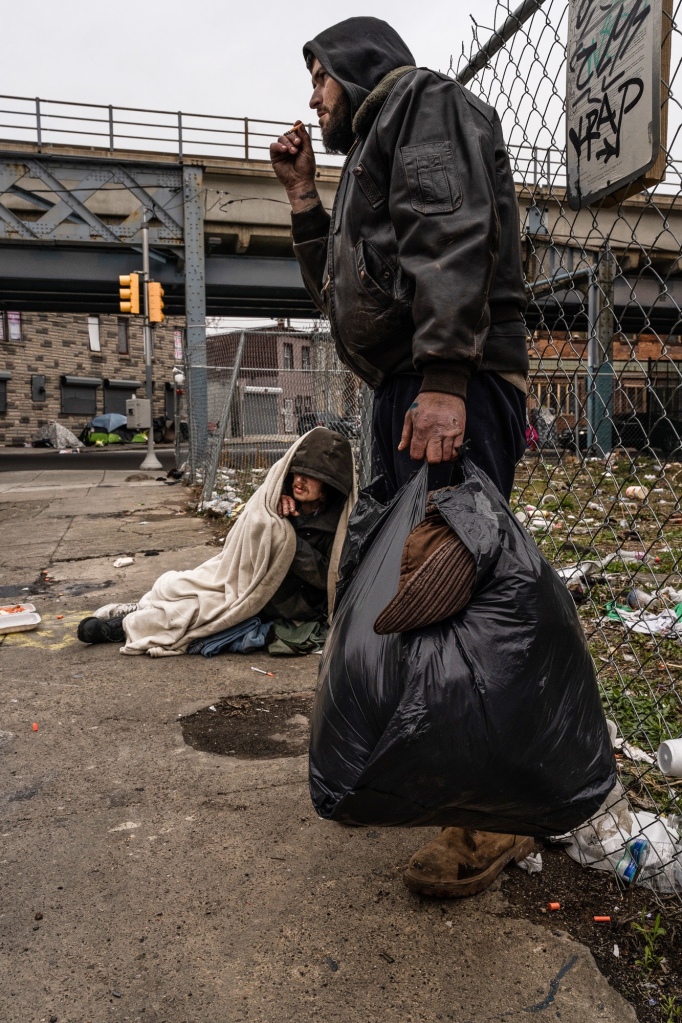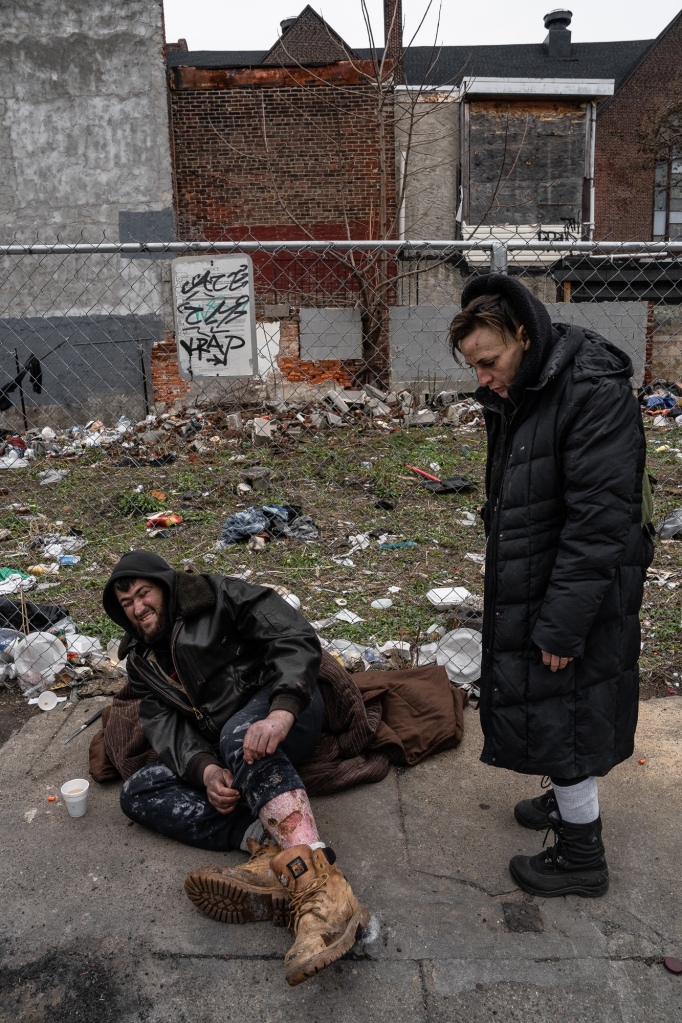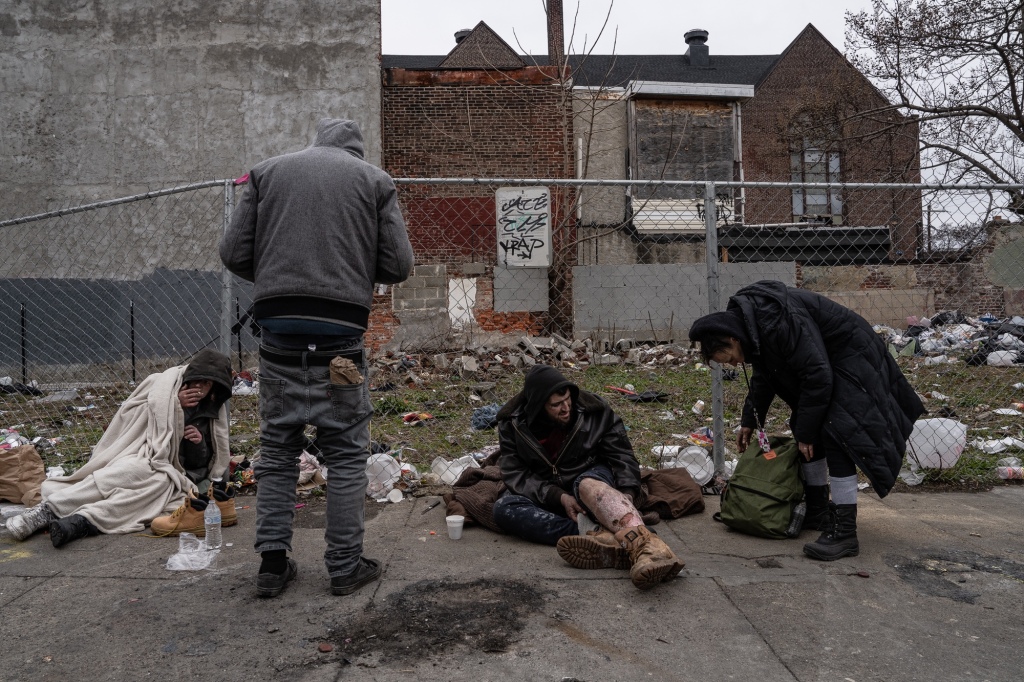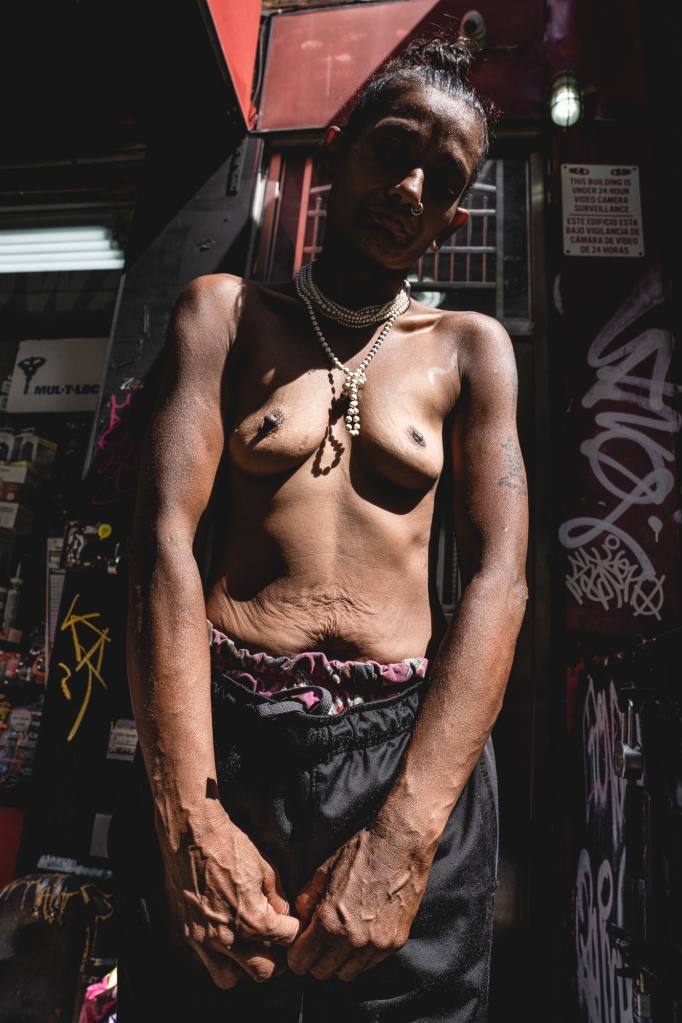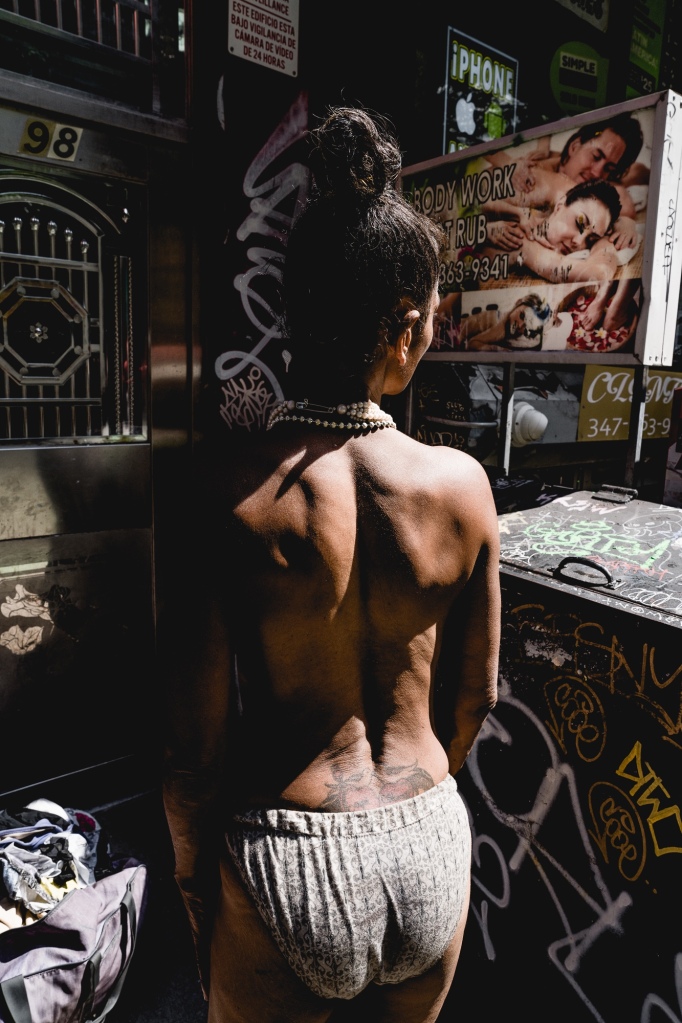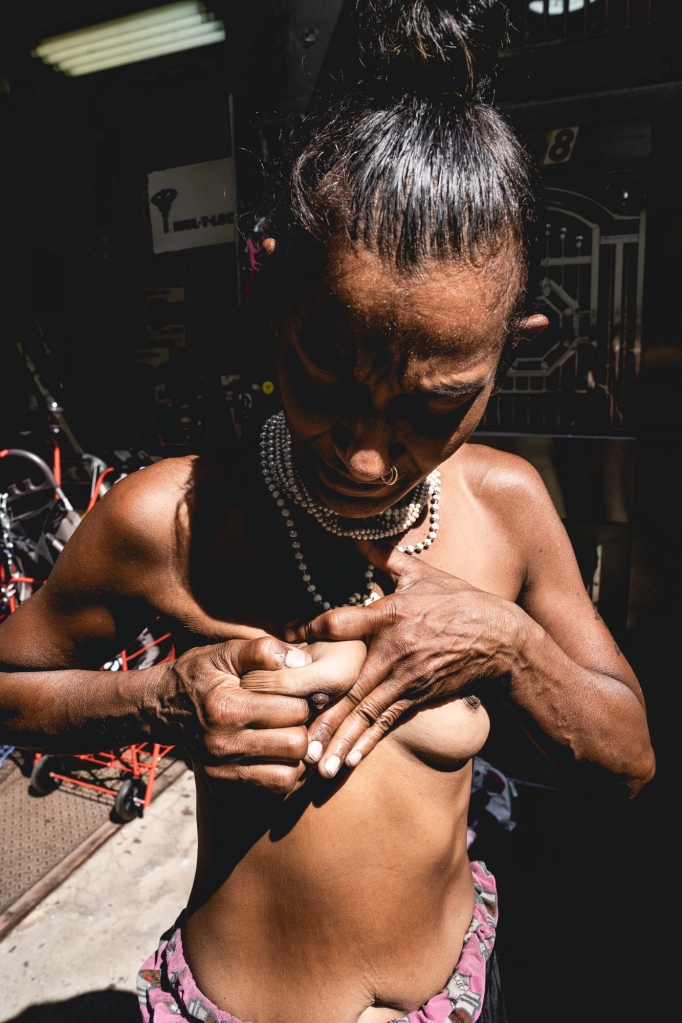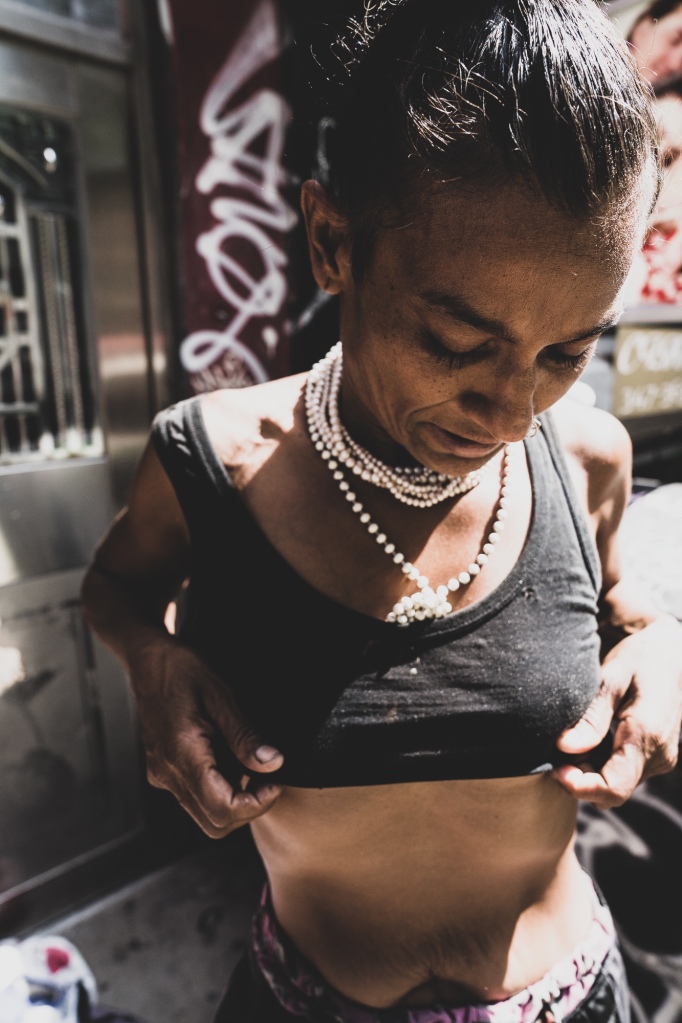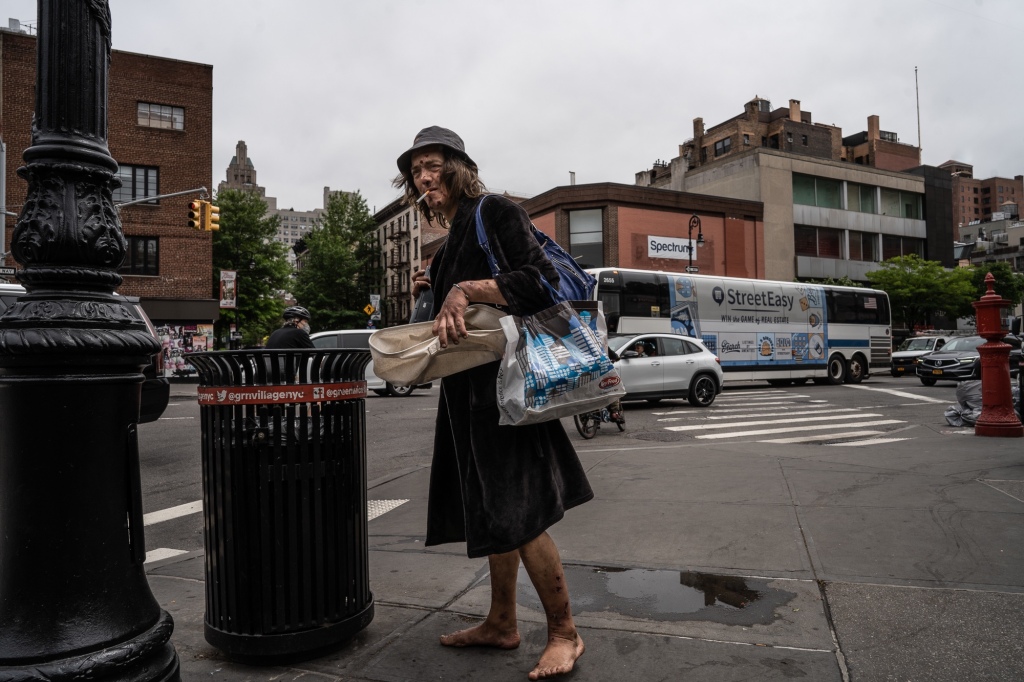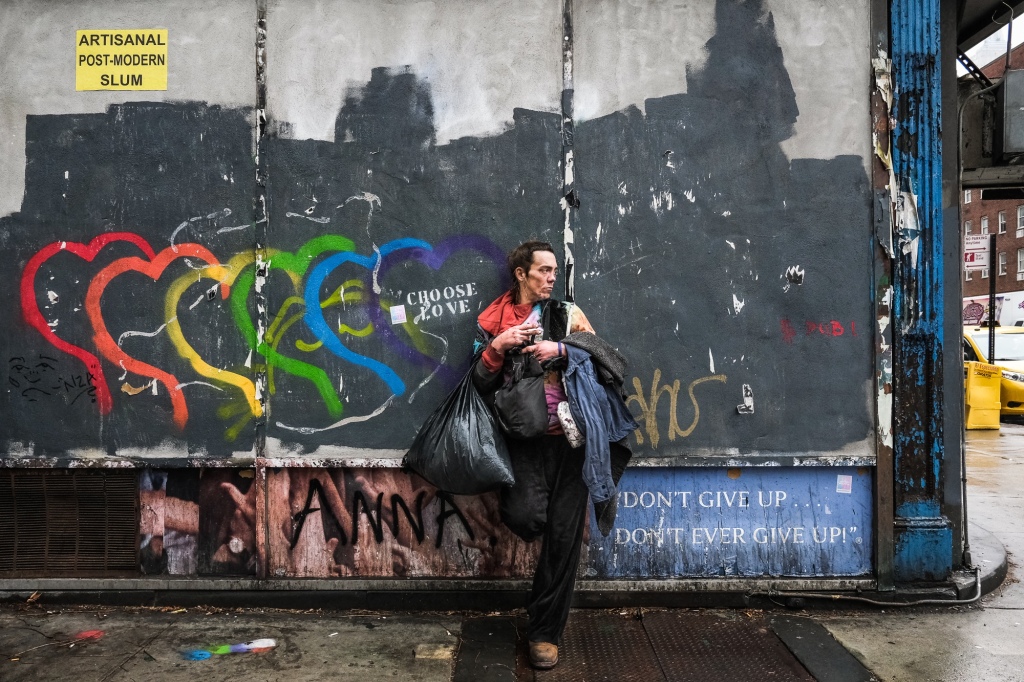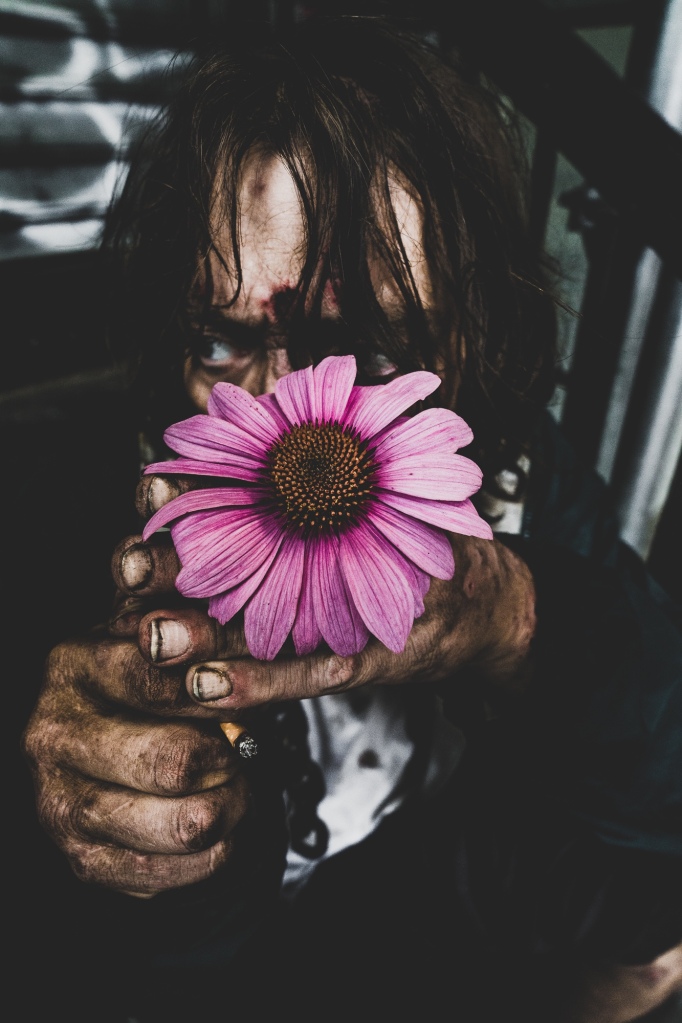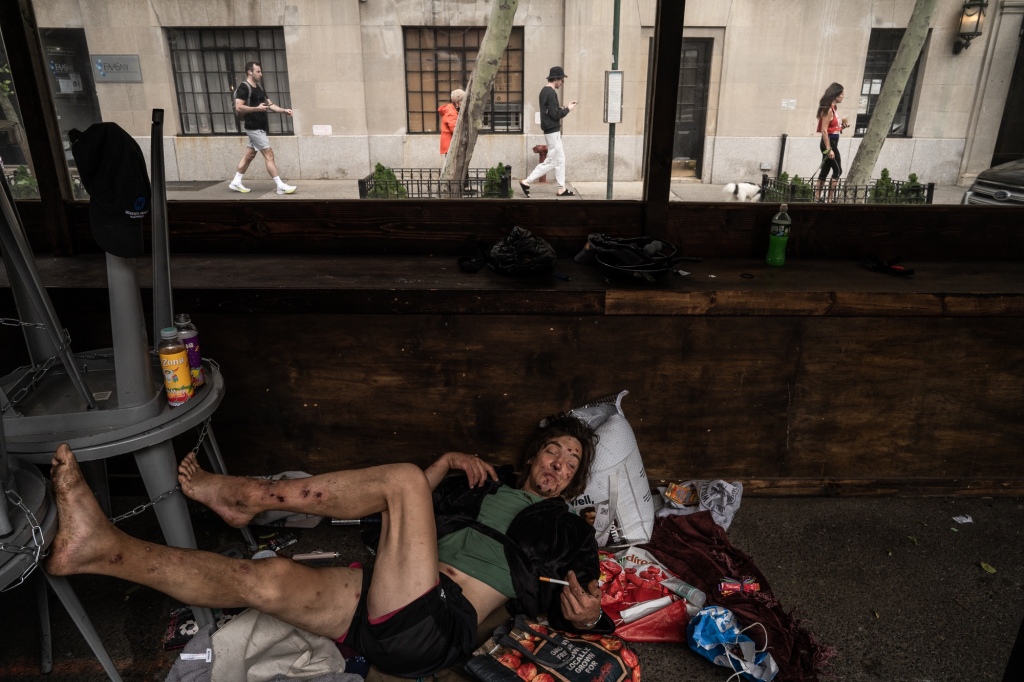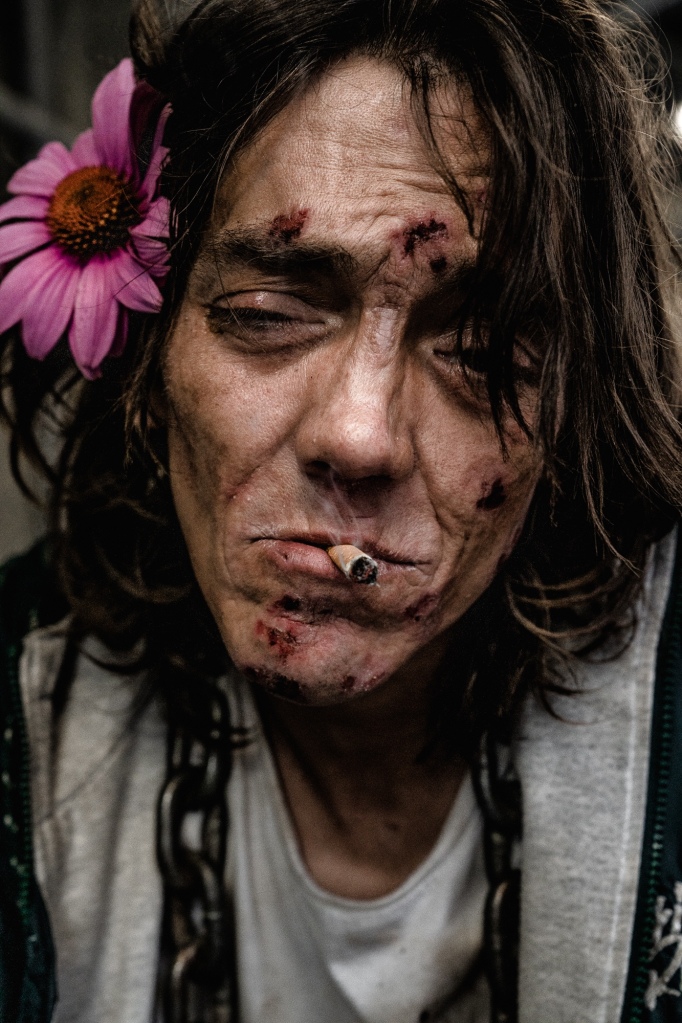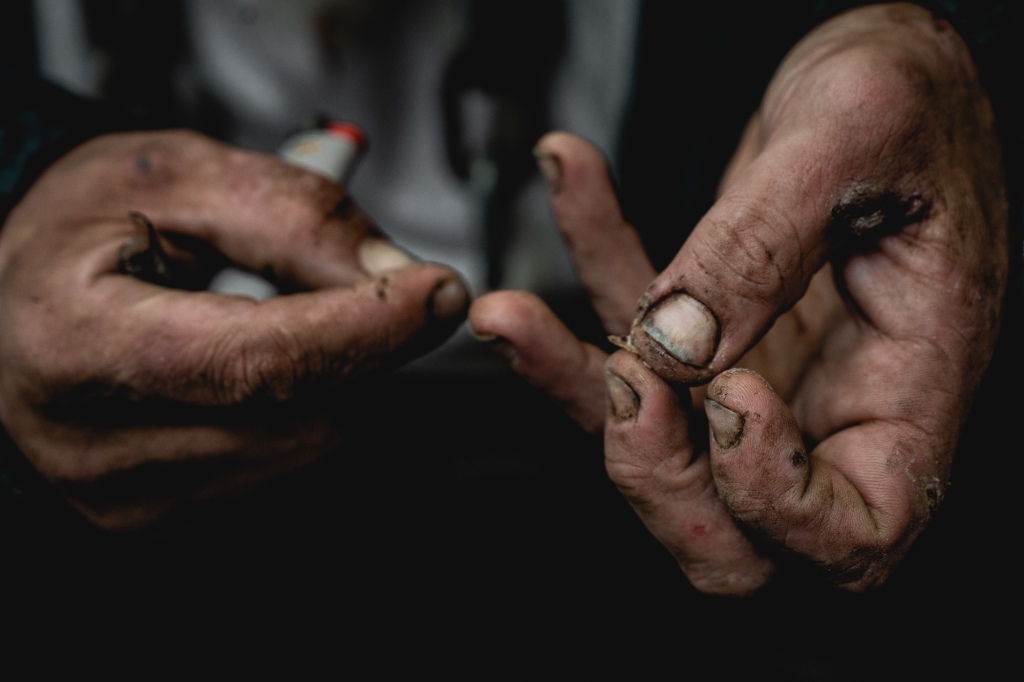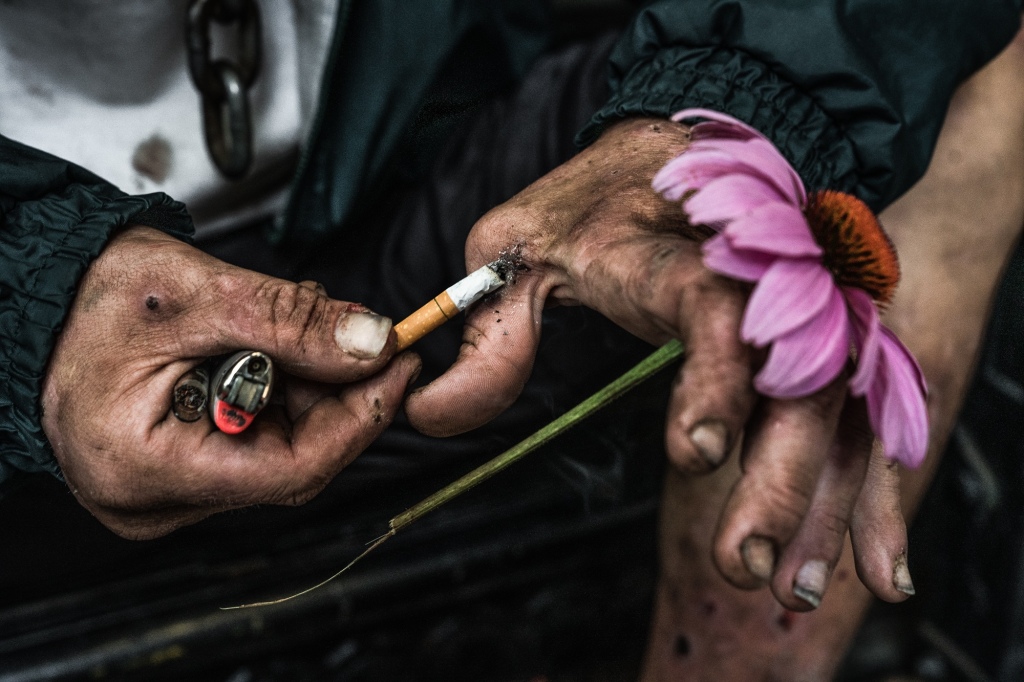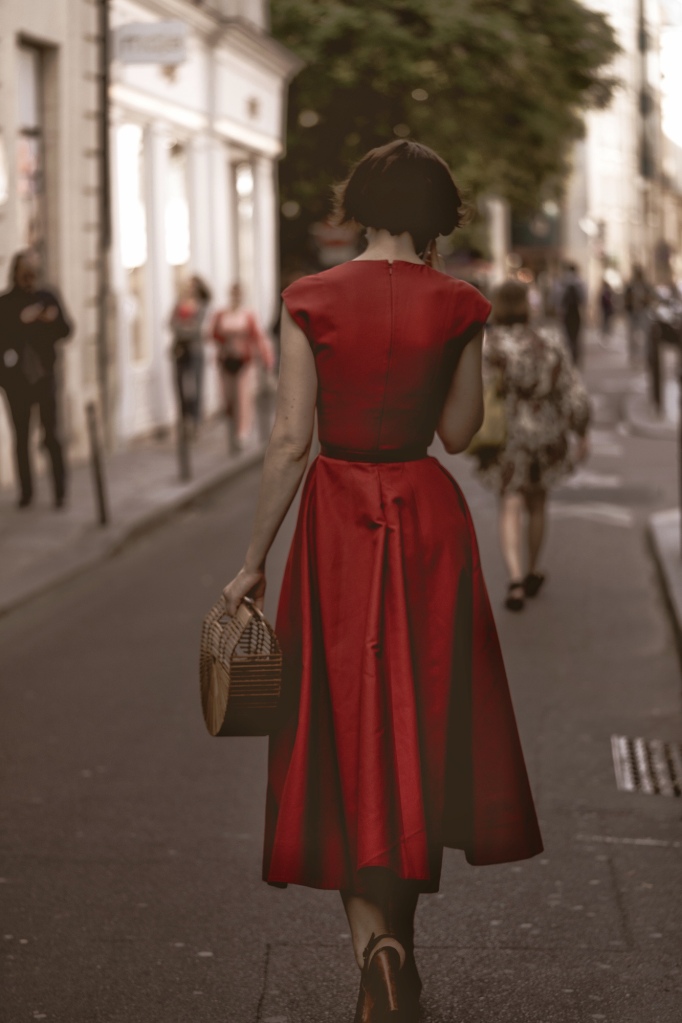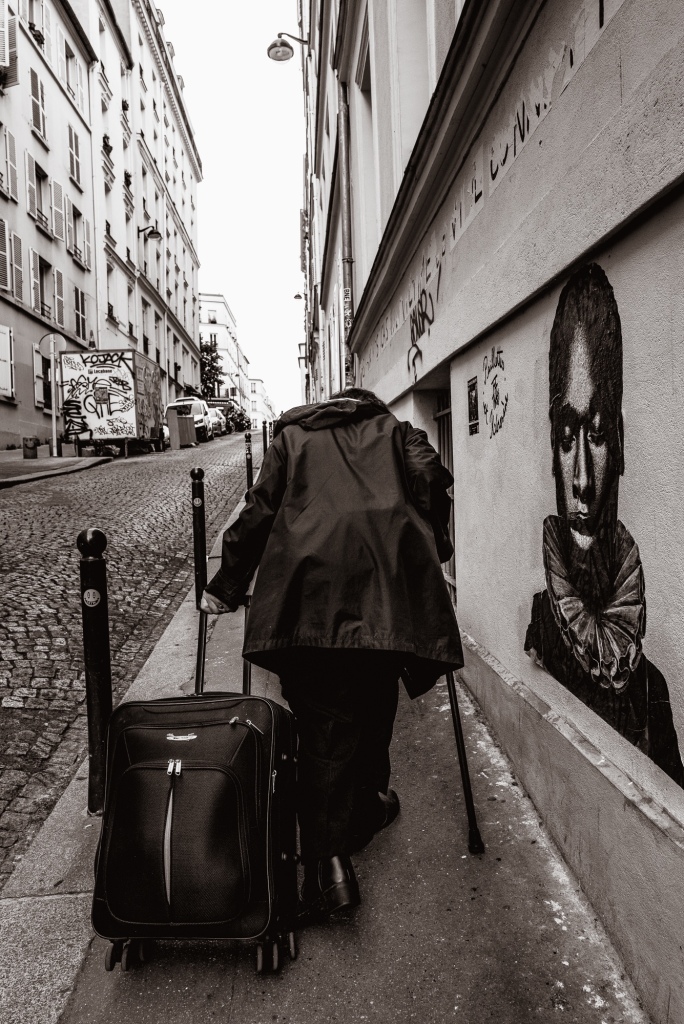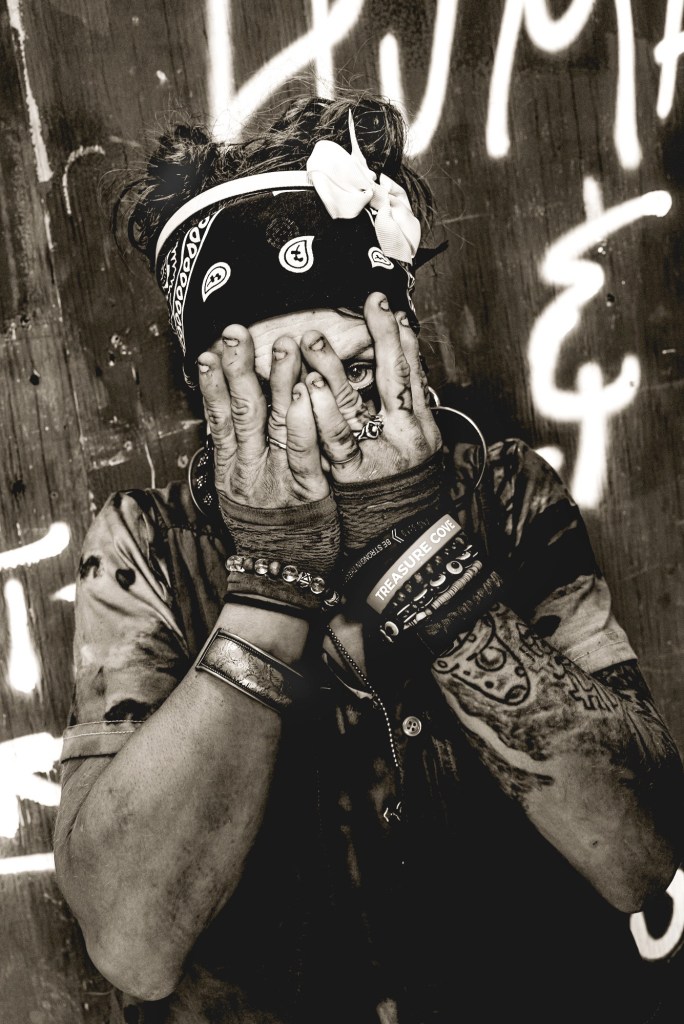
Stalking Little Bit

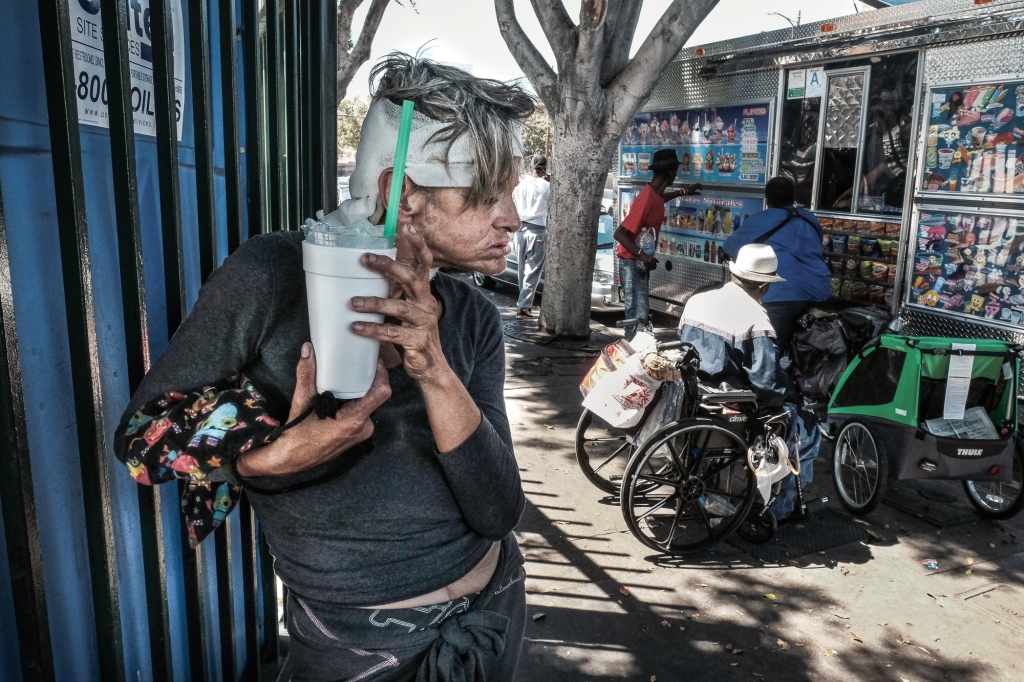
Little Bit, New York City, September 2024

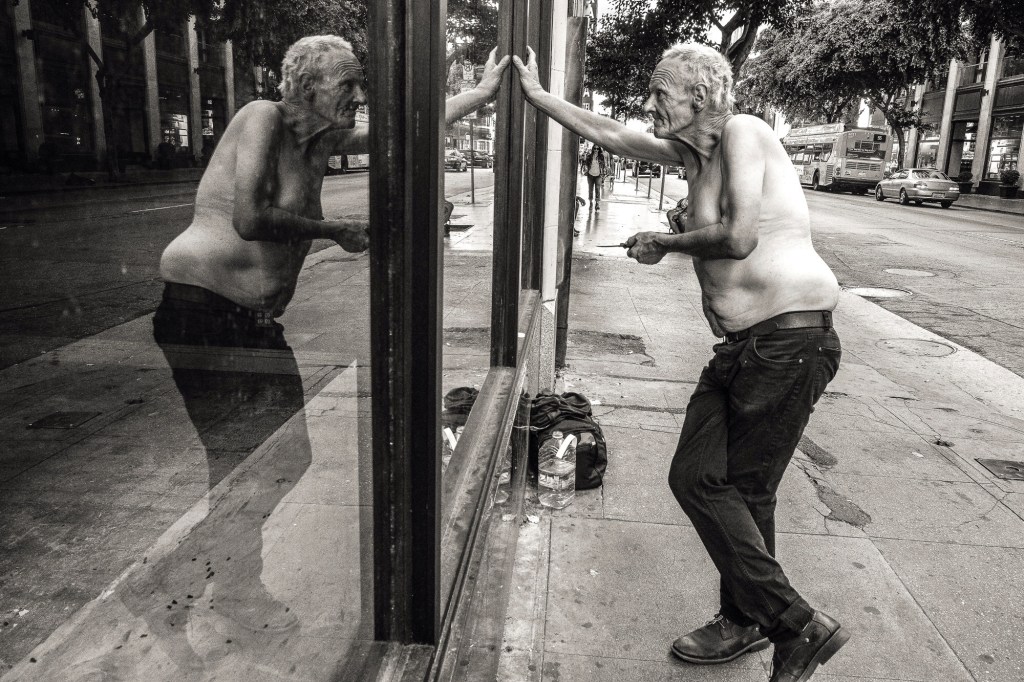
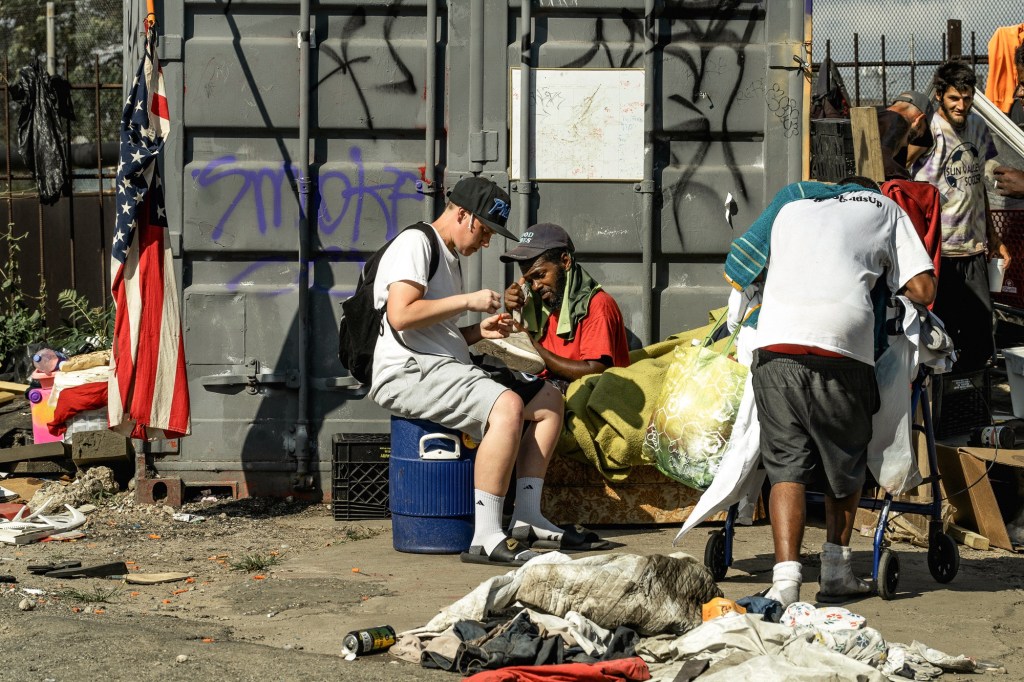
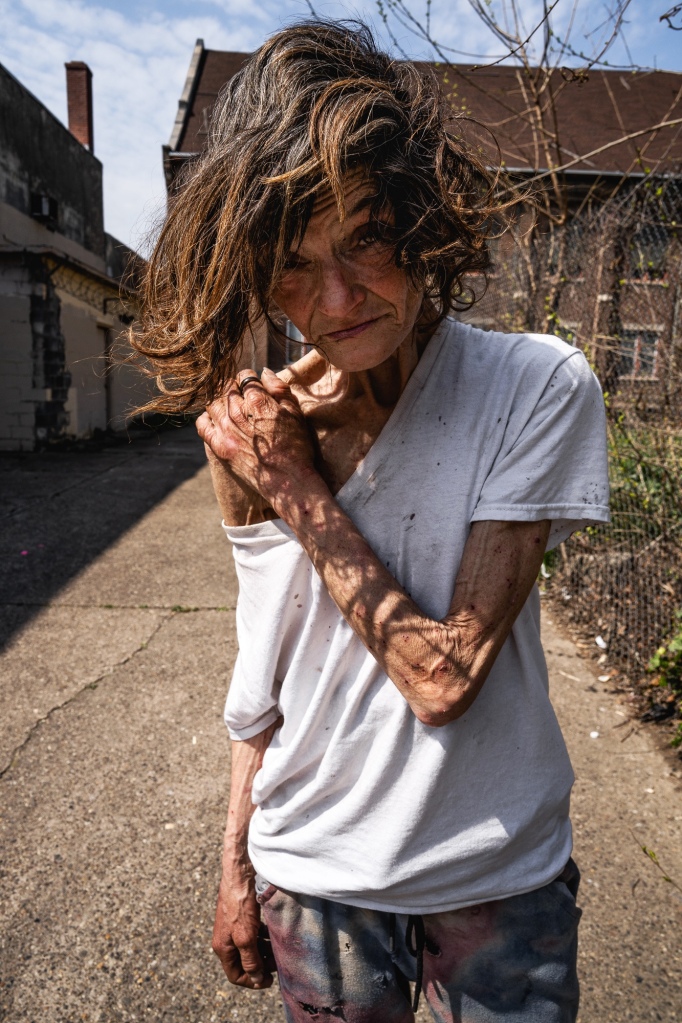
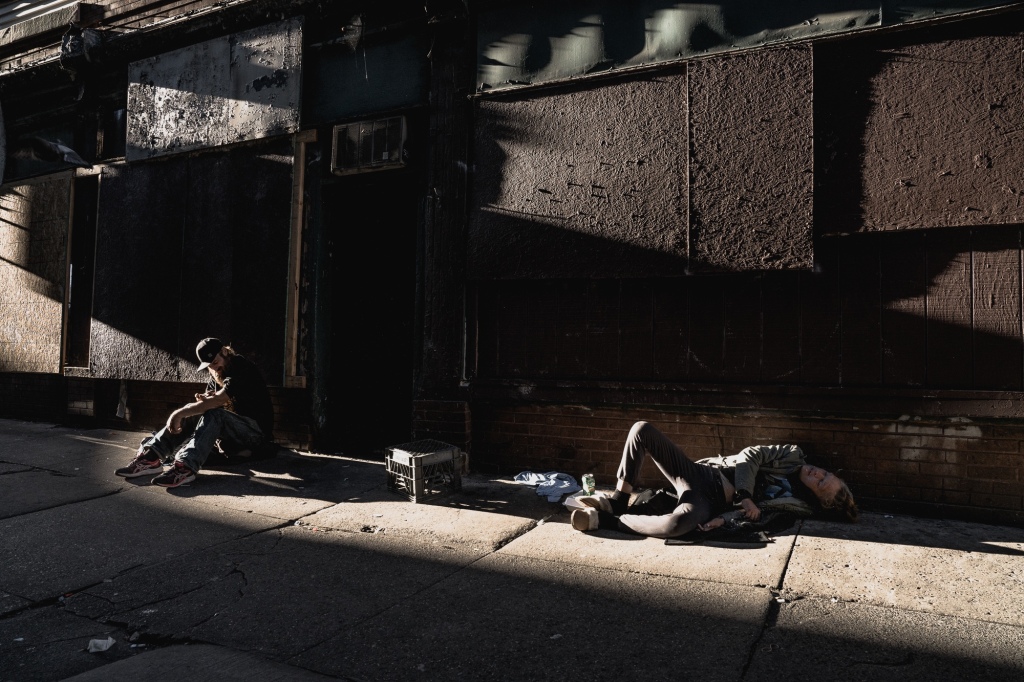
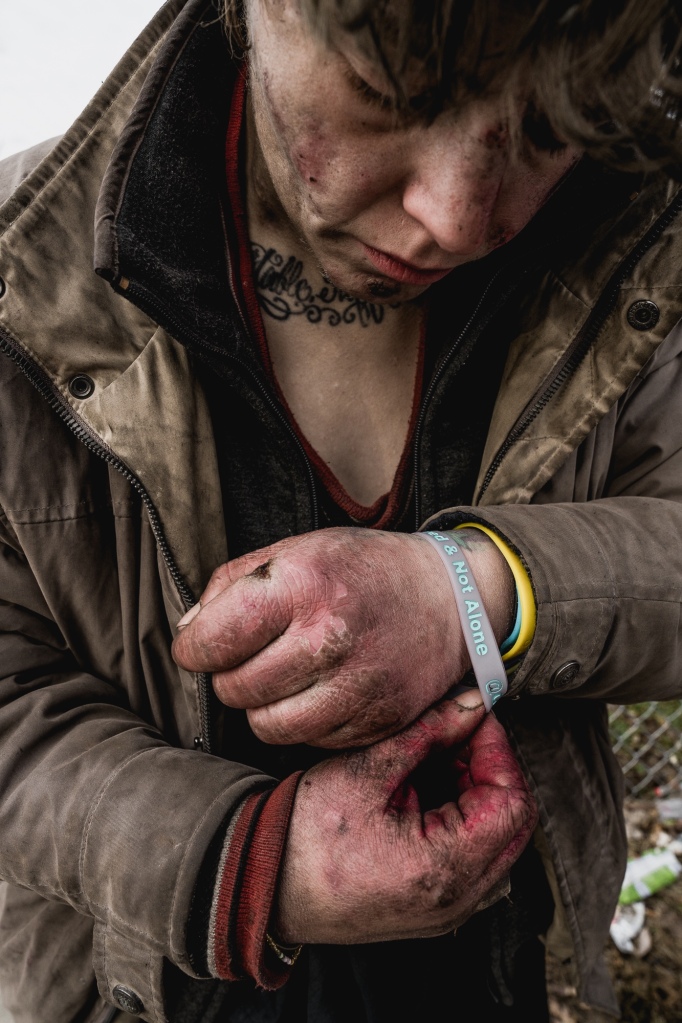
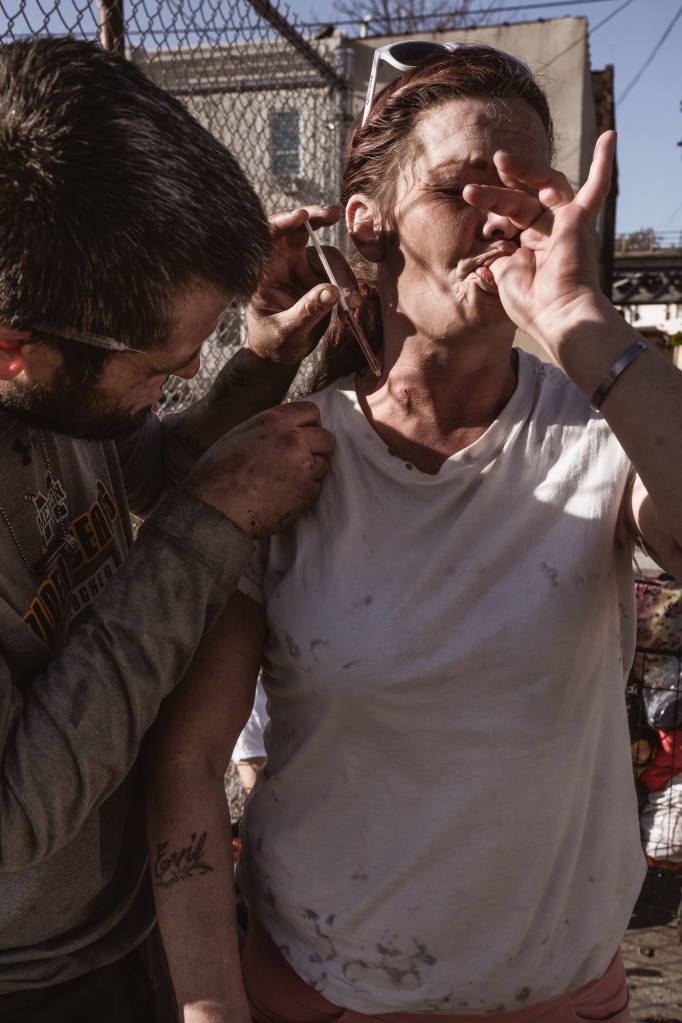
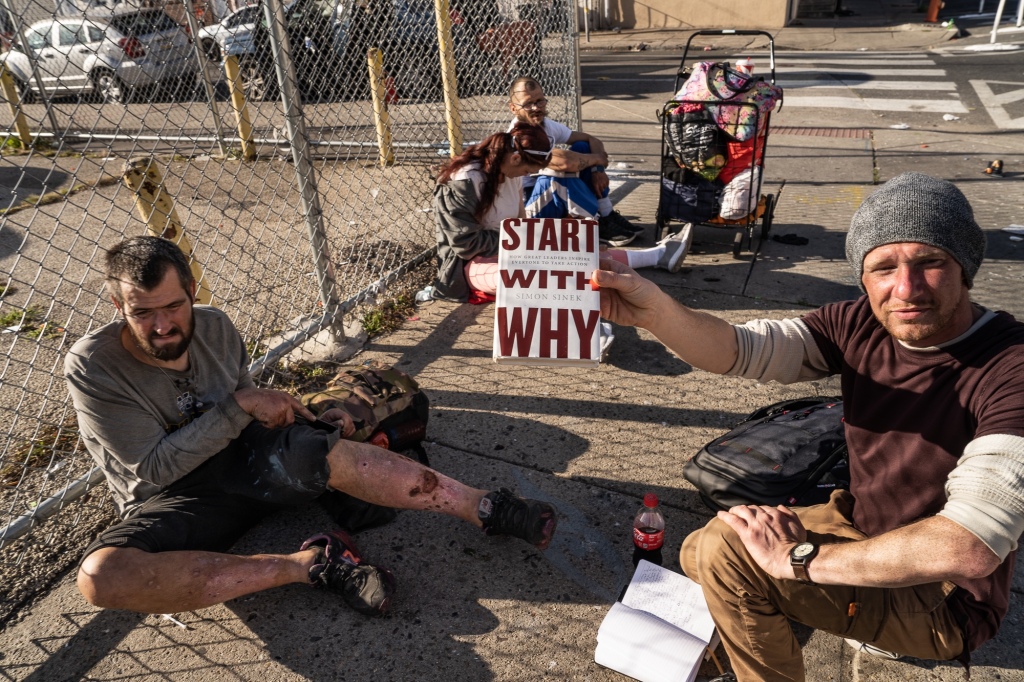
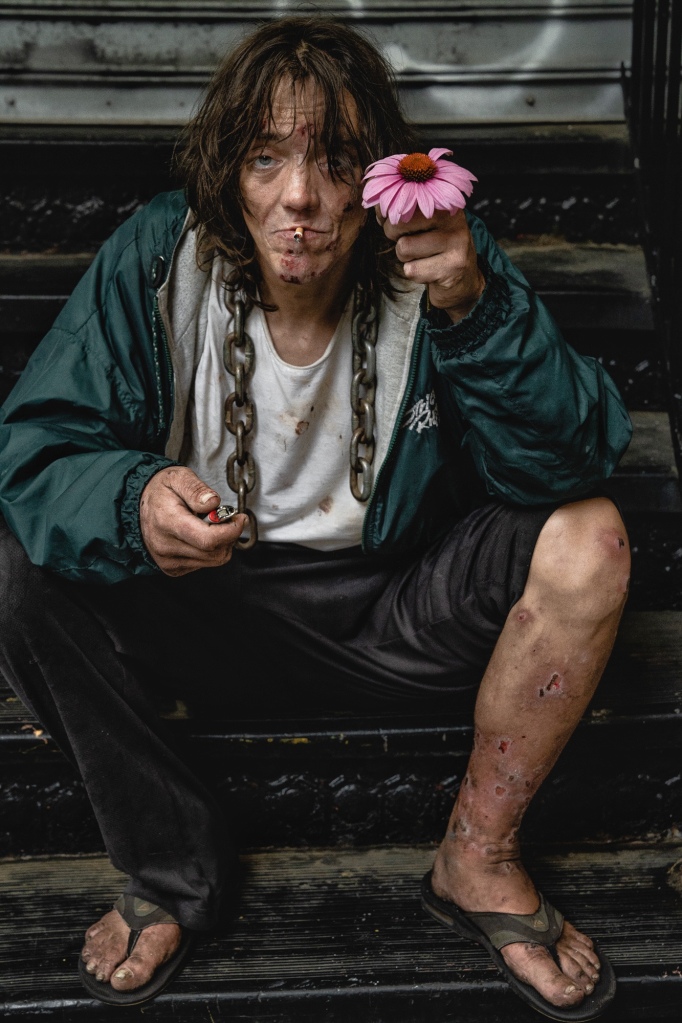
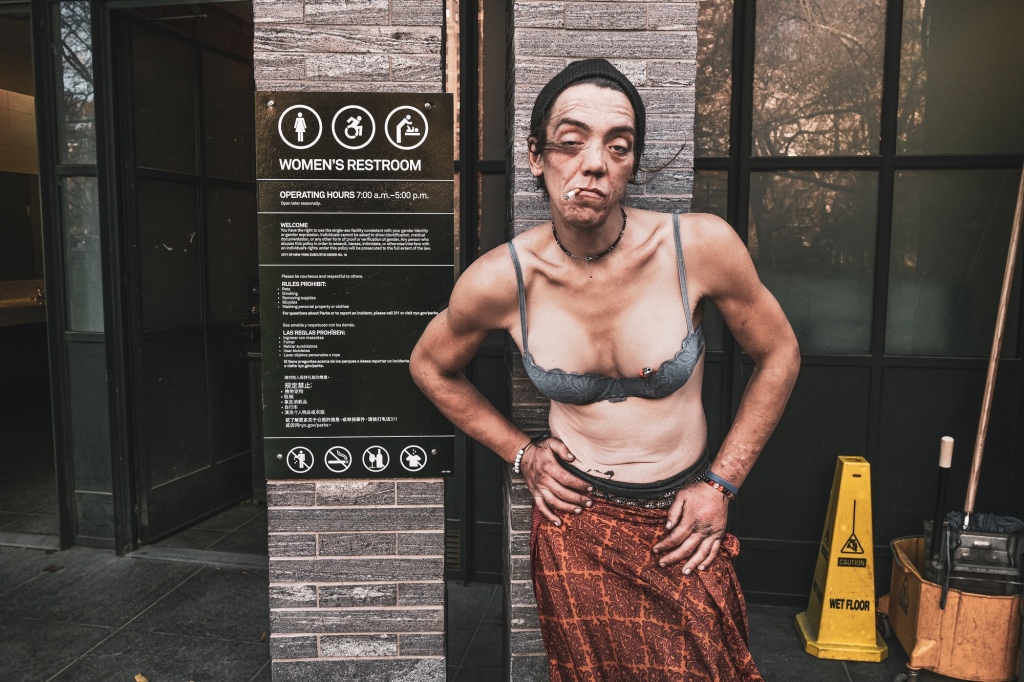
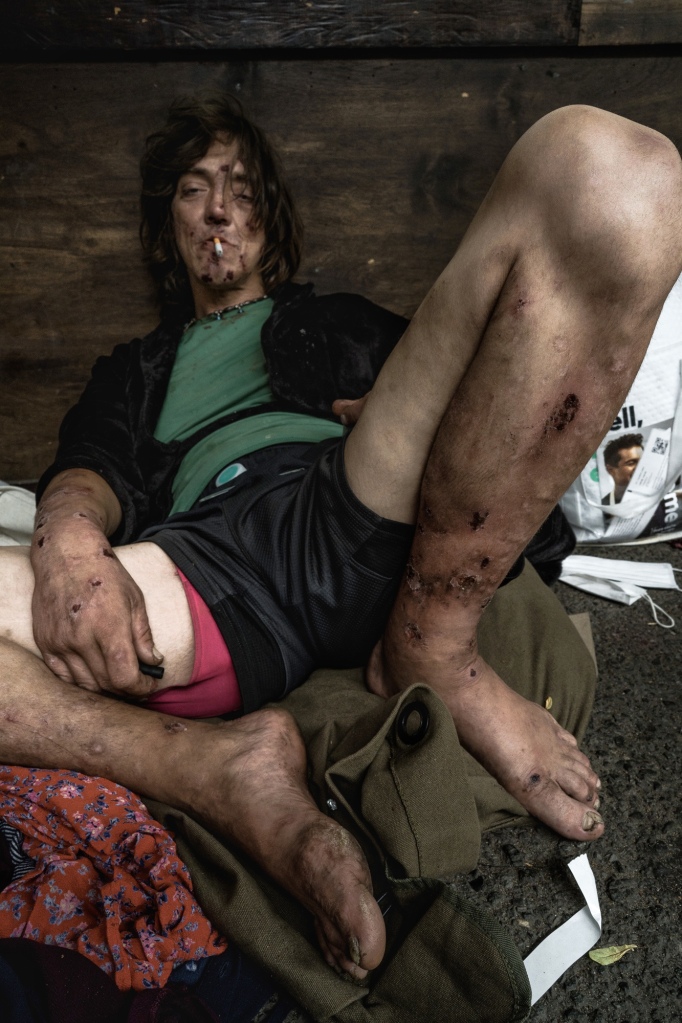
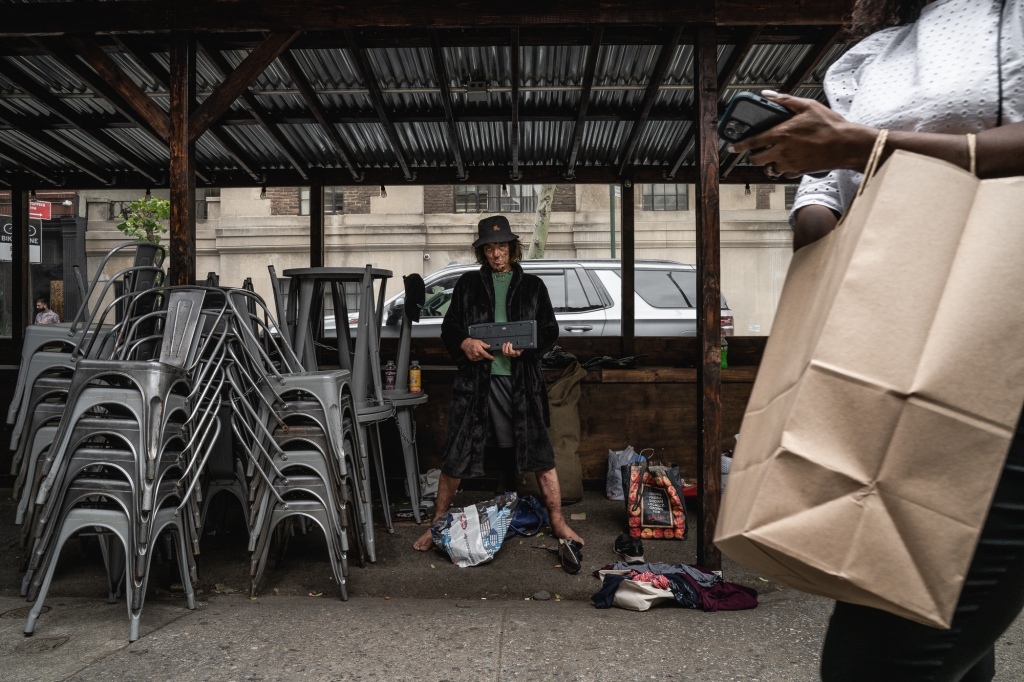
I started photographing in New York City after a two year lay off. I had completely lost track of Little Bit, and our lives had gone on completely separate paths. I never thought I’d see her again, and I had no intention of seeking her out on the street. Not because of negative feelings toward her (I will always care deeply about Little Bit and what happens to her), but because of my own cynical, bleak views concerning photographs of addicted, homeless or otherwise tormented people.

Photographing in Kensington, Philadelphia for three years has changed everything about the way I perceive my conduct as an image maker. My feelings about photojournalism and street photography generally—more specifically how it’s practiced by others—are completely separate from my expectations of myself, my personal standards and methods. After being shot at, assaulted and beaten on the street and generally being forced to fight for much of my output while in Kensington, shooting pictures in New York City as a street photographer is too easy. Of course I get into altercations over my right to photograph, what I’m doing, why….but it’s a pale comparison to Kensington, or any place that’s close to it in tension and gravity, a war zone, conflicted places that require much work in order to effectively photograph .

I will always love photographing the street, but lately I worry that I no longer find any relevance or meaningful content in walking the same footpath I’ve been on for so long.
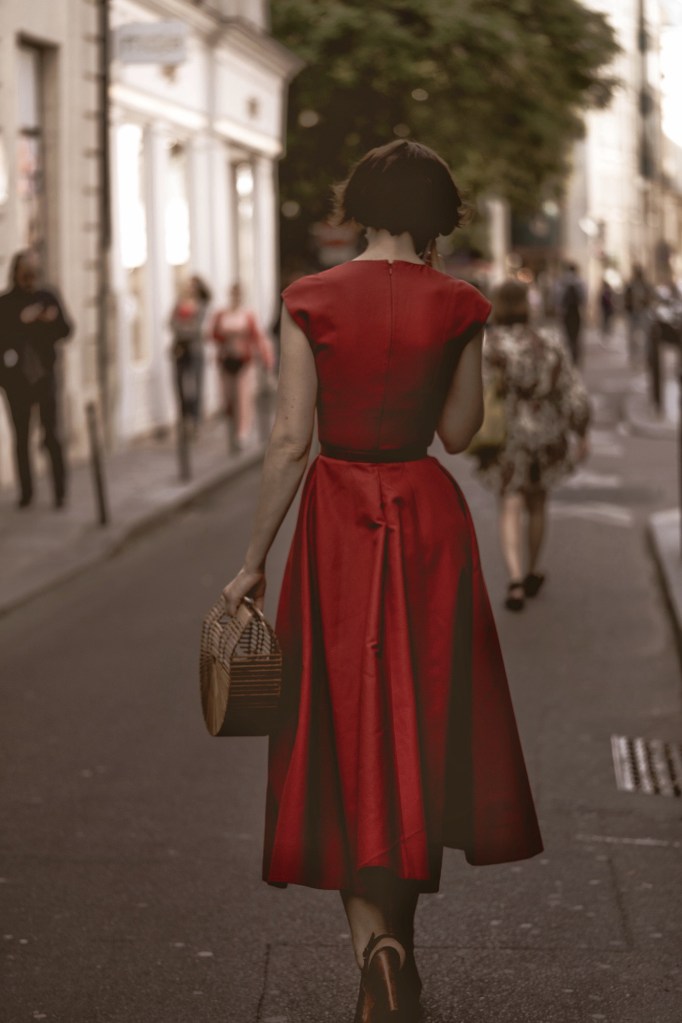
Street photography in Paris
Street Photography in Downtown Los Angeles
Street Photography in Williamsburg, Brooklyn
Street Photography in Crown Heights, Brooklyn
Street Photography in Skid Row, Los Angeles
Street Photography in Mexico City
Street Photography New York City
Street, Williamsburg, Brooklyn
Street, Downtown Los Angeles
Street, New York City
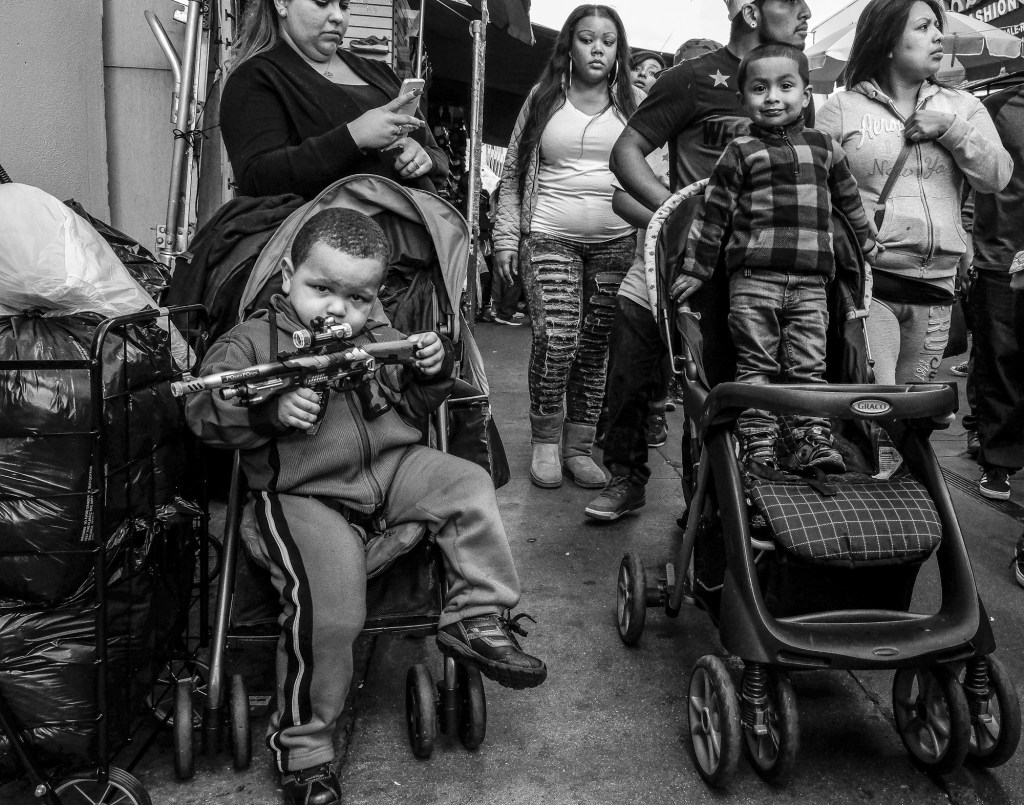
Street, Santee Alley, Los Angeles
Street, New York City
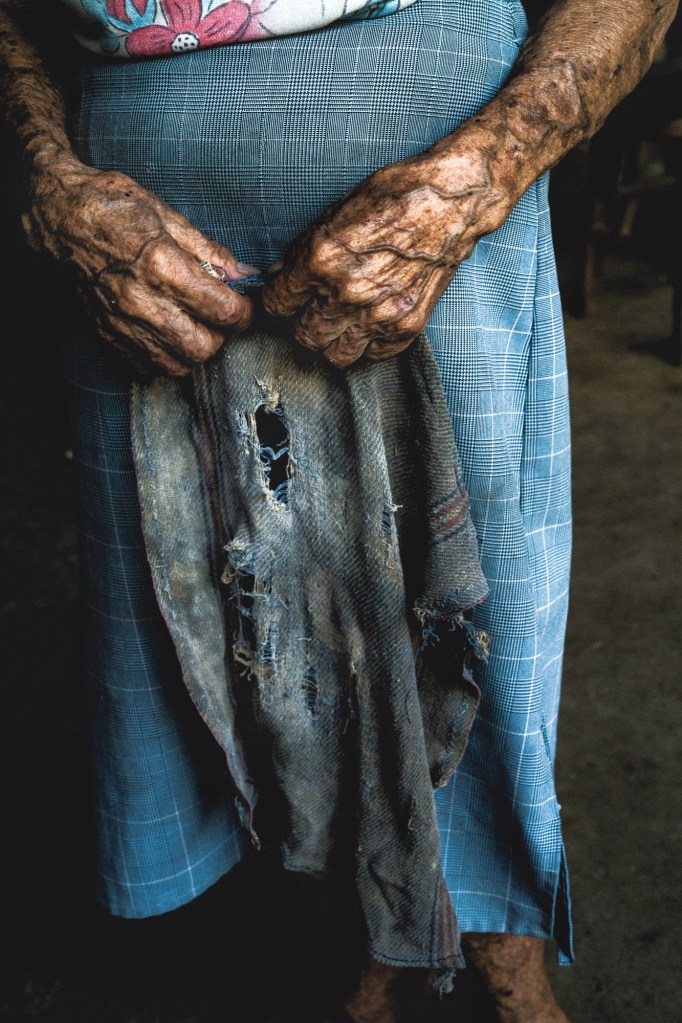
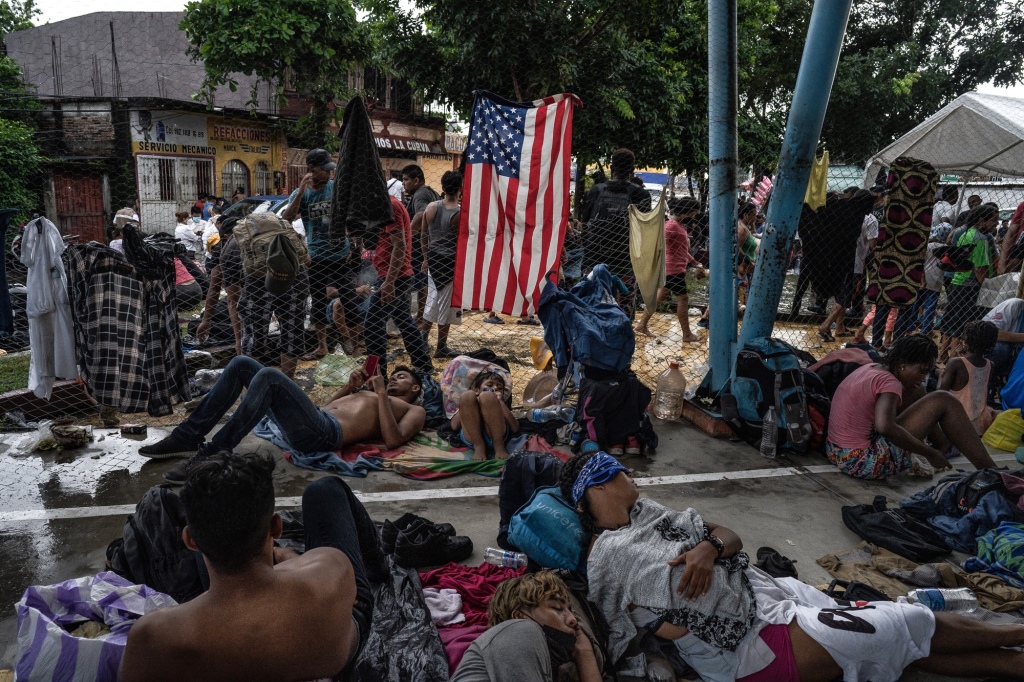
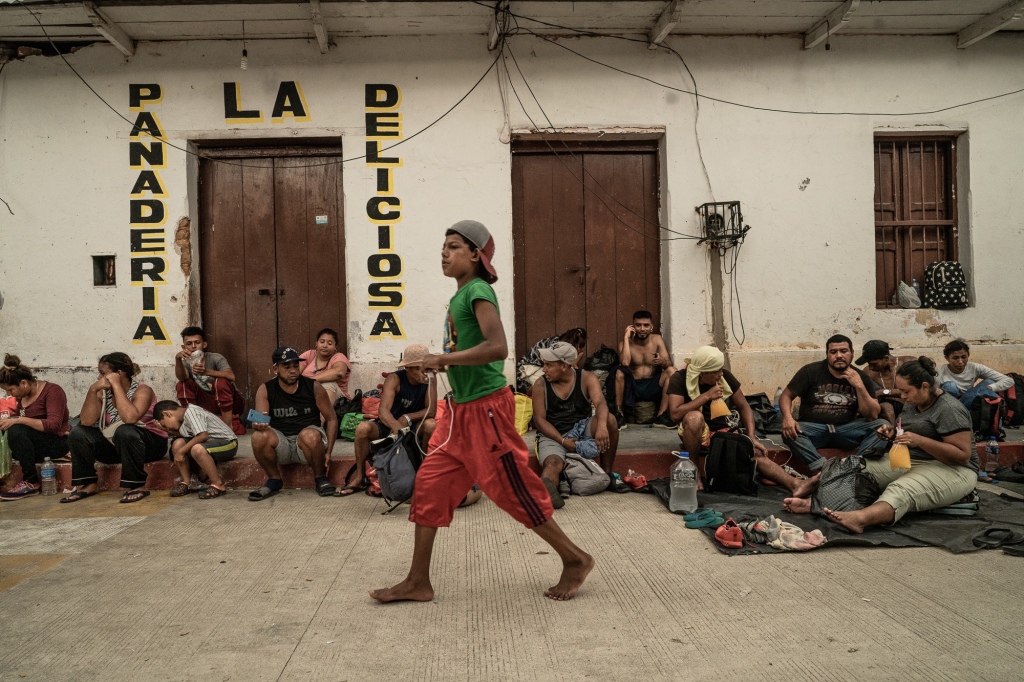
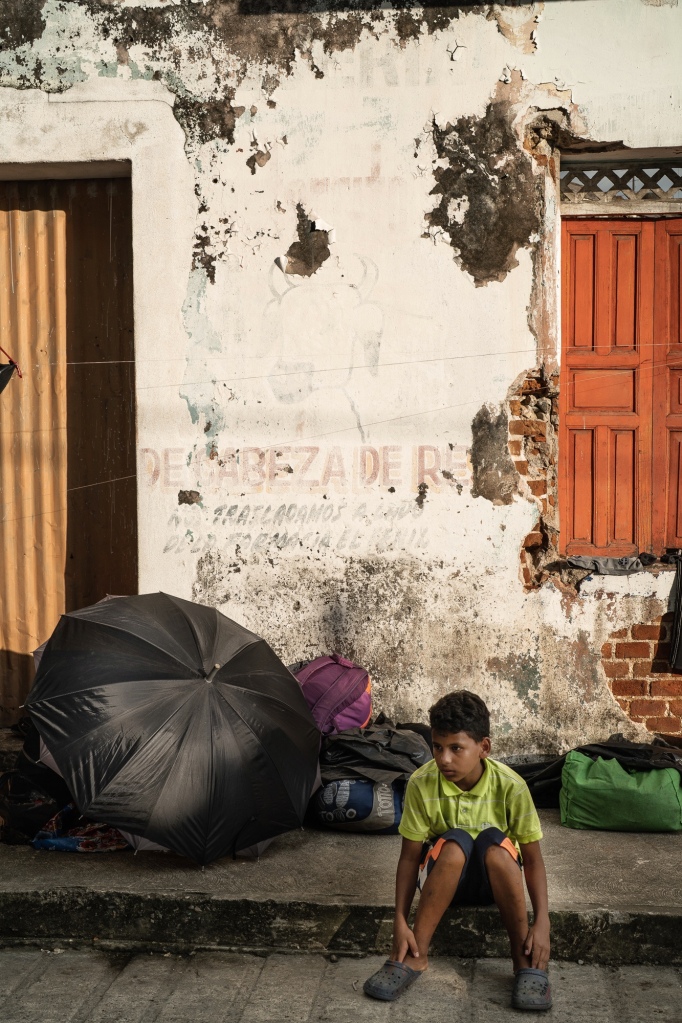
Tapachula, Mexico
Street, New York City

If I can tell a story, I hope I will always be inclined to pick up my camera and try. It’s not always successful but making the effort is what makes me happy. What is discouraging for me is that, after Kensington and so many other stories I have told…I sometimes see the streets as being vacuous and devoid of any kind of purpose.

Lately I see so many out with a camera….like shopping before a holiday. Looking up, finding someone watching me, camera in hand, on the same corner. I find myself feeling like an intruder, poaching innocent people out there trying to get from place to place. I see what I am doing differently sometimes when I observe others with a camera. I wonder how we look to passerby. I never cared…never once considered that what I was doing was odd or unusual. But at times lately I wonder if much of street/reportage/documentary work is in fact outright predatory.

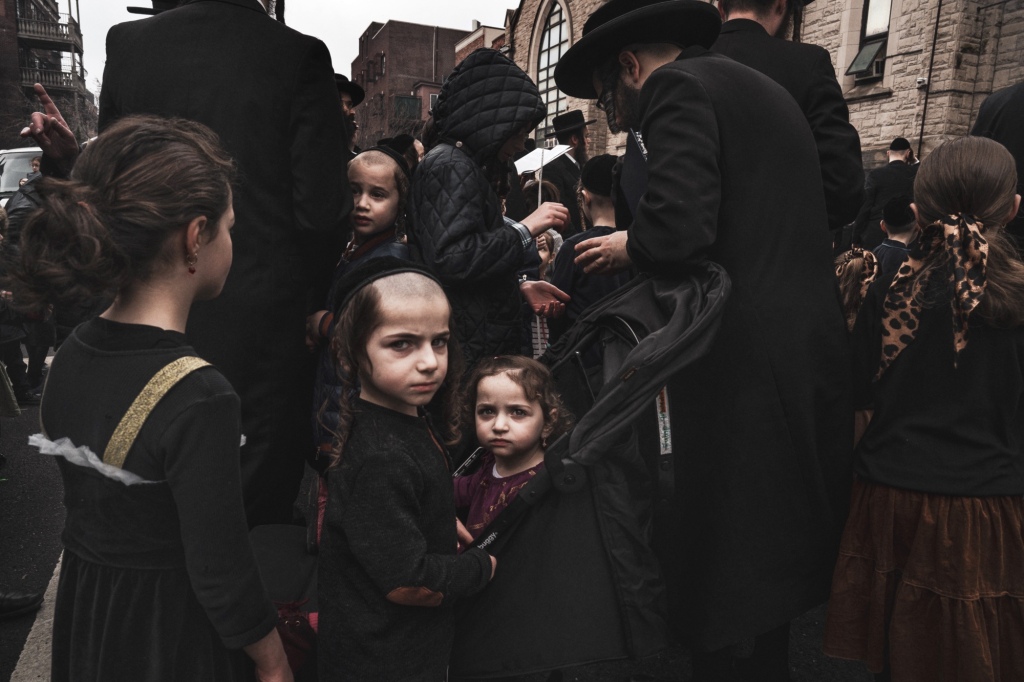
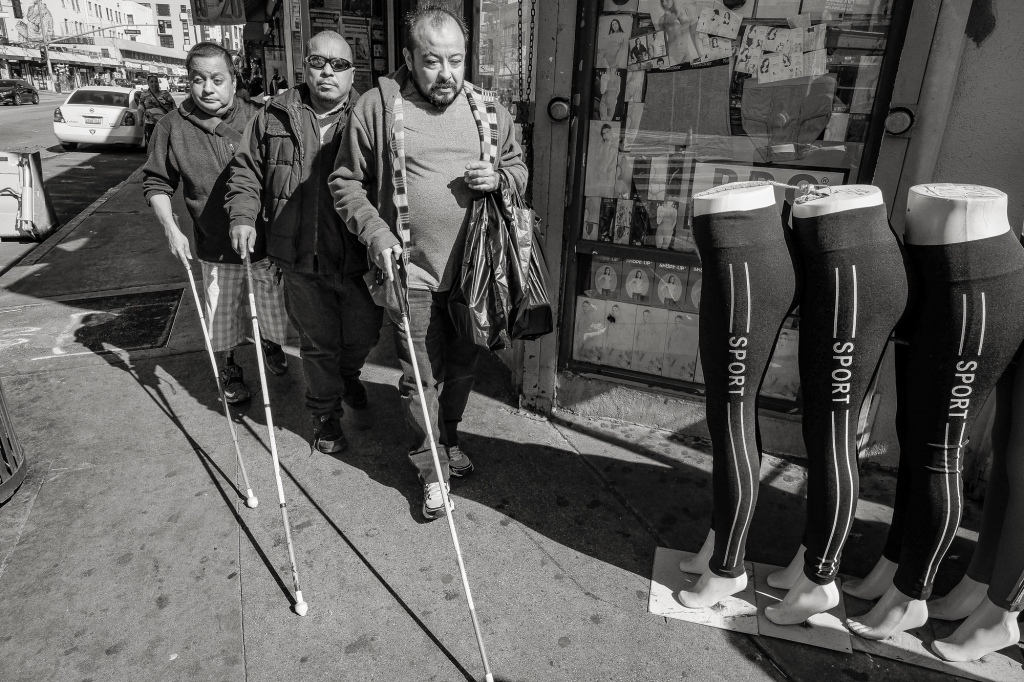
The images above are some of my favorites….sights that motivate me even as I look at them now…pictures that make me resist the urge to give up on photographing people.

Portrait of Janelle on Delancey Street, New York City

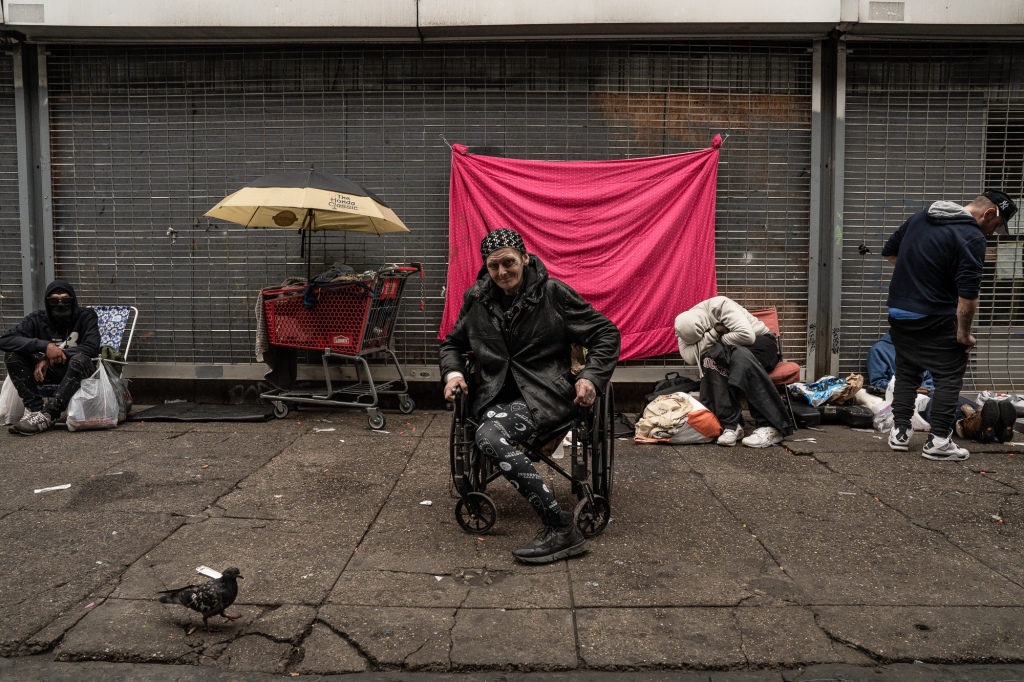
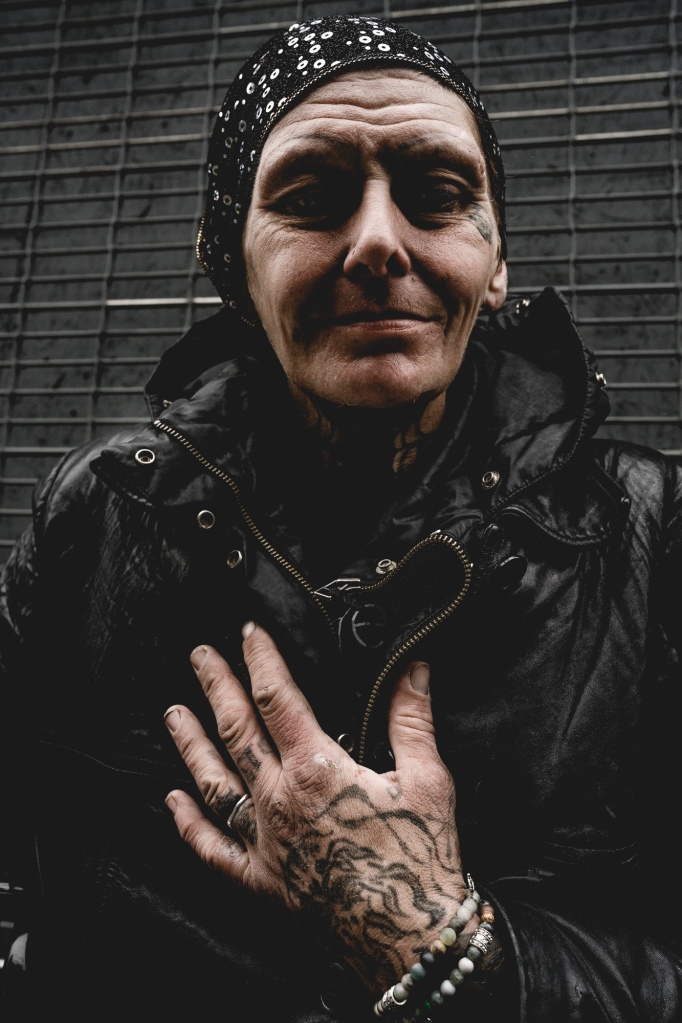
I ran into Little Bit after two years. I thought if I saw her, I would not have any desire to photograph her, but I was wrong. The urge came back fast, as did my connection to her. I had been walking down the street, on my way to a camera store. I spotted a miniature, colorful umbrella hunched against the side of a storefront. A pint sized encampment. I realized that it had to be her…tiny Little Bit at last.

As we crossed 6th Avenue, we were photographed together by a street photographer who suddenly picked up her camera when she realized that it was me with Little Bit. This upset Little Bit as she made her way along the crosswalk. I felt that my work, spanning a period of six years, had created visibility, a public persona for her, an excuse for people on the street with cameras to feel justified in acts of intrusive picture taking. Pictures that are not documents, or legitimate moments of life in public spaces. Pictures that are purely exploitative, unimaginative and irrelevant. I sometimes run across imitations of my work with particular people that I had never anticipated and feel very uncomfortable with, especially when I have personally witnessed photographers exhibit stalking behavior and had to advocate on the spot for the privacy of someone who has allowed me the privilege of photographing them. I have felt genuine shame when some of my subjects have related to me incidents of people with cameras secretively photographing, or approaching them at odd times.

Social media has made original work constantly accessible, and impossible for me and other artists in a similar situation to protect. Style, subject matter, location, entire bodies of work, compositional techniques….easily available to others and open to exploitation. Where is the line that separates artistic influence from copying the work of other photographers and plagiarism? A thin, almost nonexistent difference on social media. Most of the time I don’t think about it but there are times when it’s a problem that almost negates the positives associated with social media engagement.
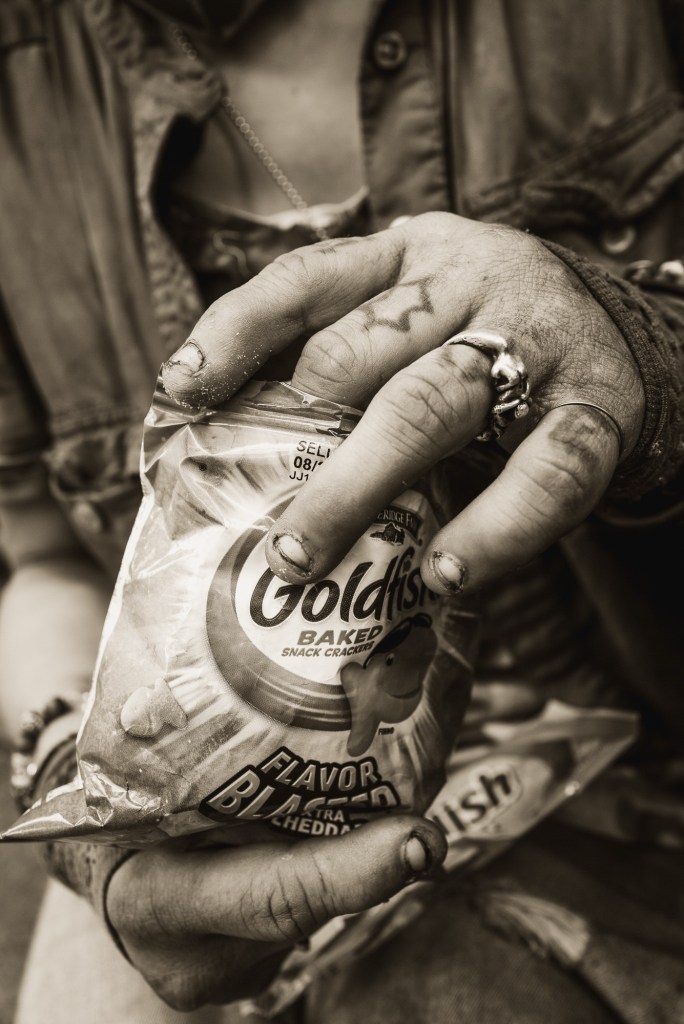
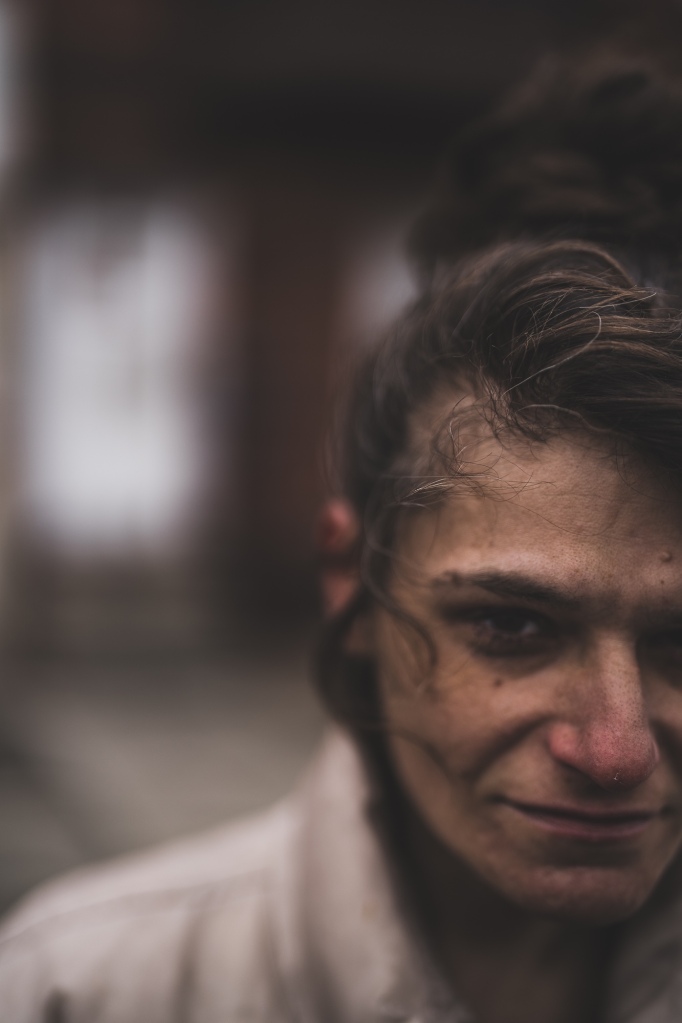
Little Bit, September 2024

We walked for hours, and it was like no time had come and gone. We had ice cream, and I found out that she had left the shelter she had been living in for nearly four years. She was not regretful. Little Bit has chosen her life, and resists victimization. She is in control and is remarkably able to avoid being abused by people on the street most of the time. But Little Bit is not able to avoid being abused by the rest of us, especially those with cameras.
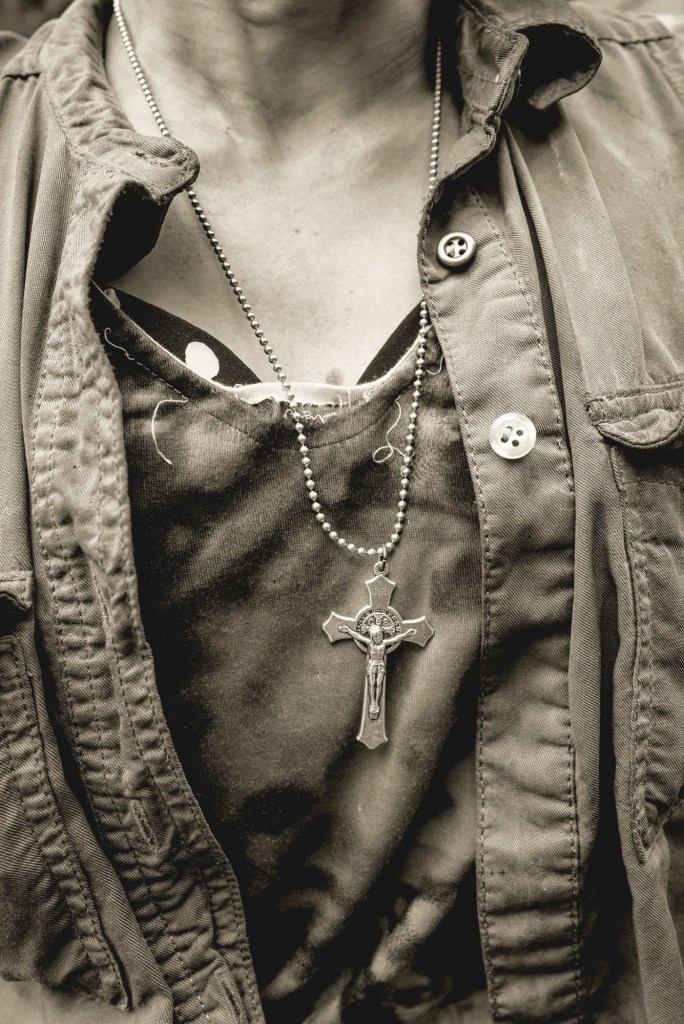
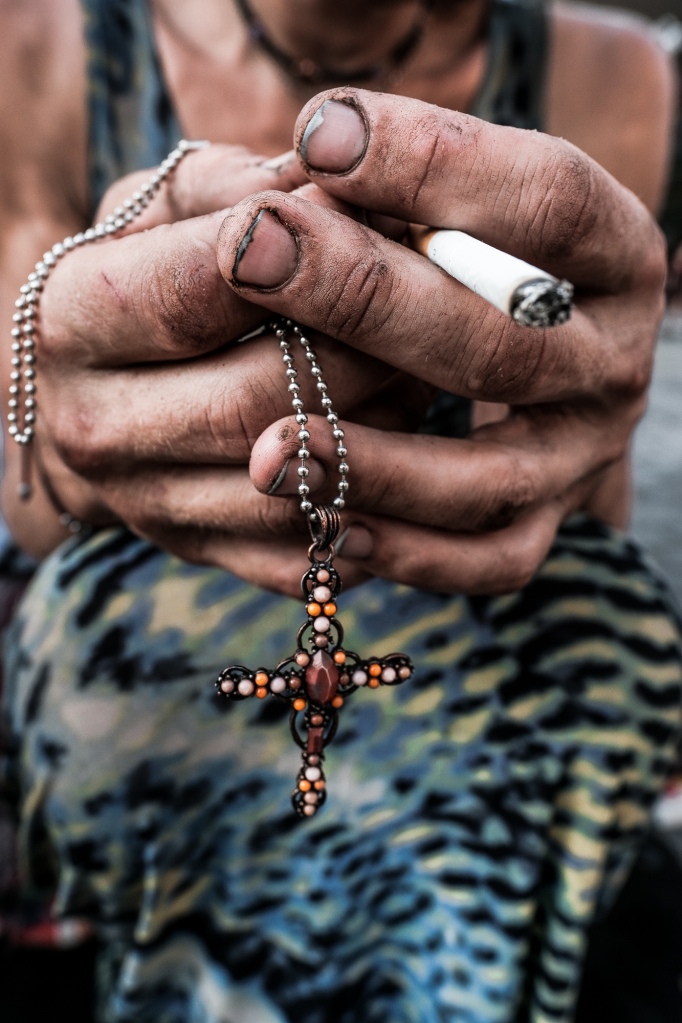
Little Bit’s cross, September 2024

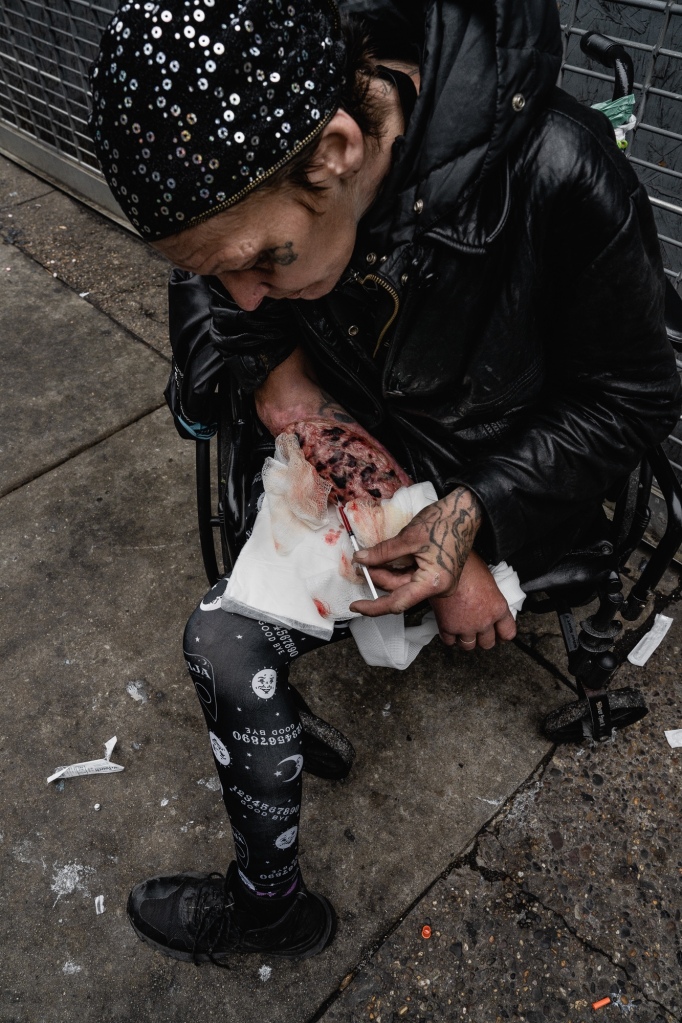
No less than three people made iPhone videos of her while we walked. Little Bit became angry and startled by the intrusions. She explained that a TikTok “creator” had made a video a year or two ago….I explained that a lot of people have seen my pictures of her as well. I know that my images have inspired others to seek her out, and I am deeply concerned and sorry for the negative impact. When people ask her politely for a picture, she sometimes allows herself to be photographed. But she doesn’t truly feel comfortable with the process. Because I spent time with her, after a long period she came to trust me, becoming comfortable with me taking pictures of her many incarnations. She has been extraordinarily generous with her likeness.

Little Bit in 2020
Little Bit in 2021
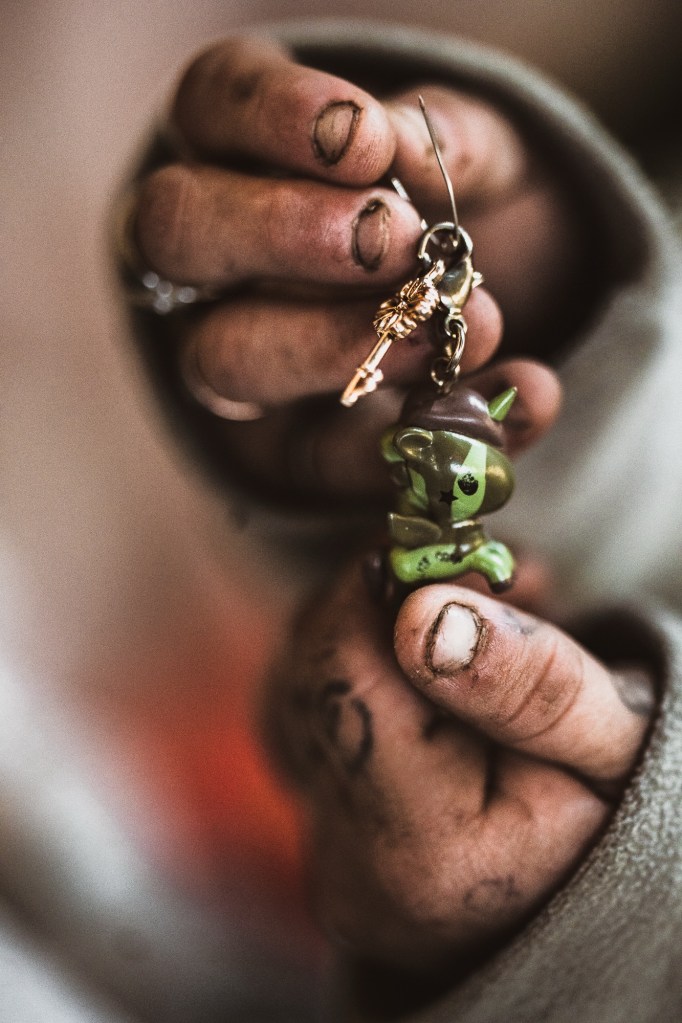
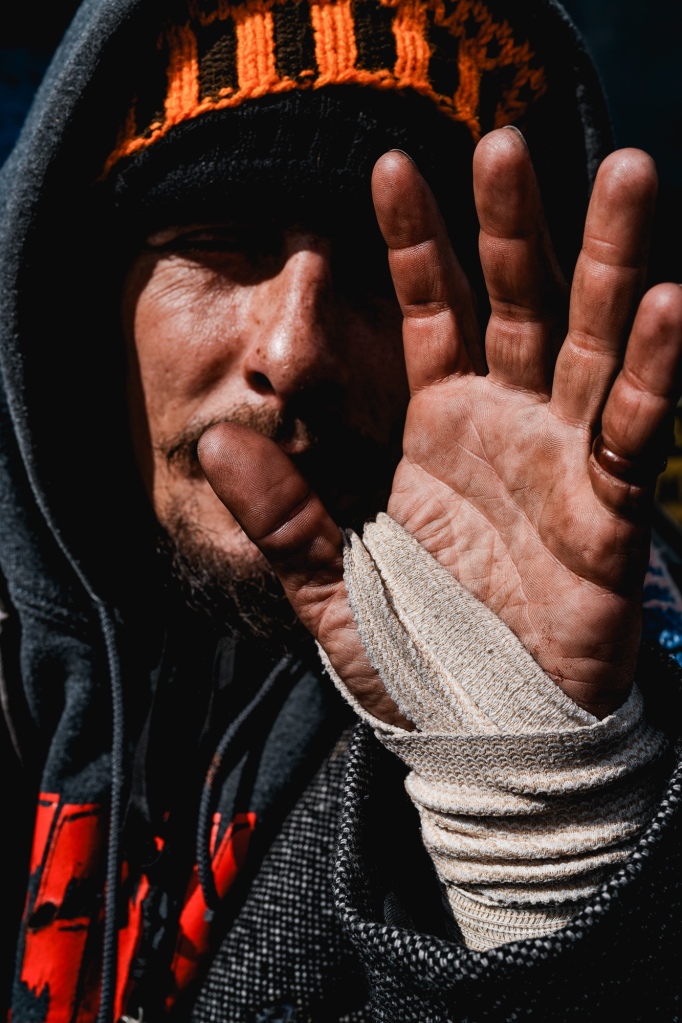
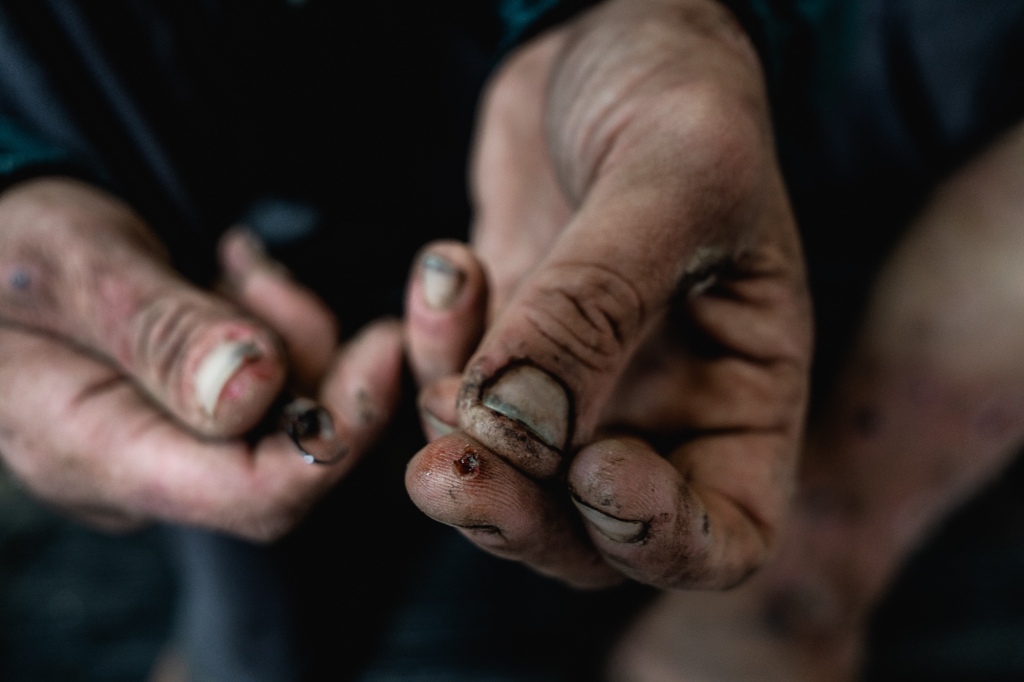
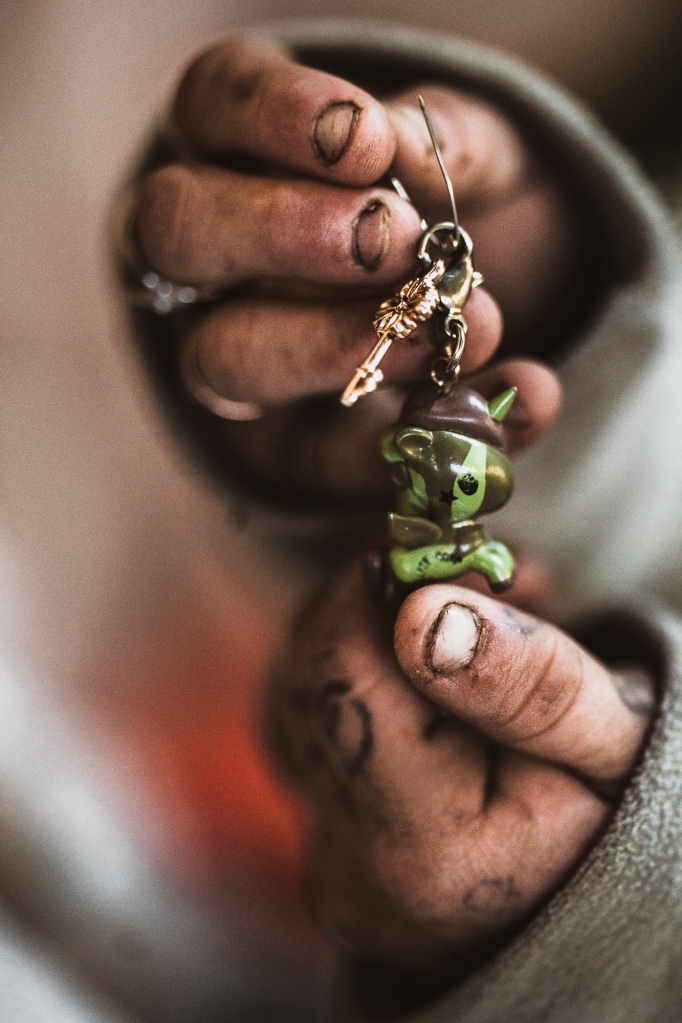
Little Bit, hands
Little Bit, 34th Street

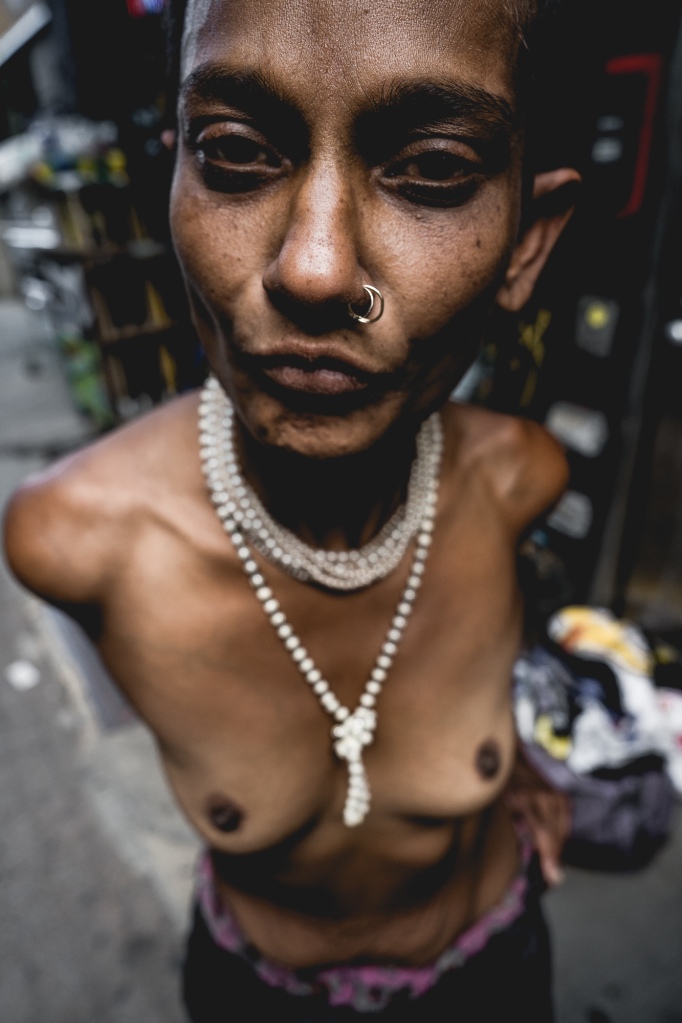
Little Bit is a lifelong amputee, and this disability has made her a commodity at times on the street. I could see, however, that she had become an easy target for some without the skill or sensitivity to approach and effectively manage photography of difficult subjects like Little Bit. A harsh statement to be sure, but a truthful one.
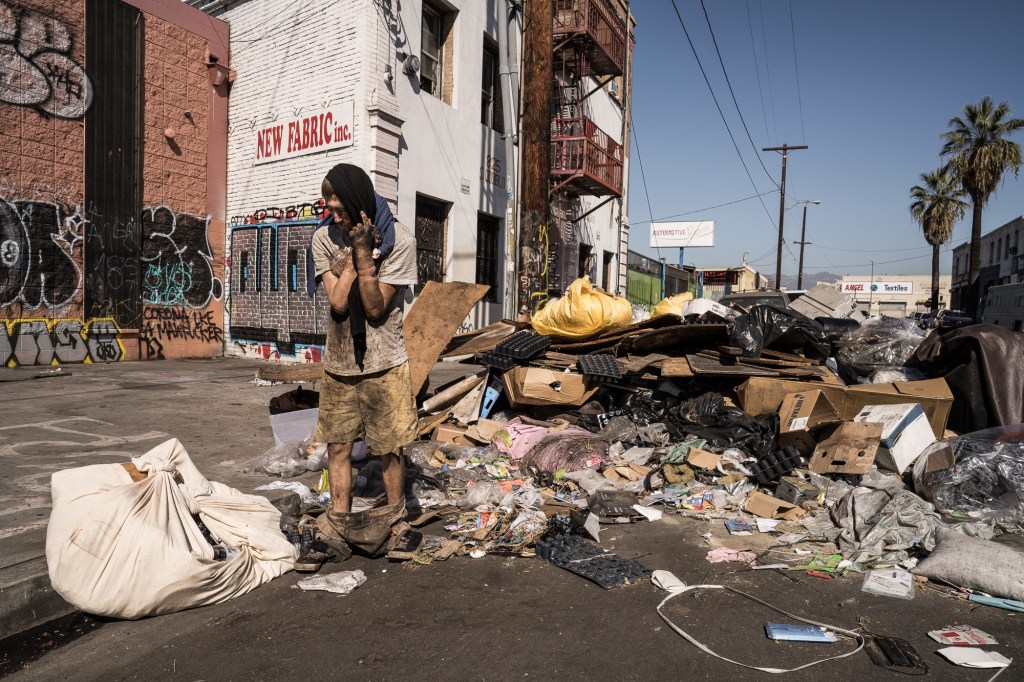
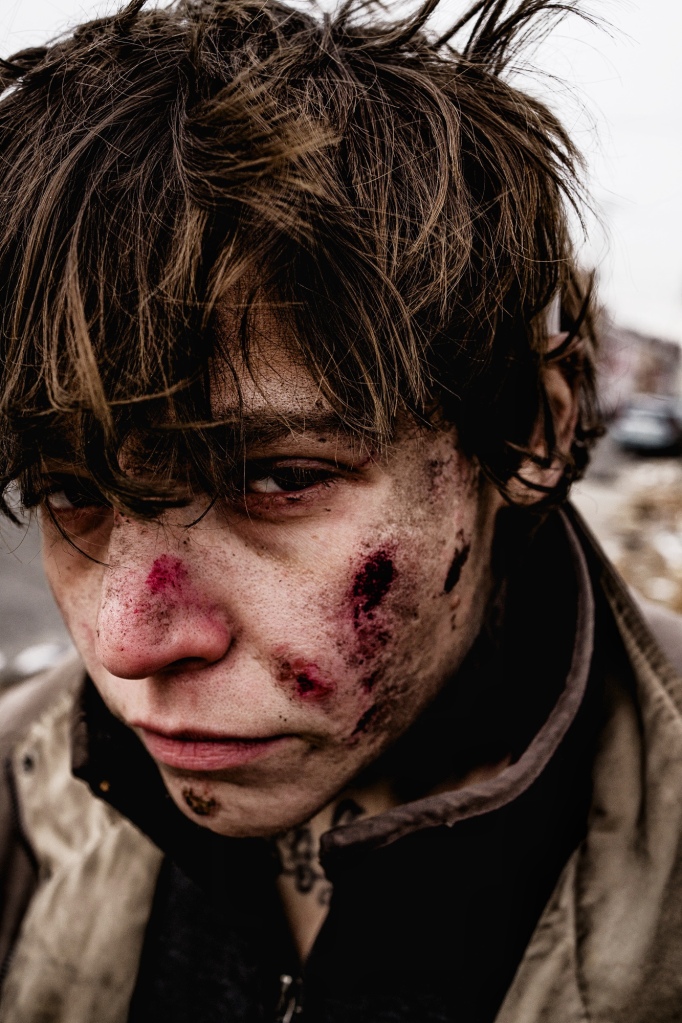
Skid Row. One of my most impactful images, a young man who had been held and abused, recently released to the street. A narrative important and brutal. Predation or documentation? I never questioned this image, but after working in Kensington and observing Little Bit being preyed upon by people with cameras, I question everything.

In the future I will no longer give location information for some of my work if it can negatively impact anyone in the image. Every day I wonder if what I am doing has any significance, and sometimes it’s a struggle to pick up my camera, even to drag my feet along as I move forward. I don’t ever want to feel that my satisfaction with my work somehow degrades another person….but I now know that in documenting difficult circumstances it has done just that. It’s unavoidable, and unacceptable at the same time. Unavoidable because to walk away from difficult situations, not photographing the way things really are, is an acquiescence to present day forms of censorship. Unacceptable because causing pain is never ethical….but justified because there’s a perception of a greater good. Documents of truth and life no matter how hard they are to look at or acknowledge I feel is the best path towards durable, righteous journalism. I know that seeing my pictures has caused pain, and in showing life accurately there are casualties. The wounded in the image, and me too. I have come to realize that I too am a casualty of my photography. I’m not yet sure what that means for me.

Little Bit’s World

Images and story told with Little Bit’s permission.

Sanctuary

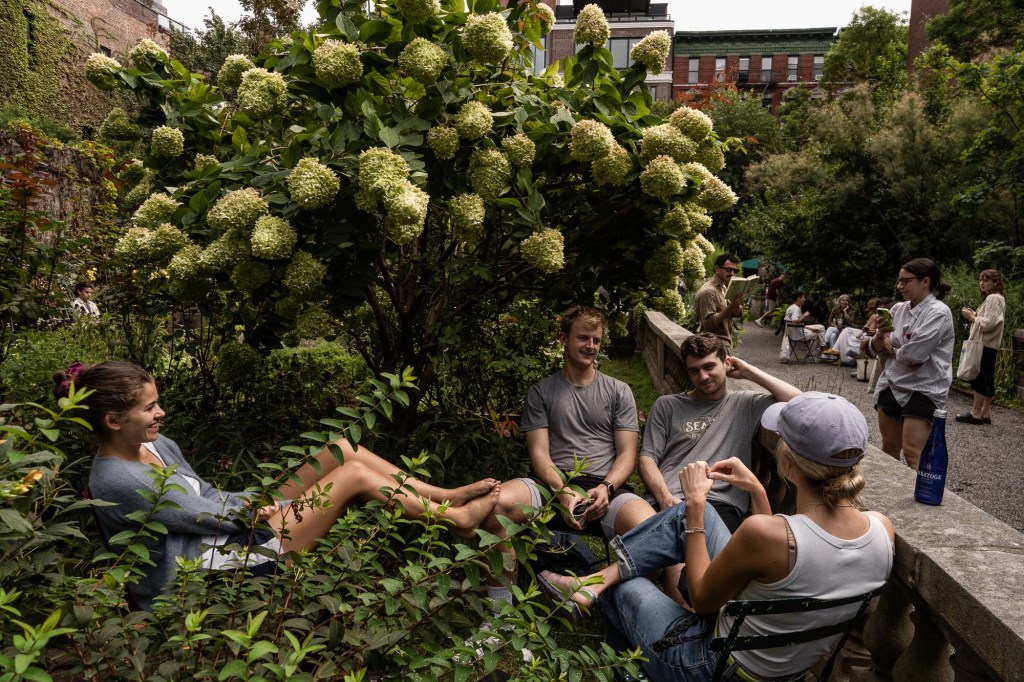
From left, Leigh, Stephanie, Nathalie and Ava

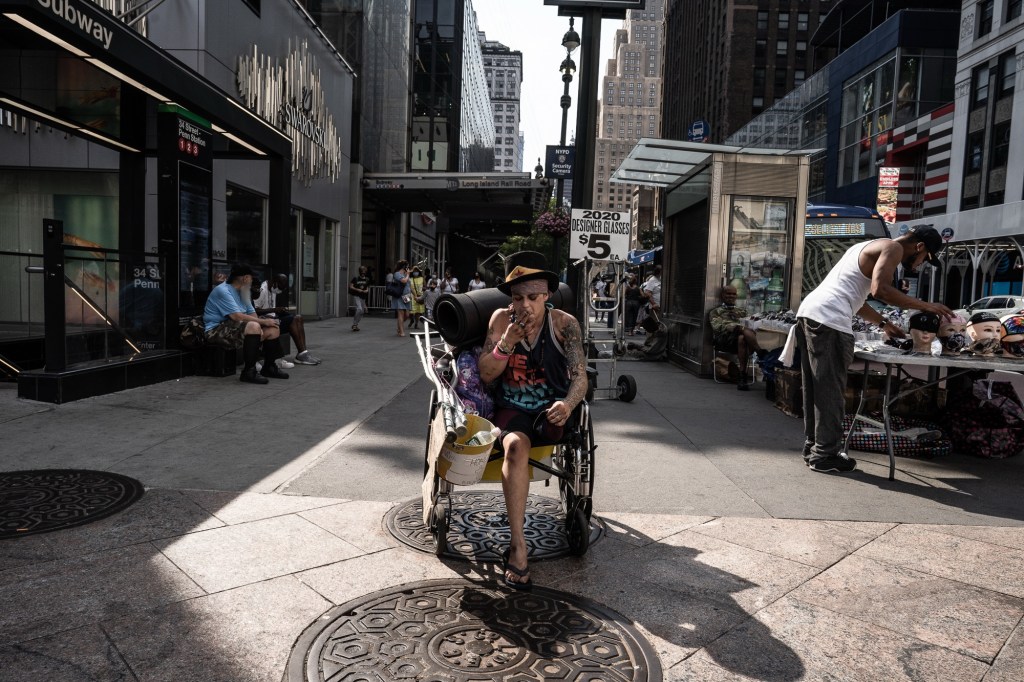
On a handsome August New York City afternoon I decided to wander midtown. I had just finished a late morning workout and my plan was to walk down 7th Avenue towards 34th street, hitting some favorite spots as I headed downtown. I took my camera from my handbag as I reached 35th and 7th, one of the great Manhattan corners. It’s got everything a street photographer could ask for when shooting a random, impersonal urban image. Mercurial shifts in compositional elements, saturated light on bodies, rapid changes in position and geometry, generating the constant promise of a great picture. The vibrant red of the 99 cent pizza sign over the busy slice joint giving context to the scene, the afternoon sun warm, the smell of charred dough and industrial cleaning solution on the sidewalk mixed with marijuana and exhaust and perfume and old garbage. People streaming into the viewfinder, shooting wide on a 24mm lens, a pure joy. Timing is critical, waiting for the perfect synchrony of motion, an urban mosaic, every few seconds an entirely new cast entering into view. My eye pressed to the back of the camera, a complete immersion, a momentary universe. It’s easy for me to get lost in a viewfinder, and without realizing I drop out, almost forgetting where I am, completely inattentive, oblivious, unguarded. Until the shouting began. Moving into view to the left of the frame in camera was a man, towering over everyone on the street. His black backpack laden and heavy, he used his long arms to swing it at people as they walked, bellowing and lurching and full of sudden and unexpected menace. In New York City it’s always beneath the surface, buried in the back of one’s mind that at any time arbitrary decisions by total strangers have the potential to derail the day. It’s a possibility and a threat that I assess routinely as a female photographer on the street. But I am never adequately prepared for the immediacy of being in the presence of someone like the man thundering toward me as I stood with my camera. Enveloped in a sudden, dead panic, I jumped out of his path and into the gutter, stumbling awkwardly over a pile of garbage and nearly falling into traffic, my camera swinging wildly. He careened past me at the last moment, fixating instead on a lone middle aged woman who was immersed in her smartphone, standing a few feet from where I stood. She was entirely unaware of his presence, even with the guttural and angry speech, jarring and ugly and terrifying. He accosted the woman, who suddenly raised her head to see a heavily built male, his contorted face thrust into hers, shouting obscenities. As pedestrians scattered, she tried to dart away but he followed, and began to chase her on 7th Avenue heading uptown. He struck at her, all the time bellowing and screaming expletives. I began to search frantically for a police car, as I pulled my phone out, calling 911. The scene quickly dissipated, forgotten as the sound of his voice moved up the avenue. The street had instantaneously swallowed the tumult, normalcy returning to those of us observing, the lucky ones not being maniacally chased up 7th Avenue.

Stephanie and her dog, Lou
Norbert and Catherine
Julia

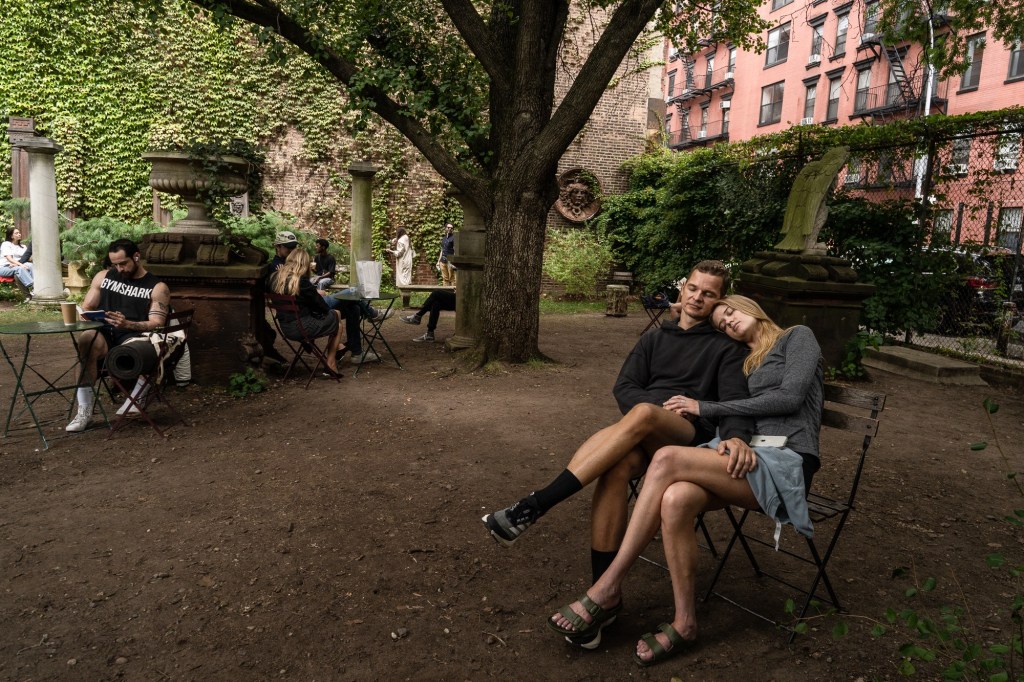
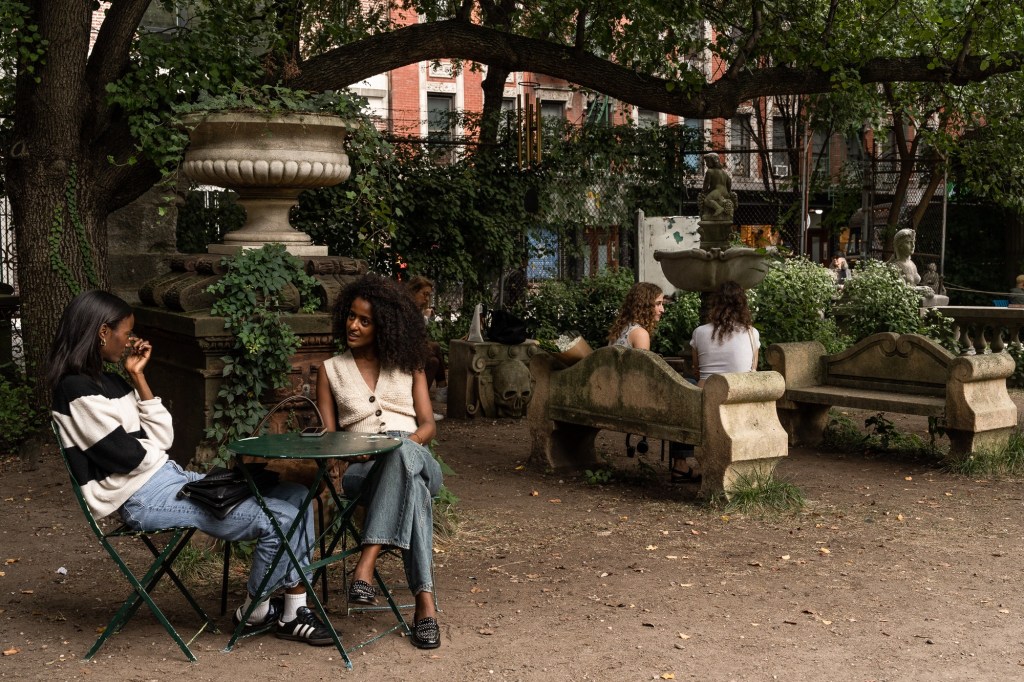
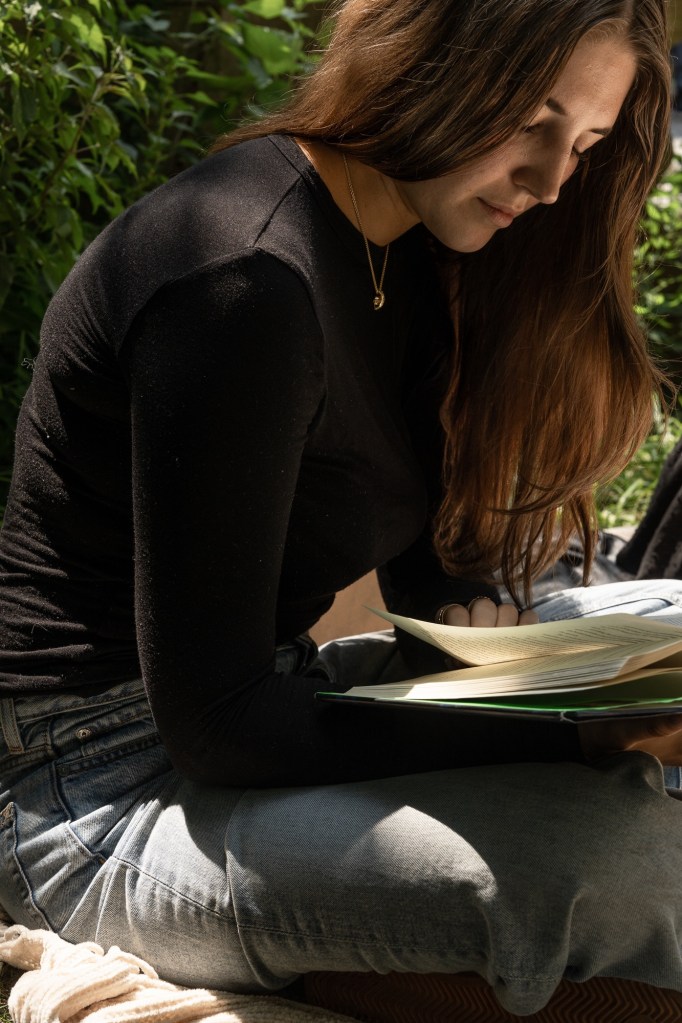
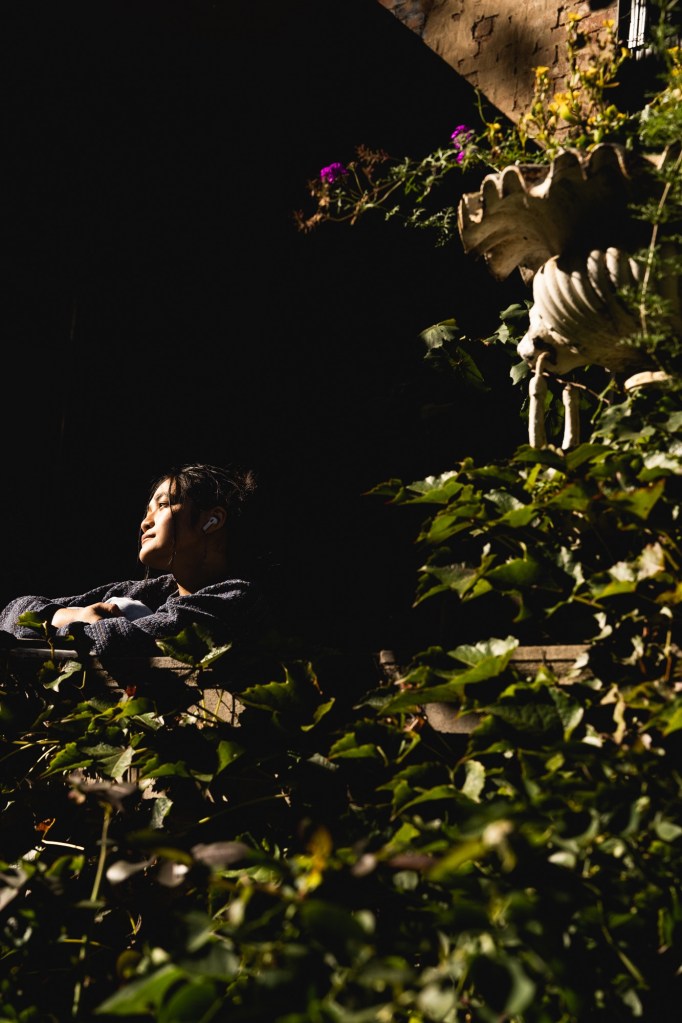
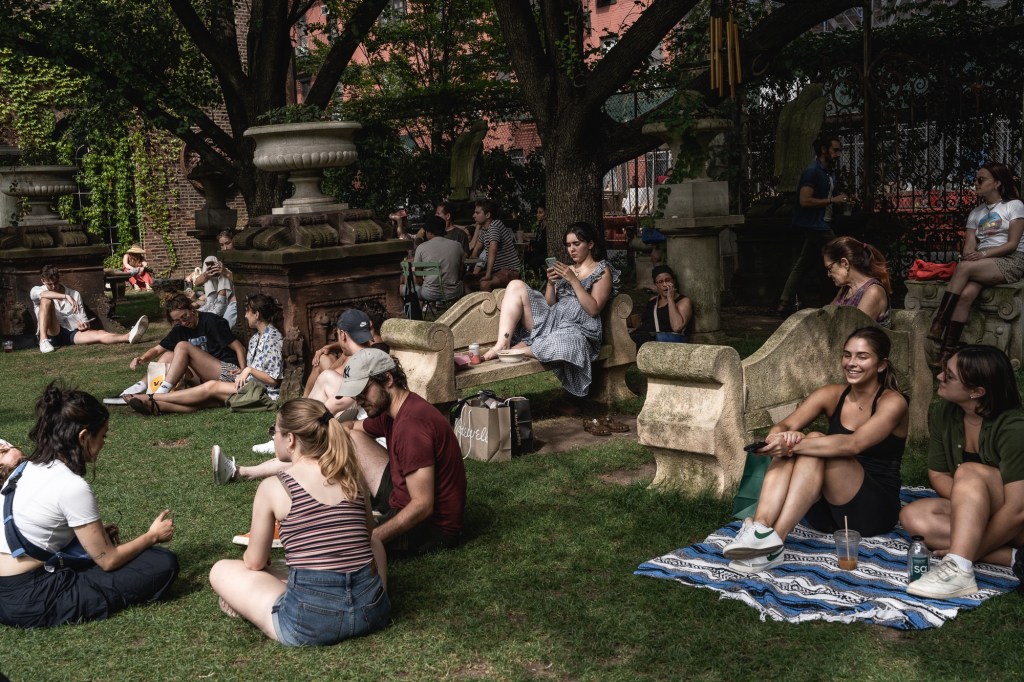
I made it downtown, making a few obligatory street pictures just for the practice. I was uncomfortable and angry and couldn’t manage a decent image. Finding myself on Elizabeth Street, I entered the sculpture garden that I had not visited in nearly two years. In every corner of the garden I saw women….young, middle aged, elderly. Sunbathing, many swapping hardcover books for iPhones, an unusual sight and a subtle signal that I was in an uncommon space.

Some were lost in conversation. I imagine what they are saying, intent on issues I can’t guess at, exchanges private and consuming, sometimes smiling, sometimes thoughtful. A sense of order and tranquility, best friends on a weekday meeting in New York City. Unwritten rules unspoken but clear. No smoking, all dogs on leash, no music or loud talking, a mutual respect without need for enforcement. A safe space for women.

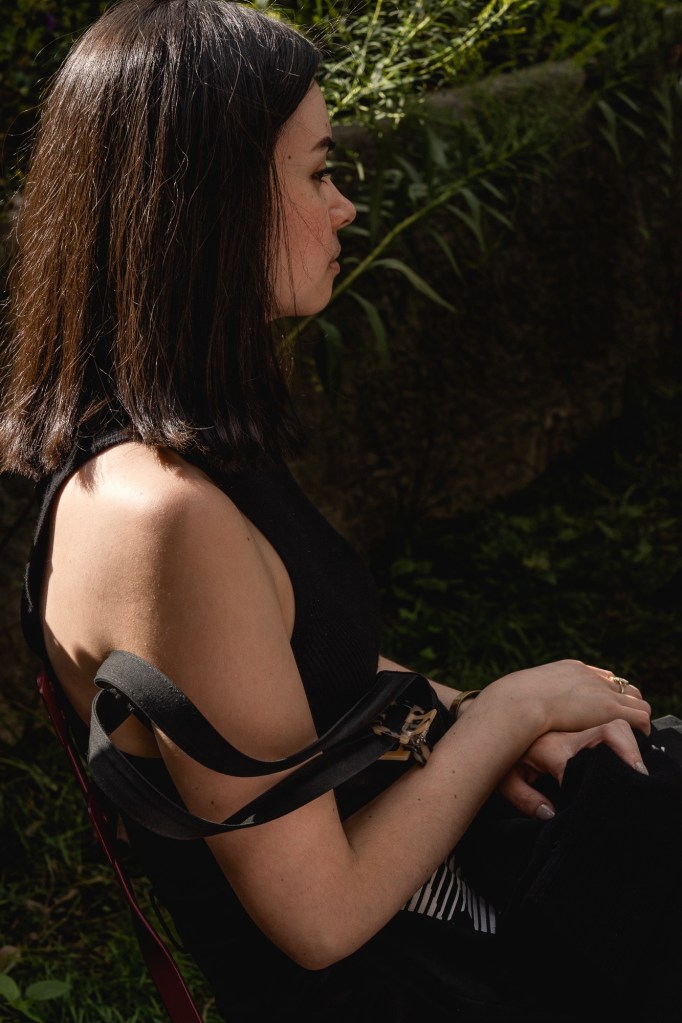
Some are lone figures, most with books but some with paintbrushes or pens, able to find a position in the garden seen but not necessarily observed, solitude found in a public place.

I felt that I had lost time for having misplaced my memory of its existence. How many times had I walked down Mott or Mulberry, forgetting Elizabeth Street, hot and tired, or cold and drained, life in New York City a grind on some days, loss of heart a daily battle? How I would have liked to have found a stone bench in the garden.

I had the vague knowledge that the City of New York had plans to sell the plot of land to a developer, and that the construction would include housing for over 100 senior citizens as well as some people experiencing homelessness. Recently I learned there would also be luxury retail included in the project (after all, it is SoHo). A combination of a socially important development and high end profit opportunity that has galvanized the neighborhood in a years long effort to preserve the garden in a city neighborhood without any other green spaces. By providing the city with alternative construction sites for the project, the conservancy that manages the Elizabeth Street Garden has been fortunate to postpone the potential inevitability of the loss of the garden.

Natalie, left, and Nicole, right

During my absence, the garden has evolved from a quaint respite in Nolita into a sanctuary. A sanctuary for everyone and anyone needing time away from the amplified cadence of life in modern New York City….but most especially, a kind of critical refuge for women. Women who come to the space to exist unguarded for a short period in a city that has lately suffered through grinding repetitions of a distressing storyline: women and those identifying as female harassed, pushed down stairs and in front of oncoming subway trains, punched in the face while out on errands. As I write, in the last few days, an elderly Manhattan woman punched in the head while out walking her dog, and another 62 year old woman pushed onto Brooklyn subway tracks.

From left: Maeve, a volunteer activist with the Elizabeth Street Garden, and friends Nick, Edward and Macey.
Sunday afternoon, July 2022

Since I picked up a camera nine years ago, I have photographed many people living in the streets. My experiences as a single parent suffering in the financial margins opened a world of perception that I hadn’t been able to perceive in my 20’s and 30’s. The dull familiarity of a word like “home” for most people—a word used countless times during the course of a day—has changed, becoming an essential issue for anyone wondering if they will be able to own a home, anyone concerned about the rent, those of us growing older who lie awake at night worrying about a future unanticipated.

There are two sanctuaries in the balance. One alive, and one imagined. A projected refuge for over 100 elderly individuals, a percentage of chronically homeless included. A permanent housing solution for a very lucky few in a city that has hundreds of thousands indexed for affordable housing, section 8, or anything at all outside of a homeless shelter. A tiny minority of beneficiaries when compared to the colossus of desperate place holders endlessly, hopelessly waitlisted. One sanctuary attracting much attention, the beneficiary of the tireless advocacy of a devoted assemblage of activists, celebrities, models and neighborhood regulars. The other sanctuary, a voiceless projection of hope for a selection of people battling homelessness and insecurity. Permanent homes, the first and most important thing, a refuge, a bedroom, a closet. Those who would benefit most from housing on this site remain invisible, justification for their cause absent, the lack of advocacy and visibility detracting from the validity of their claim on the spot. When seen in comparison to those in the garden, their cause becomes imperceptible to a public that has no window into the true nature of housing insecurity, and the devastating reality of the crisis that permanent shelter holds over the heads of hundreds of thousands of New York City residents. A burden that never seems to be lifted, unending and limitless, this spectre of homelessness and disadvantage.

How to measure the weight of importance of each sanctuary? Is it possible to compare the needs of a housed population seeking respite from the pace of life in an affluent neighborhood with the despairing situation of a relatively small set of individuals who are without the basic sanctuary of a room of their own? Green spaces are indispensable to all of us, and mandatory in many European cities. It is Orwellian and unjust to pit quality of life necessities like the Elizabeth Street Garden against the potential construction of a desperately necessary haven that will be a blessing for those fortunate enough to be chosen.

Lepa, left and Joe.

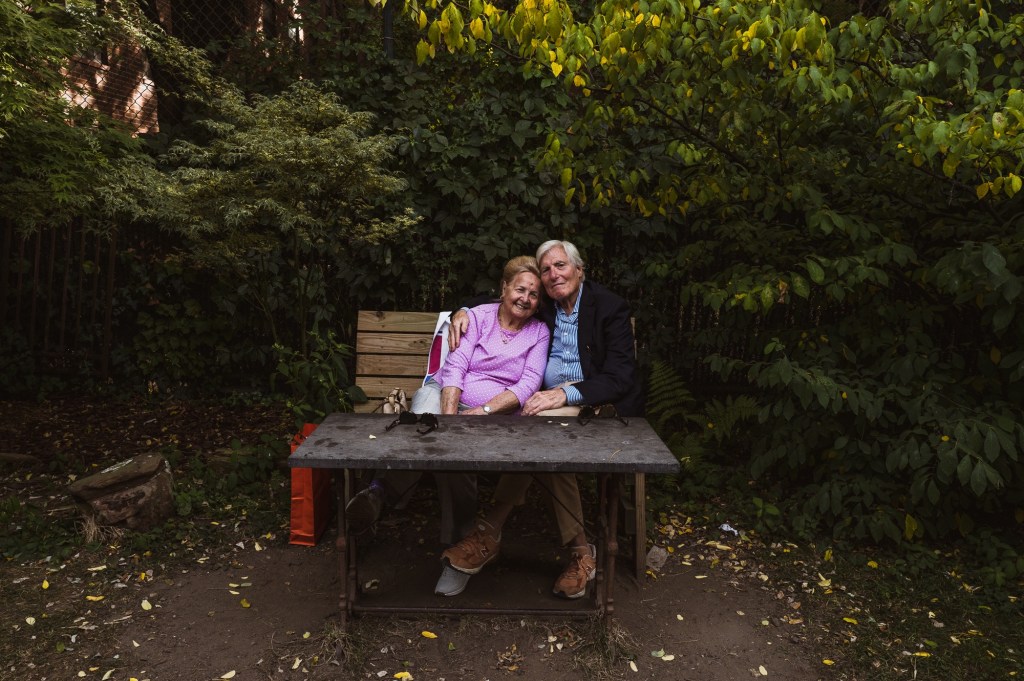
One beautiful afternoon recently I met Lepa, 84, and her husband Joe, 75. They had found a measure of seclusion, away from the more public sections of the garden. Joe graciously pulled up a chair and I sat, happy and relieved to be off my feet for a few minutes. Joe and Lepa are longtime New Yorkers, now living on Chinatown’s Park Row after raising a family on Staten Island. Regular visitors since 2014, they cannot imagine the loss of the cherished green space. Joe is fiercely protective of Lepa, and is her caretaker. They have disavowed the use of public transportation in Manhattan, eliminating the option completely four years ago due to Joe’s anxiety over Lepa’s vulnerability. Love of New York City’s cultural offerings holds them to a place they’ve spent decades in, but fear of its decline has forced other options onto the table. A return to Lepa’s hometown origins in Europe is one thought, a return forced by a steady downturn in their perception of the quality of life in the city. Beloved but changed by events, a city profoundly burdened by its inability to meet its obligation to all people, especially to those for whom support and protection are of critical importance. A commitment pledged, and one most urgent for the endangered.

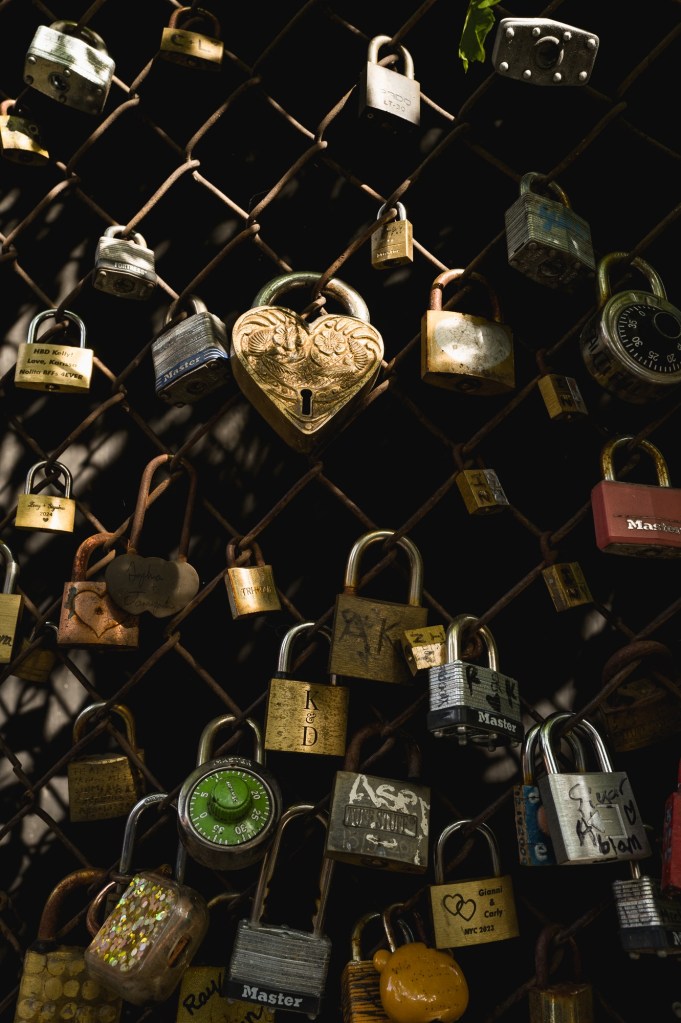
Locks of love, Elizabeth Street Garden

Street Photography in Kensington, Philadelphia

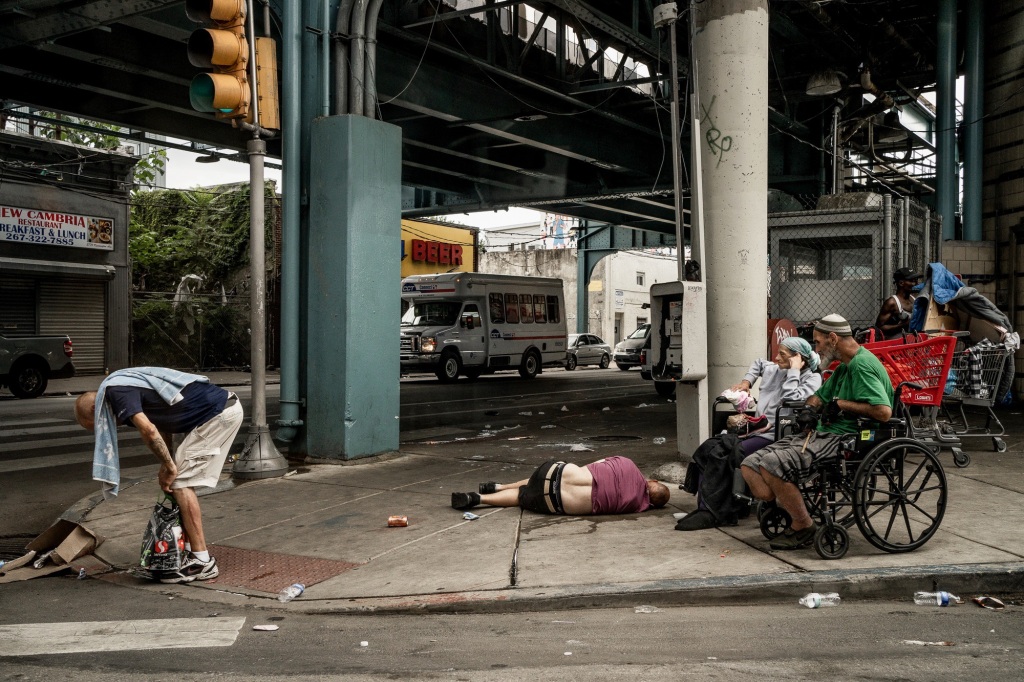
Kensington Avenue and Somerset Street, Kensington
East Tusculum Street and Kensington Avenue
East Gurney Street, Kensington

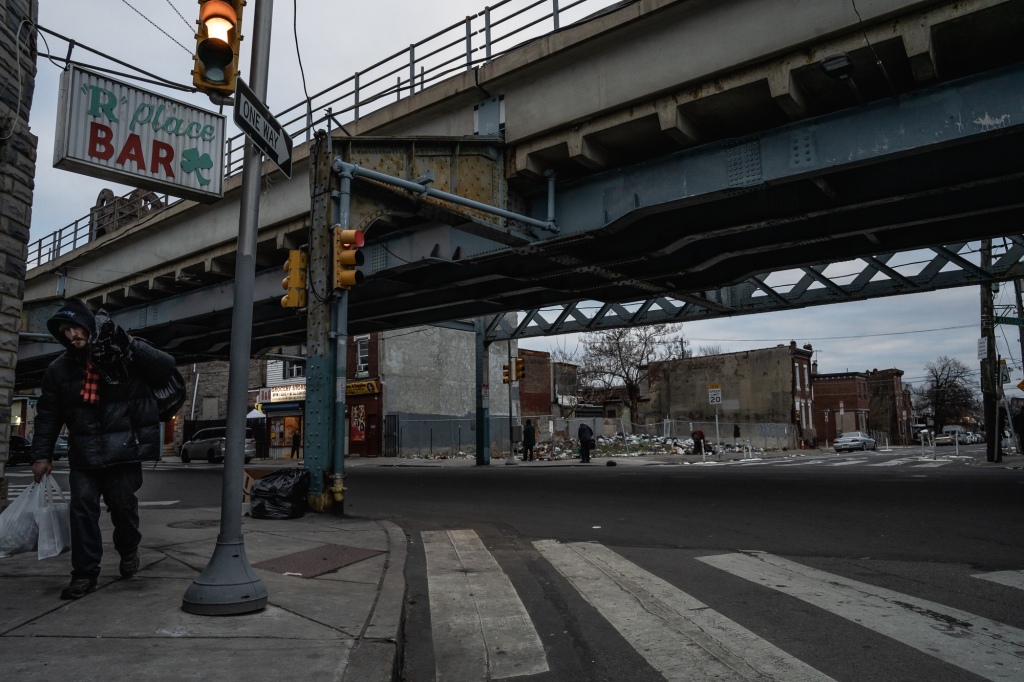
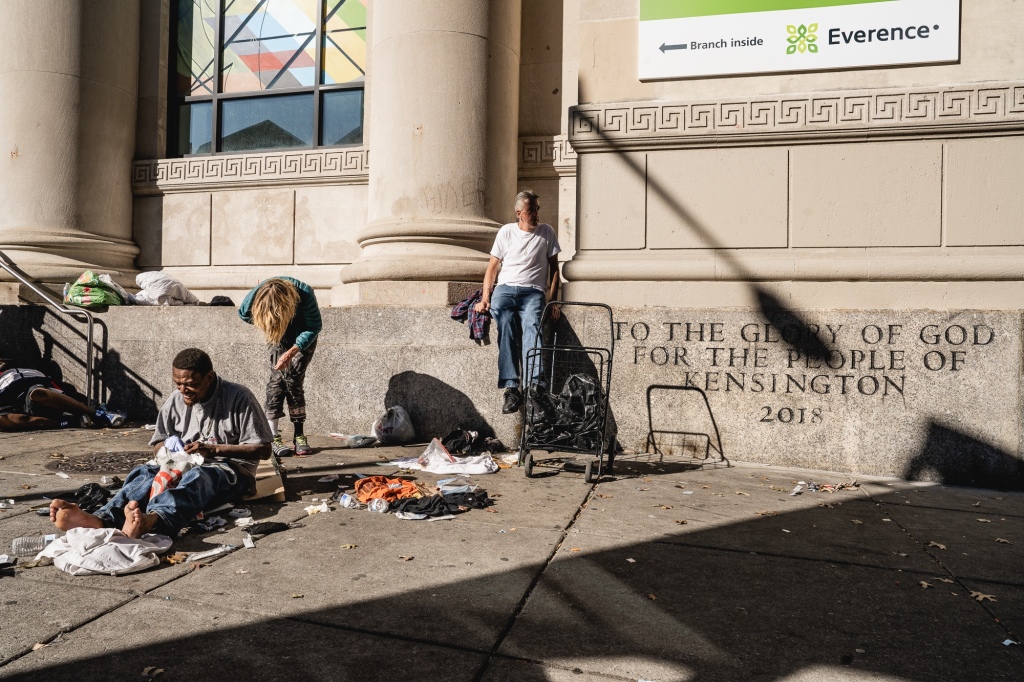
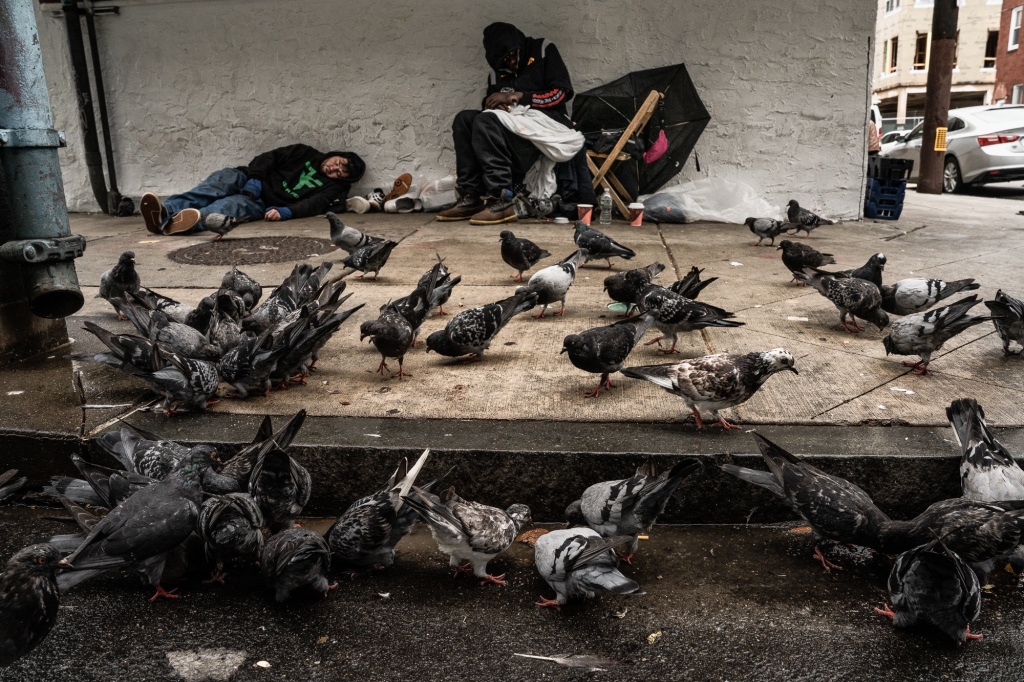
For a long time I felt too uncomfortable to shoot honest street photography in Kensington. I had been photographed several times, pictures of me posted on social media accounts, ugly posts intended to destroy my reputation and ability to move freely and safely in the neighborhood. A couple of harm reduction groups based in Kensington were dedicated to passing very damaging lies about me, outright harassment, utilizing threatening language intended to force me out of the area. Philadelphia is a city that has long been left to its own devices, whole neighborhoods allowed to fashion their own rules and protocols that go against standards of behavior in other places. Kensington is a universe with an entirely different geography, a terrain governed by emotional outbursts, a culture of abuse that has grown and flourished, wound tightly throughout every block, felt in everyday exchanges, palpable in every way and in every moment. And so there is little accountability, and people are able to do the wrong things to each other. One can choose either acceptance or revenge. I have met some incredible people, forceful and selfless, giving time and energy, dedicated to saving those who have entirely lost hope. I wish that I could say that I have met more than a very few beautiful souls on Kensington’s streets, there only to do good, but I cannot in all honesty say that. There are a few that stand out, truly remarkable people—nurses performing wound care, everyday people bringing bagged lunches, religious groups systematically doing legitimate outreach—but the gifted are outnumbered. I have become practiced at recognizing the for profit systems and people, and prefer to remain completely disengaged moving forward.

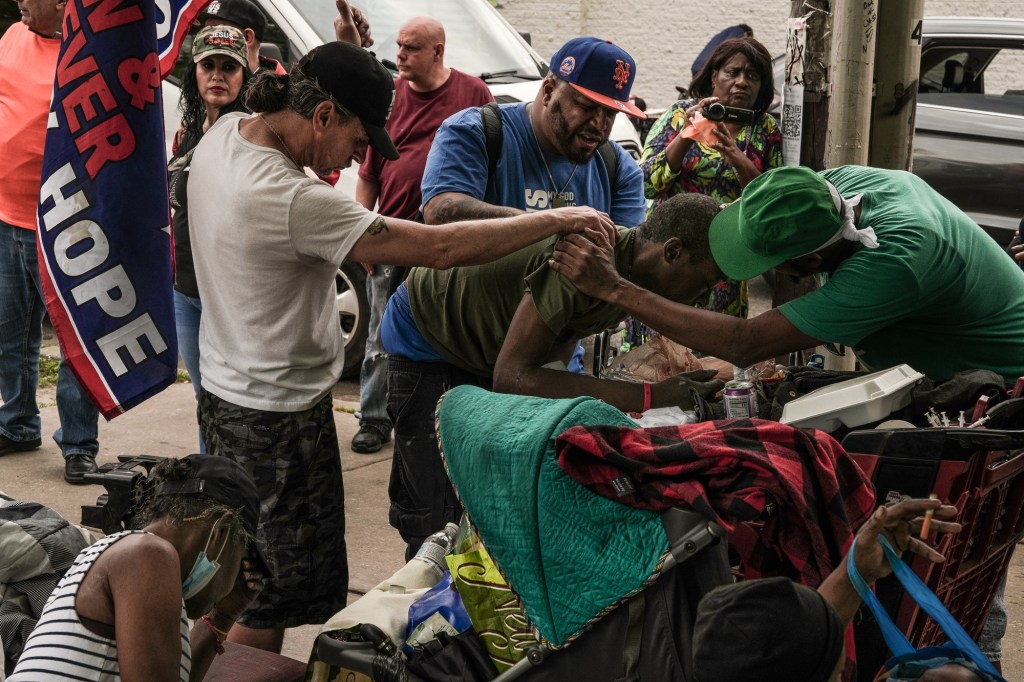
Former addicts work hard on Saturdays to offer prayer and comfort to people in the grip of endless addiction in Kensington
Trying to find people who need a moment of prayer on Kensington Avenue

Heatwave, East Lehigh Avenue, Kensington

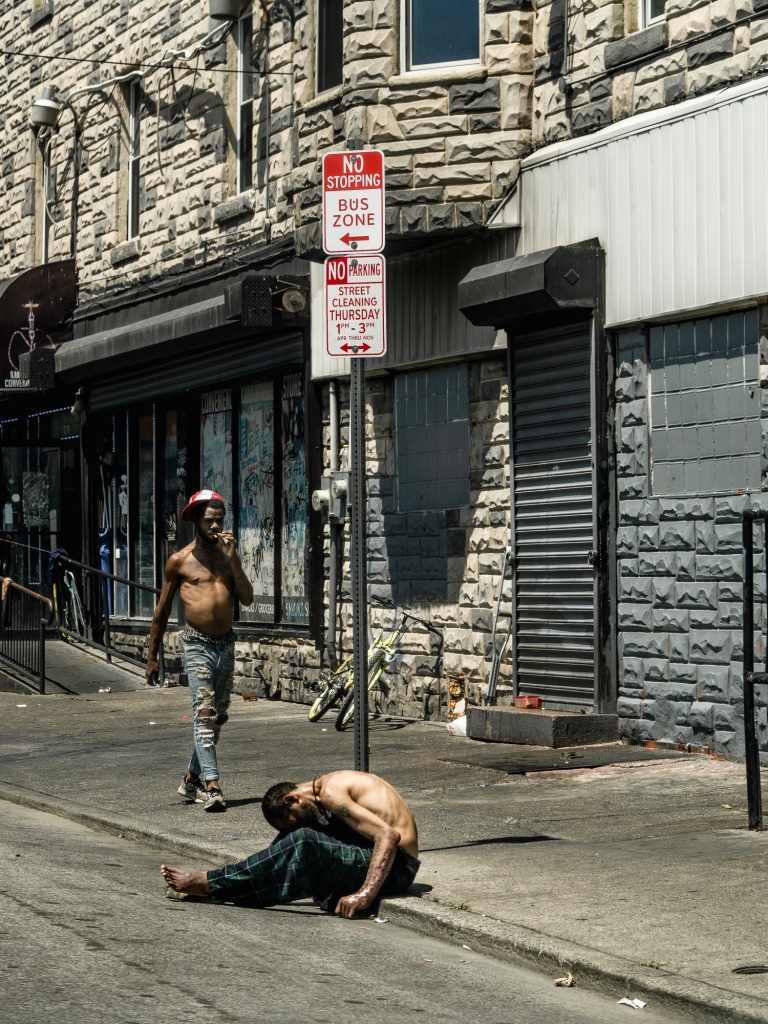
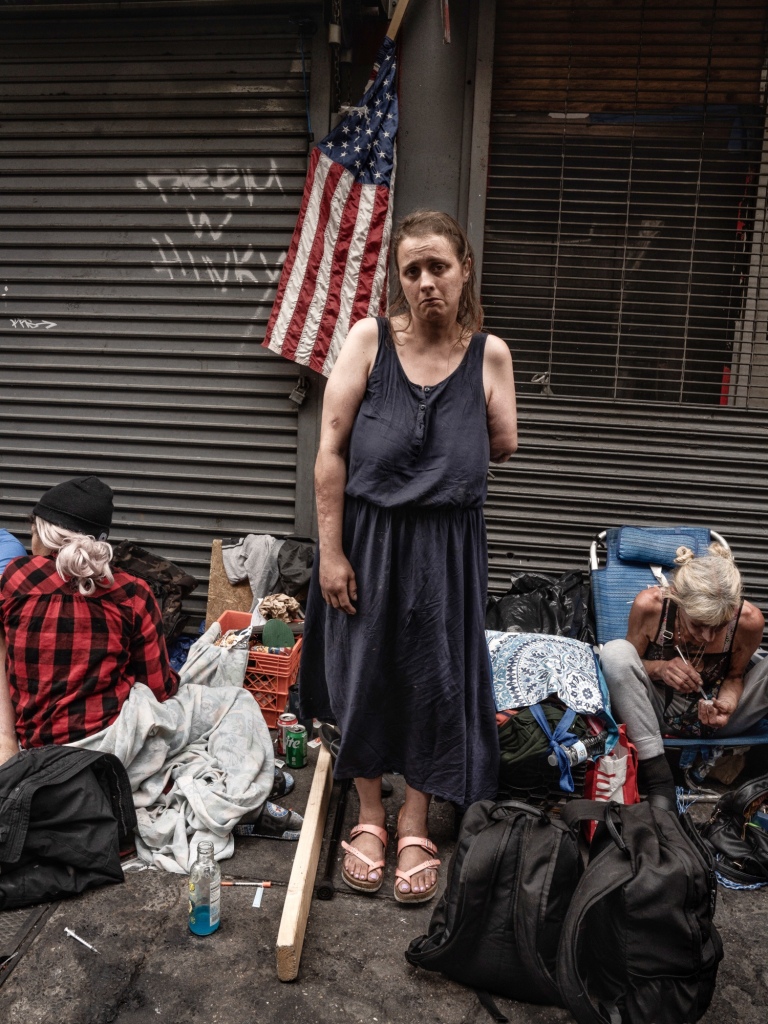
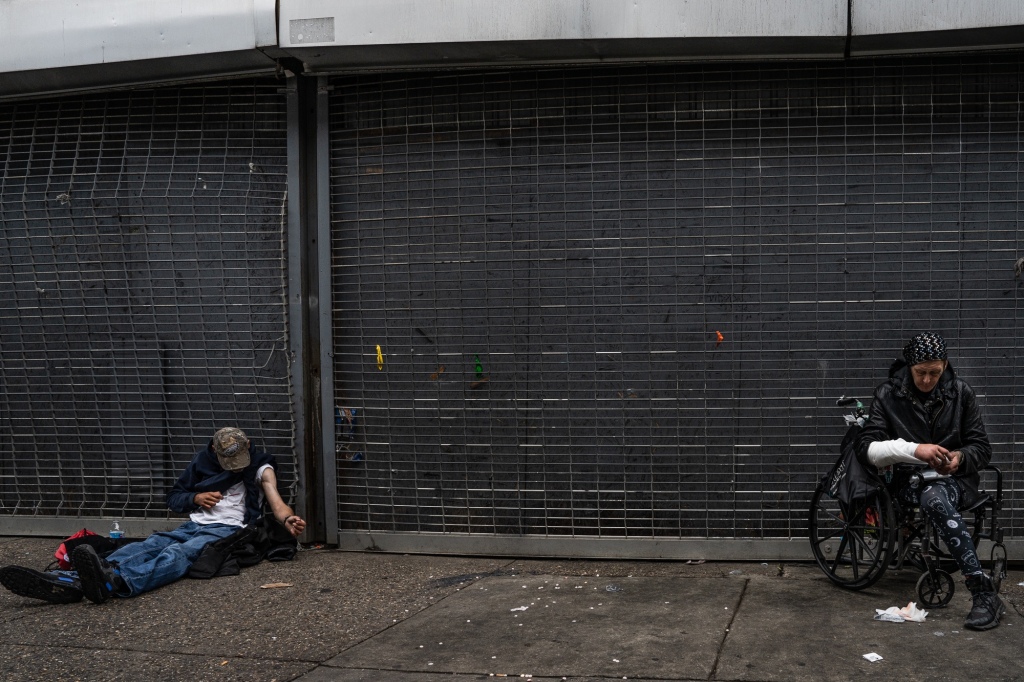
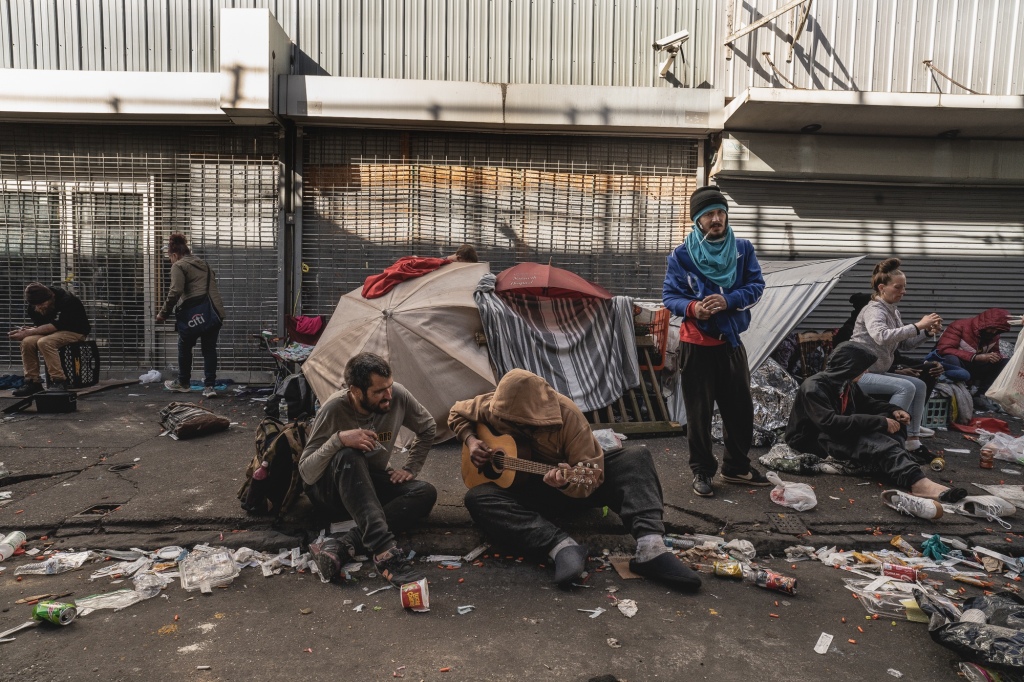
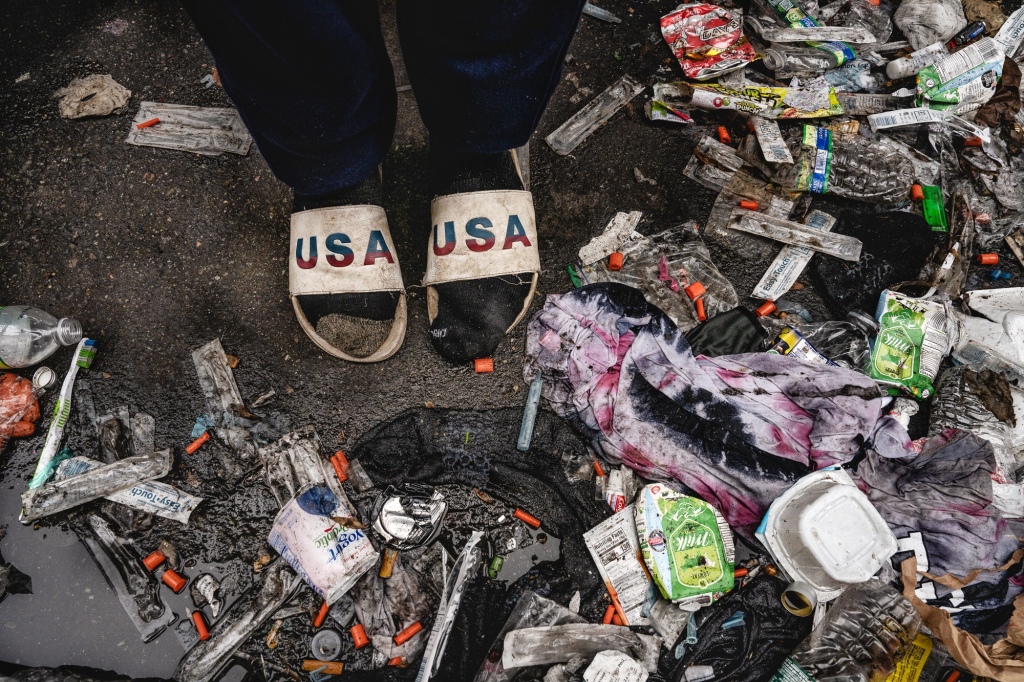
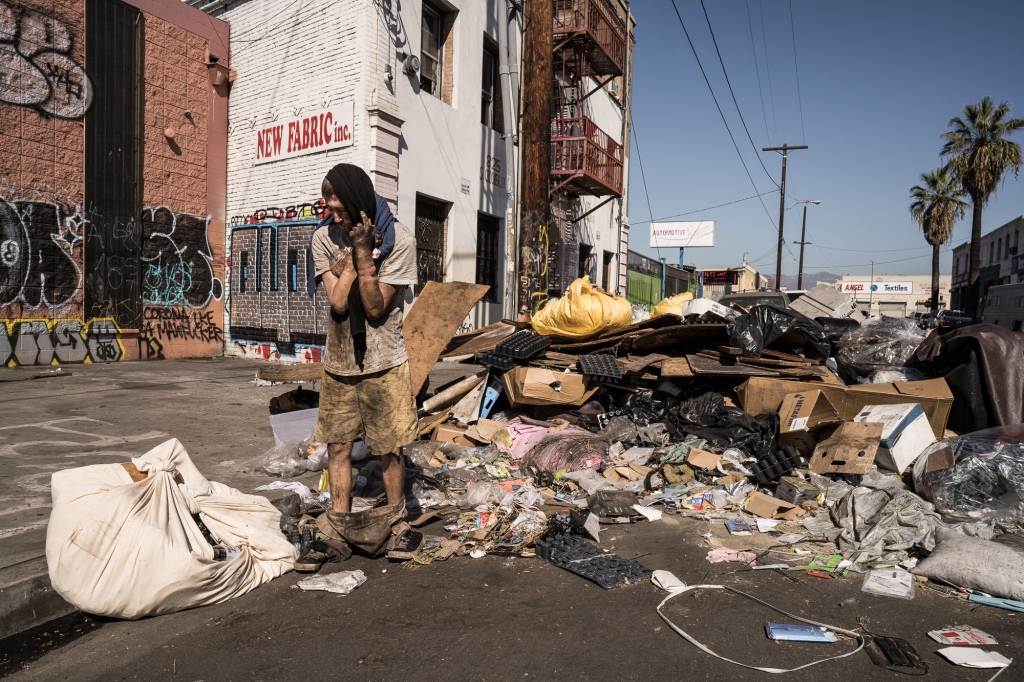
I chose to suppress my instincts for many months. I passed by and through many scenes that told the story of Kensington, and drug use, and addiction, and neglect….and America. This American landscape, pockmarked by smoke shops and tranq wounds, discarded needles and Dunkin’ Donuts bags….an America ravaged by addiction. A hidden landscape, brutal and raw and ugly. A kind of street photography/reportage that runs totally counter to what people have come to expect and admire on social media and in news publications.

Heatwave on Somerset Street near Kensington Avenue. Including images like this one are mandatory if one is to communicate the message of Kensington to an audience
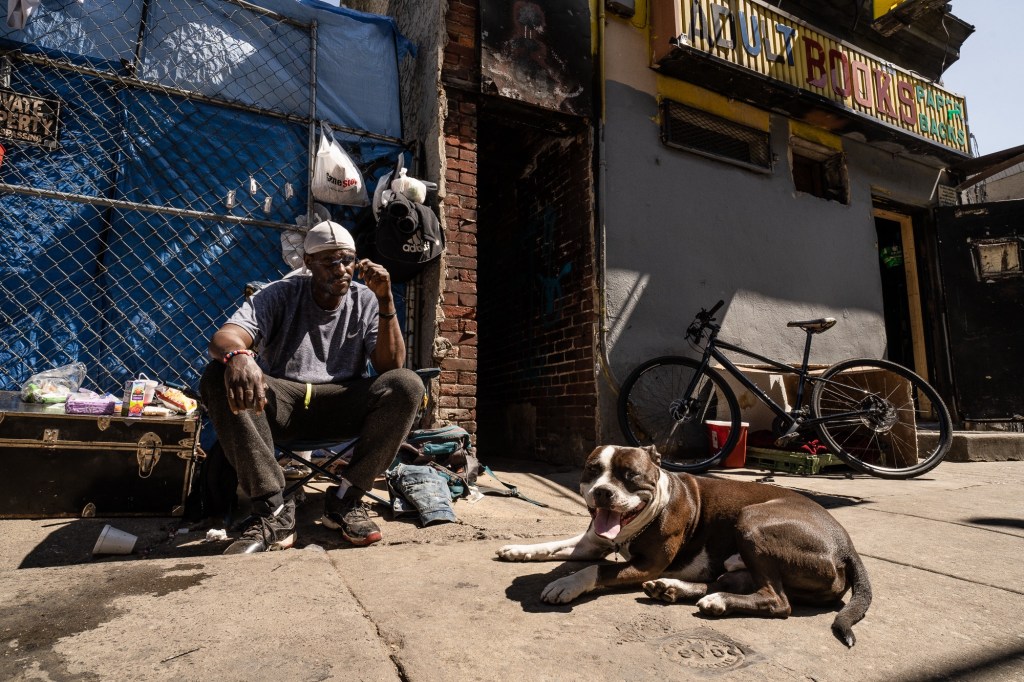
The Adult Books storefront formerly at Hart Lane and Kensington Avenue. It was a trap house, used to sell drugs and provide space for sex workers upstairs. A place that had many secrets, torn down and razed by the city in late 2023.
Close up of Manny, left, and Money in front of Adult Books

I was so disabled by the intense pressure to resist exploitation of any kind, even at the expense of important storytelling, that I lost critical opportunities to record images of destruction, desperation and life in this place in the United States of America that I will never be able to recover. Scenes that will never repeat themselves, sights that should be seen, despite the severity of the disastrous scenes on display.

Still life on B Street
Allegheny Avenue, Kensington
C Street near E. Tusculum Street, Kensington

Not all photographic effort in places like Kensington is effective. Some of it is outright exploitation, unbearably difficult to look at because of poor execution. Technical skills lacking, but more importantly the ability to perceive artful narrative—a critical skill—missing altogether. Where is the line? I asked myself so often that I forgot the point of being there with a camera. There is tremendously damaging cultural pressure at this time to agree with prevailing ideas, to adhere to divisive and incendiary statements or risk being othered, to remain inoffensive to all….or risk being outed, canceled, unemployed.

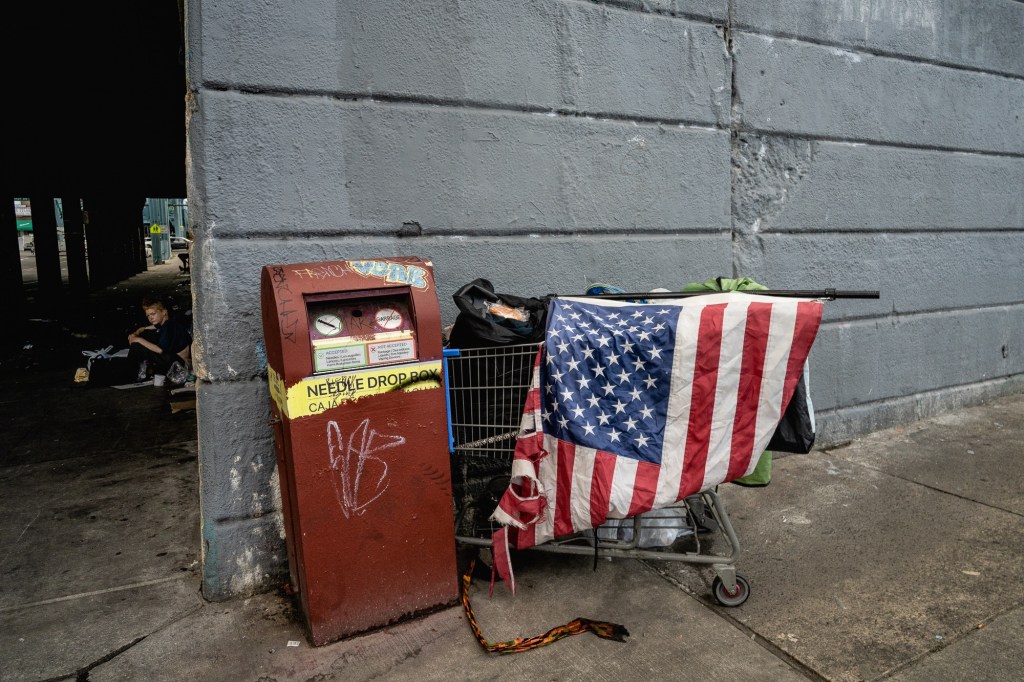
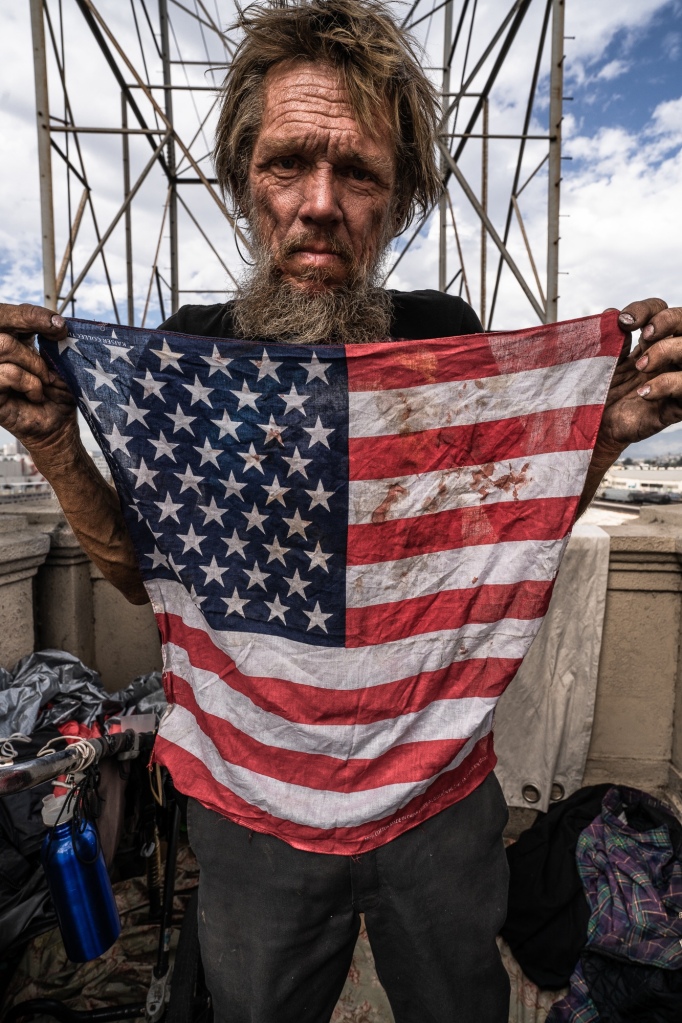
The flag on East Gurney Street tells an American story.
Still missing….Needle/MacPherson Park
Missing flyer, Kensington Avenue

I found myself literally bypassing stories I wanted to tell. Missing women, a constant thread running throughout the undercurrent in Kensington. There one moment, gone the next. Sometimes placed in custody, sometimes just vanished from places they had been adhered to for months. Some images I sat on for a long time, unable to find my voice, having lost it. Sometimes I just didn’t take the picture, resigned to my silence, pressured into overlooking. Editors at major publications uneasy and unable to confront my images and what they mean….so many negative influences, working together to create a new feeling of unworthiness. I let this cultural failing seal my mouth shut, for fear of damaging my ability to have my work seen more widely. What I didn’t understand was that just by photographing what was in my heart, what I felt was truthful and compelling and non negotiable had already effectively distanced me from the mainstream editors and gatekeepers who routinely shun risk.

Pacific Street….this young woman was always in the area, until she wasn’t. I asked about her, and was once told that she had suddenly disappeared, while another source thought that she’d been arrested. Have not seen her since October 2023, having inhabited Pacific Street for over a year.

I witnessed situations that had to remain in memory, because pulling out a camera would have been suicidal. These images, the ones that I did not photograph with my camera, are some of my strongest and most meaningful. Some of the loneliest images in my mind are the ones of young women, ceaselessly walking the lengths of Kensington Avenue. They are vulnerable and very difficult to ethically photograph as they appear on the street.

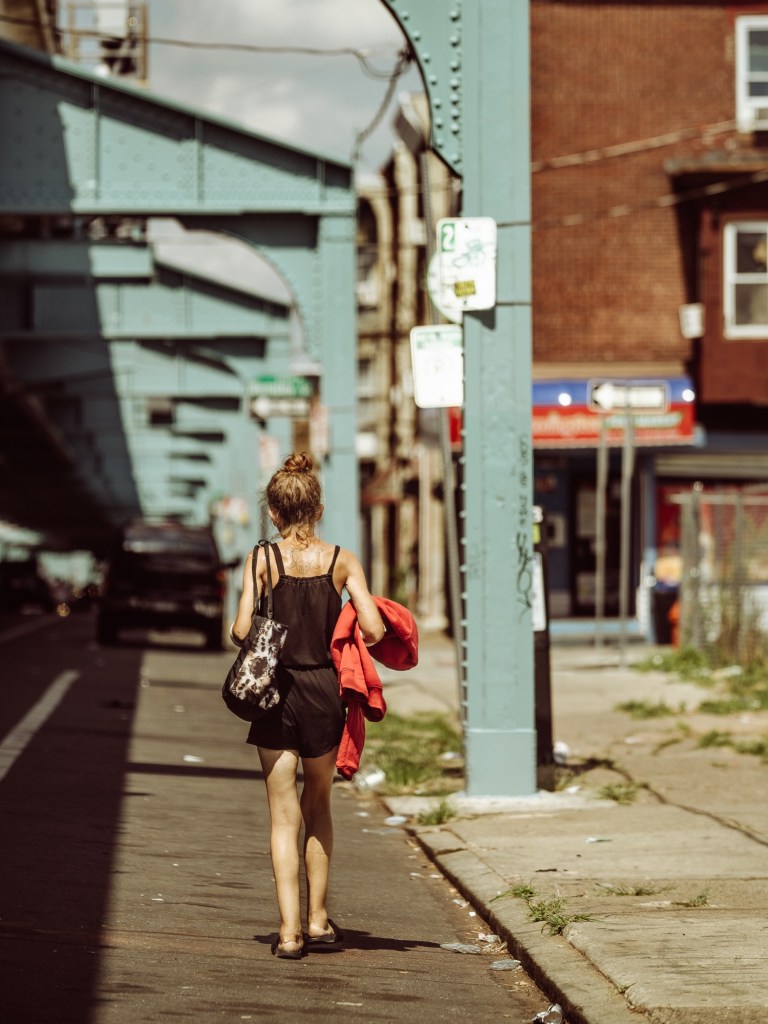
Young woman walks Kensington Avenue. Women often disappear from the streets.
Pacific Street, Kensington…women often can be seen in this area. Street photography in particular parts of Kensington is very hard to execute meaningfully. The line between telling the story of Kensington and taking a damaging photograph is very hard to navigate.

Missing

I will never forget the woman, walking near G Street and E. Schiller Street, holding in outstretched arms what appeared to be a dead infant. Face down, wearing a light blue striped onesie, arms and legs dangled lifeless, absent any kind of muscle tension or sign of life. A tragically emaciated child that was in shockingly poor condition. As she walked, she wailed angrily at a man crossing the street in front of my car, who fearfully shouted back while trying to get as far away from her and the baby as possible. I thought about a picture….but that was a risk that I was unwilling to take on the tight, narrow one way streets that offered a slim chance of a speedy exit when the camera caused sudden chaos. That’s just one memory of an image, an image that would be tough to place even on my website if I’d been able to pull off a picture and escape with my life. I wondered how many secrets are out there in broad daylight, residing only in memory, in places like Kensington.

B Street, Kensington

In the end I have come to the realization that public spaces are public. For a photographer that means that if someone is able to photograph a festival or street scene in any city in the world where photography is legal, then it’s acceptable no matter the geographical region within that legal zone. I have come to understand that Kensington is a place that must be photographed. Doing it well is a challenge that I admit I’m not always able to execute….I do my best every time. But I find that Kensington has existed outside the law for so long that photography and photographers are easily demonized because we are threatening exposure. I believe that if people are in public, and they are a part of an unfolding story of any kind, with disaster and calamity holding a deeper significance, then photography is well within the often disputed boundaries of fair practice. Many people are exploiting the neighborhood and the unusual freedom in the area to do anything at all in public, no matter how harsh, or cruel, or sad, or objectionable, or outright unlawful. How can this exploitation be somehow placed off limits to the curious? Because if I am witnessing a place that does what it pleases, when it pleases, then who is really qualified to say which exploitation is the most egregious, theirs or mine?

Drug corner near Emerald and Sterner Streets
Emerald Street Corner

Calling Me

F Street, Kensington, Philadelphia

I give out my phone number. Not every day, and not to everyone I photograph or meet in Kensington. When I interact with someone that I think is especially vulnerable, or if they want me to send them pictures I have made with them, I give them my contact information so that I can text an image. Sometimes I have sent pictures via text to people’s parents, and then a parent of someone on the streets of Kensington will have my mobile number.

Kensington Avenue

Giving out my personal phone number is a risk, but I often share it because I have always felt that it’s more important for me to be able to be within reach if someone is hungry, or needs a ride to the Emergency Department, or wants to talk. I’ve been doing this since I became a photographer, and in 8 years it’s only been abused a couple of times. I understand that it’s not an obligation as a documentary photographer….but shouldn’t it be? If I insert myself into a person’s sphere, one sometimes full of extreme emotion or calamity or precariousness, isn’t it fair to say that it’s morally correct to be available for a select group, one that I have taken care to document and advocate for? It becomes more of a responsibility than a typical 9-5 work day entails. Vulnerable people, in horrible situations. But in Kensington giving my contact information has allowed people to think that I am someone that is potentially a source of gain. Stuff in my car, in my camera bag, on my person.

Cambria Street

When is it acceptable to consider a portrait of a life a never-to-be-repeated encounter whose responsibility ends when the last photo is taken? These images are sometimes burned into my soul. Learning to recognize that the experience that I have of the images and situations depicted and the intensity of the moments I am witness to does not mean that those experiences of mine—or the images created— reflect the deepest realities and truths of those that are in the images. At what point and with whom do you set a personal boundary? The sense of obligation that I often feel to try to offer aid to those in my images has in fact put me in jeopardy. But it has taken me a year and a half to fully understand how easy it is for trust to be abused, and how dangerous the simple act of texting a picture can be. Because Kensington is a very particular place, and I have learned that it has its own protocols and standards of behavior. One unwritten but universally recognized social norm on the streets of Kensington is that if you unintentionally open a door of any kind that could be used to exploit personal vulnerability—and acts of kindness or donation unfortunately fall into that category—one can be placed in a potentially dangerous situation down the line. Establishing trust with small gestures is only possible if both people have a similar understanding and respect for the delicacy inherent in the process of investing in someone else. Because gaining the trust necessary to be given contact information is itself a hustle that can pay off in the future.

I’ve been set up several times in Kensington, by people I have gotten to know. Using my phone number to call or text to express urgency in order to lure me to a meeting place, where my equipment can be stolen.

Recent communication

Face to face meeting requests, especially when the sender is messaging or calling me at night, are an immediate warning. When someone expresses an urgency that they know has the potential to worry me, or to galvanize me to race to Kensington to act as savior is nearly always an attempt to bait me into showing up somewhere. And these requests can come from people that have been given food, or mobile phones, or other kinds of support and help. At first, I felt disappointment. Not in the person trying to deceive me, but in myself for being such an obvious mark. I realized that whatever conversation I had had with people was subterfuge. And I felt embarrassed. This has happened too often, and I’ve been forced to overlook these failings in those who I have documented in order to move on and keep documenting. A set up can be an act of violence or theft that could be awfully hard for me to come back from. And I have learned that the level of criminality and dysfunction in a population that I have at times grossly misunderstood and underestimated can sometimes rise to a level of seriously manipulative, destructive and sociopathic behavior. I have been deceived by this masquerade at times, mistaking it for a kind of hapless, childlike state of vulnerability, casualties of the ravages of accidental drug addiction and resulting trauma experienced while living on the streets. Which is sometimes the case….but not always. And it can be very hard—nearly impossible at times—to detect when there is deception or masquerade. An inability to recognize the signs of manipulation can be life altering.

In some places, any act of kindness can signal vulnerability, and even the smallest of gifts can invite exploitation. It’s a kind of entitlement that develops when even the act of saying thank you becomes a rarity and is a product of very low expectations and too many gifts given.

Learning when to believe in someone, and to resist the urge to blame everyone for the sins of a few is a most important skill. Walking away from a person who needs belief and support would be an unjustifiable tragedy.

Shame

Graphic Content

Joseph, East Cambria and Ormes, Kensington
Broken, Cambria Street, Kensington

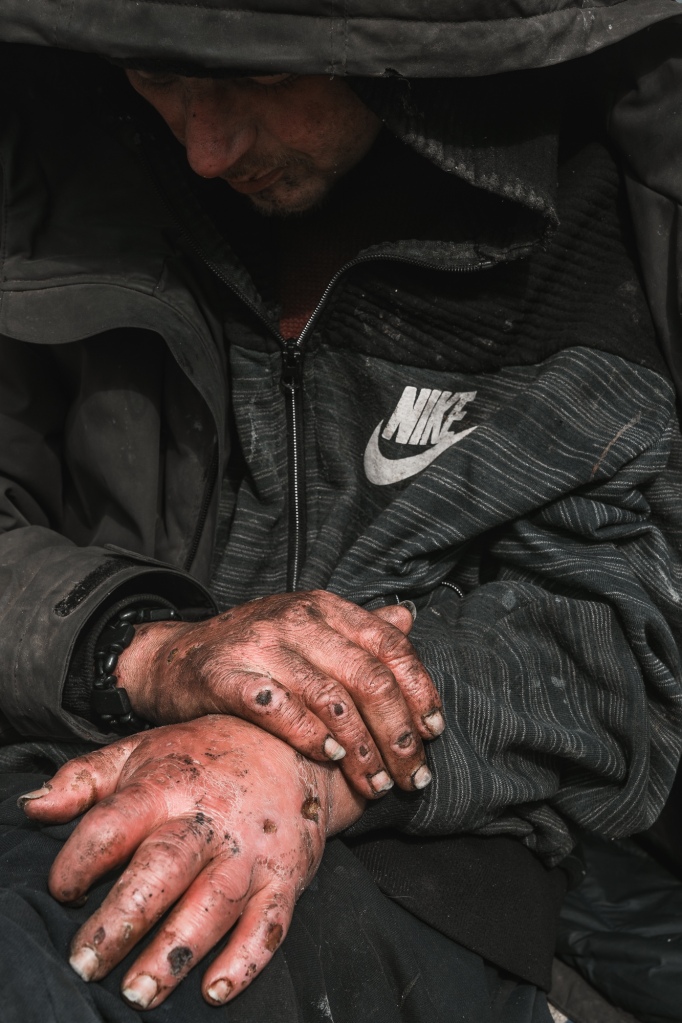
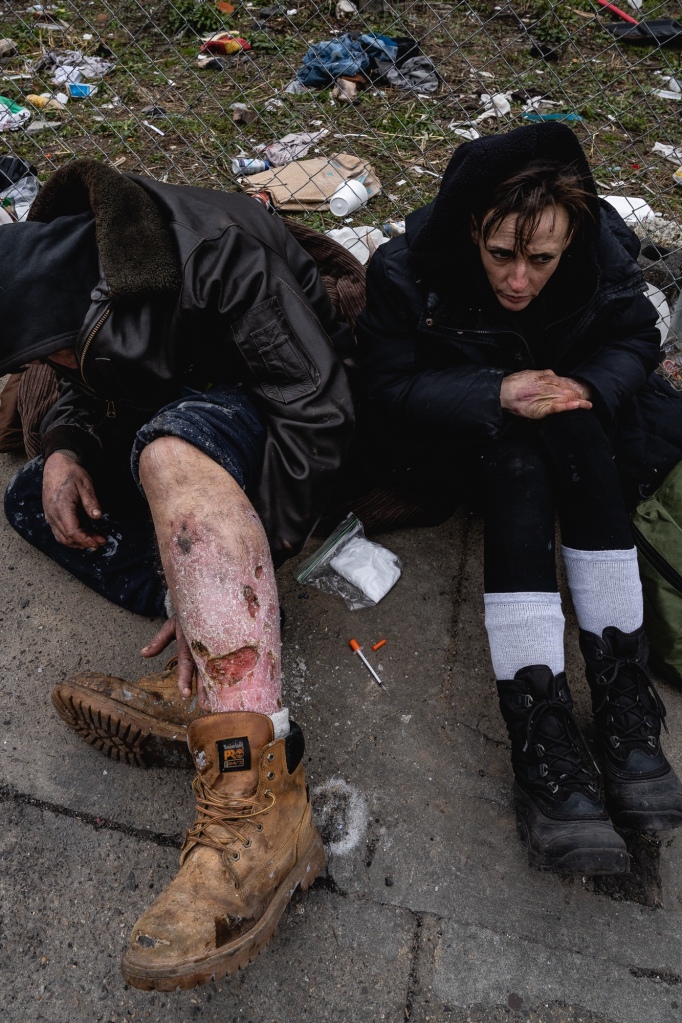
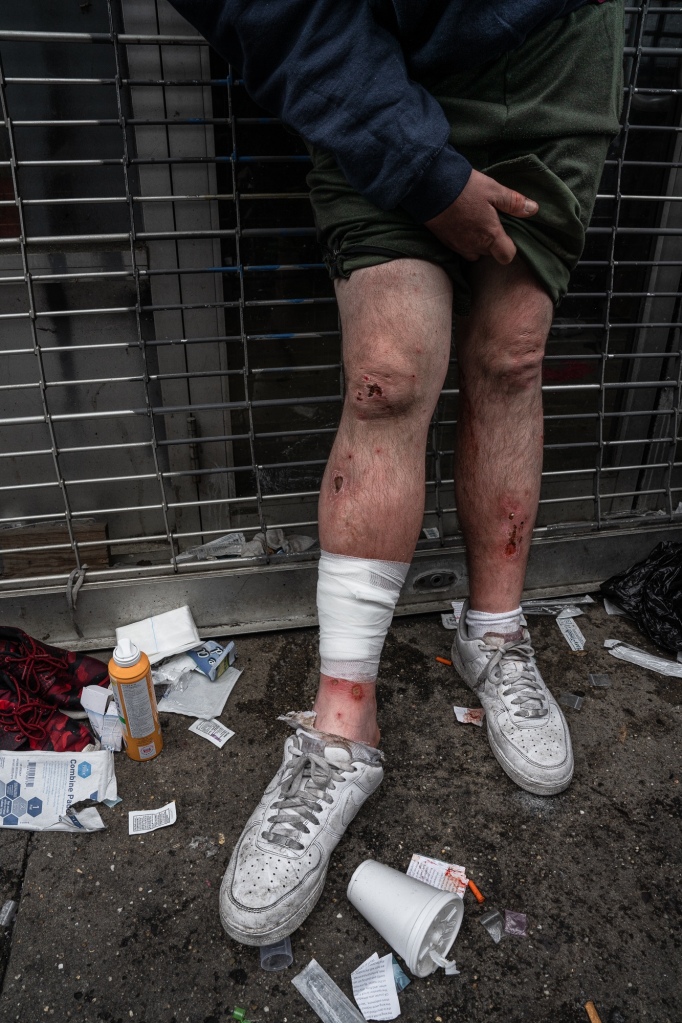
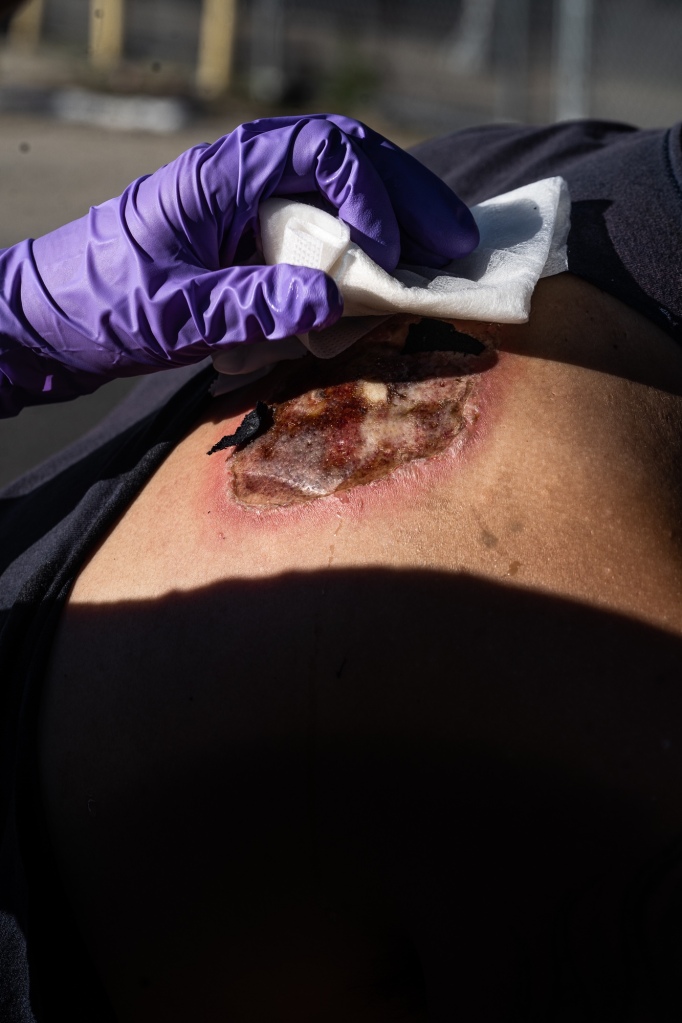
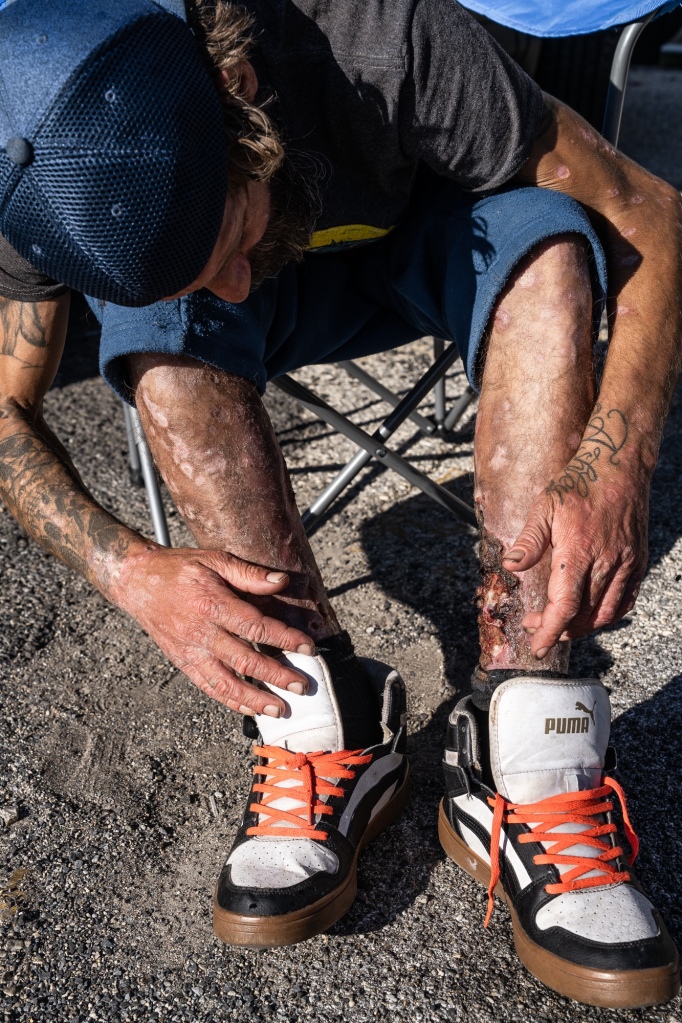
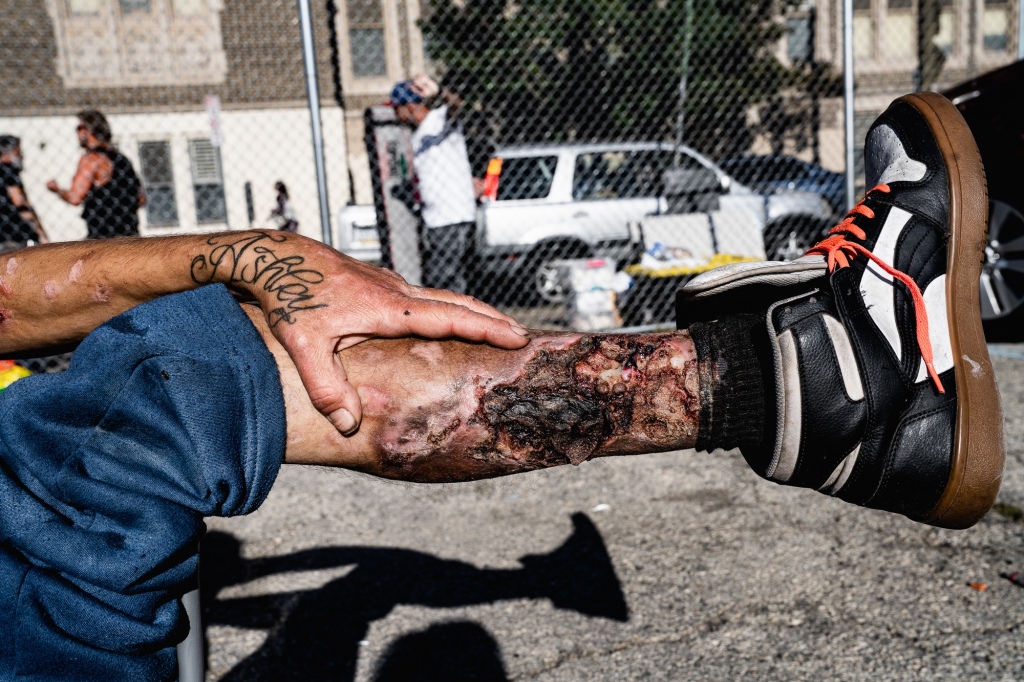
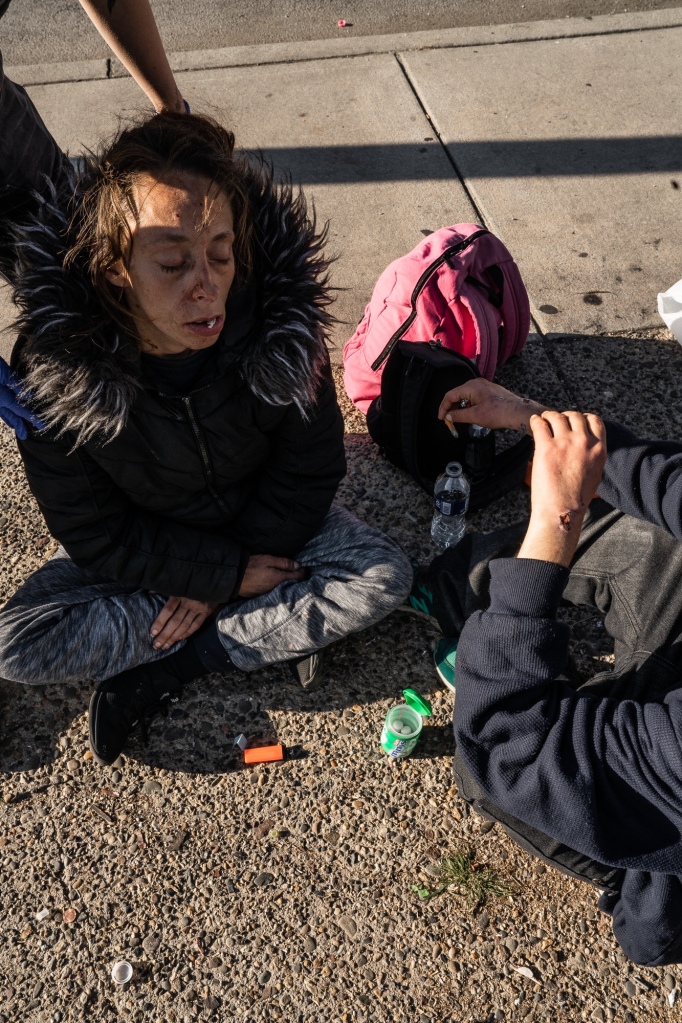
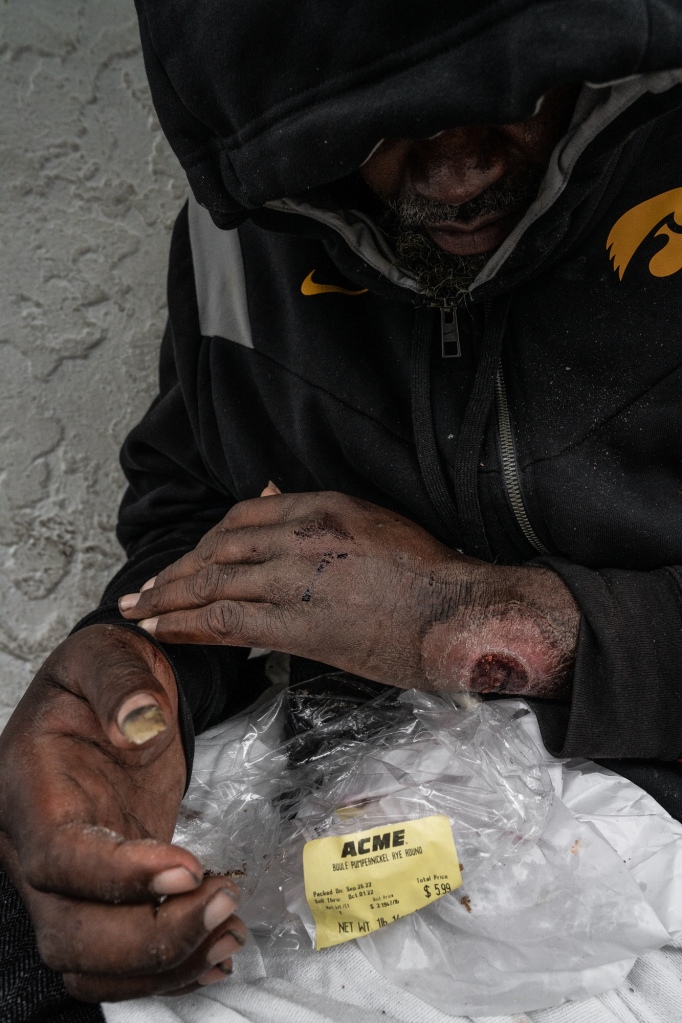
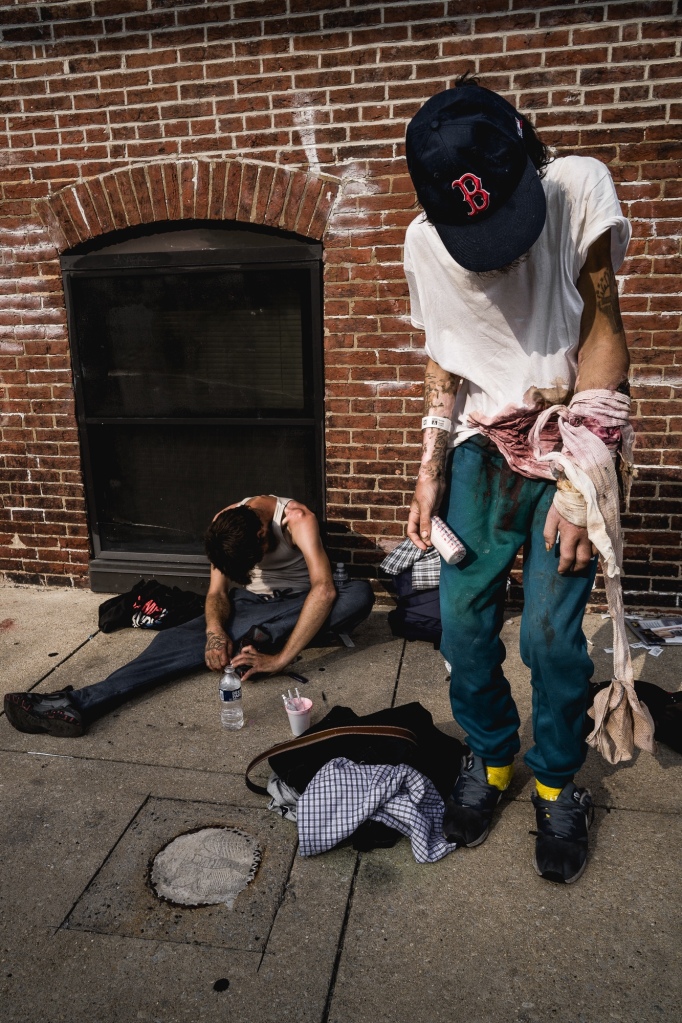
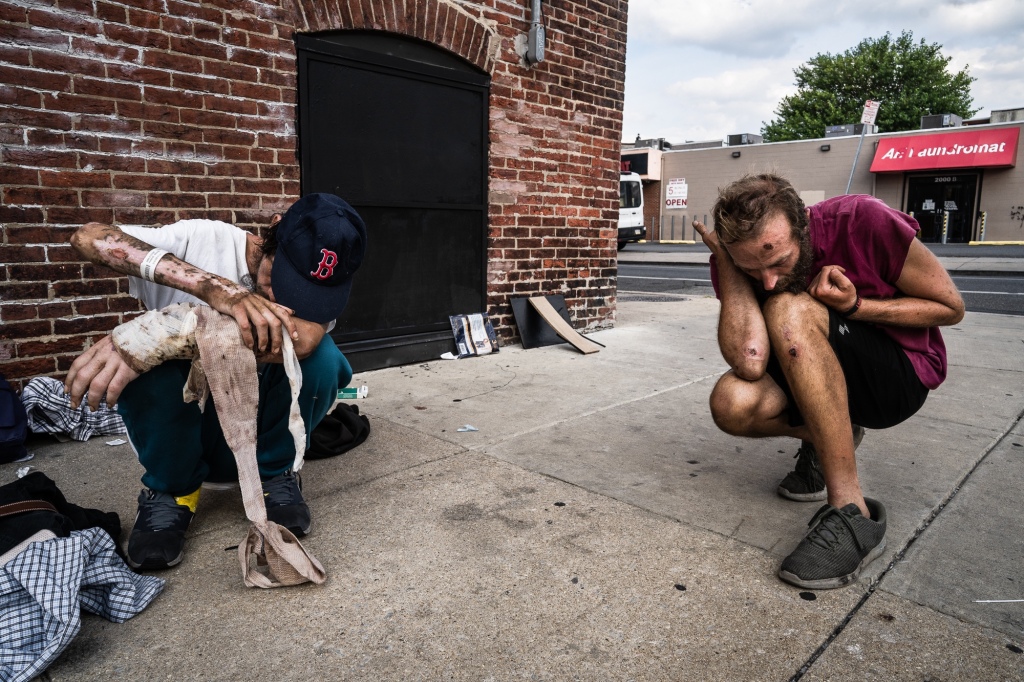
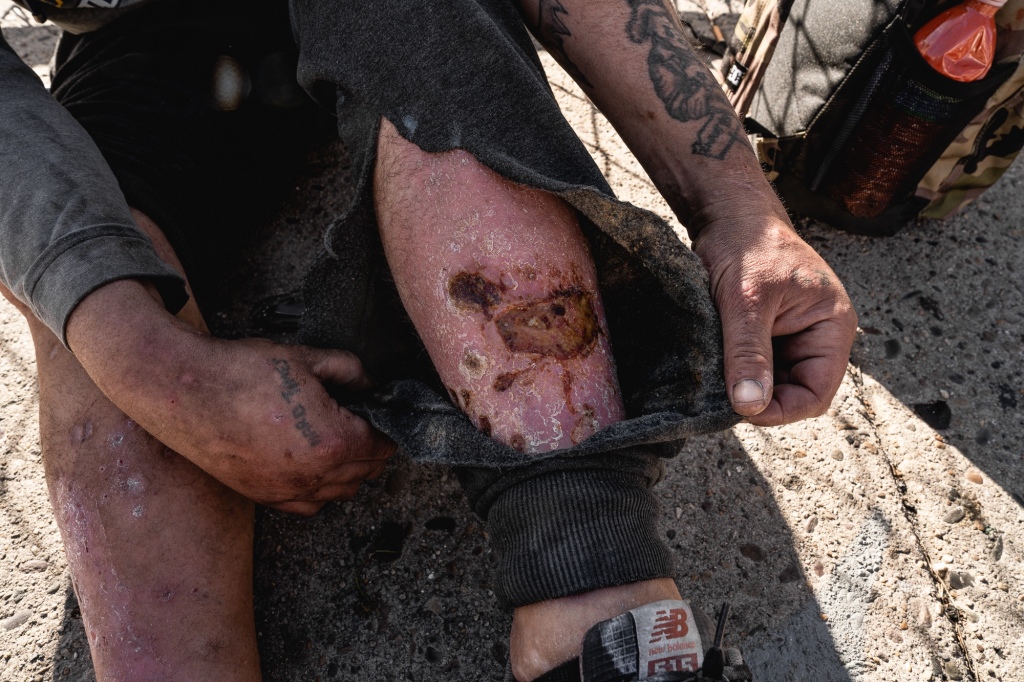
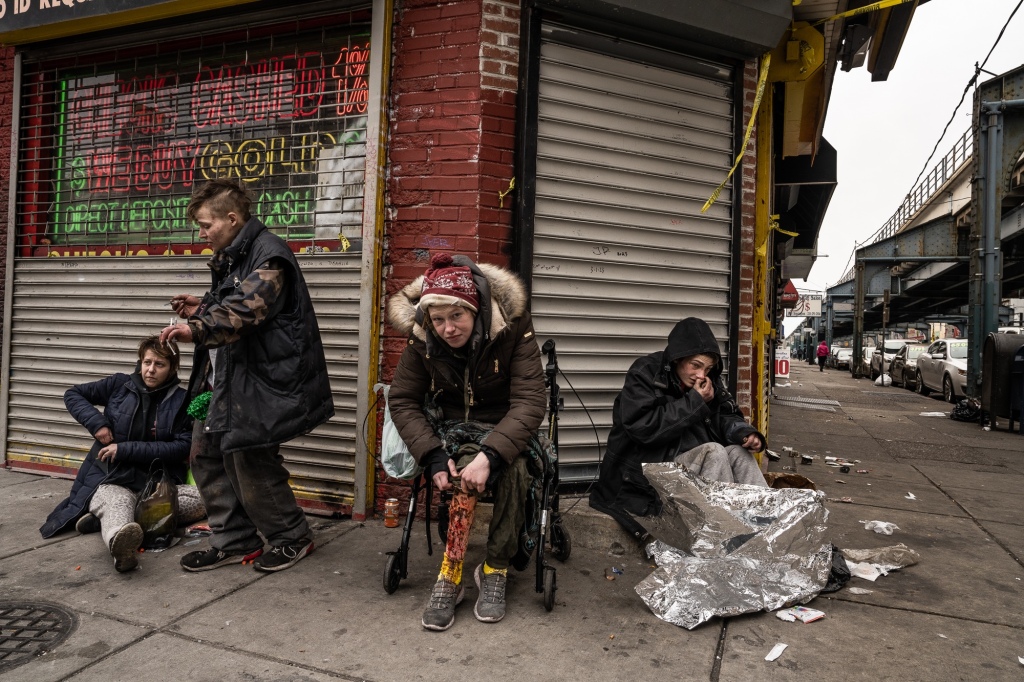
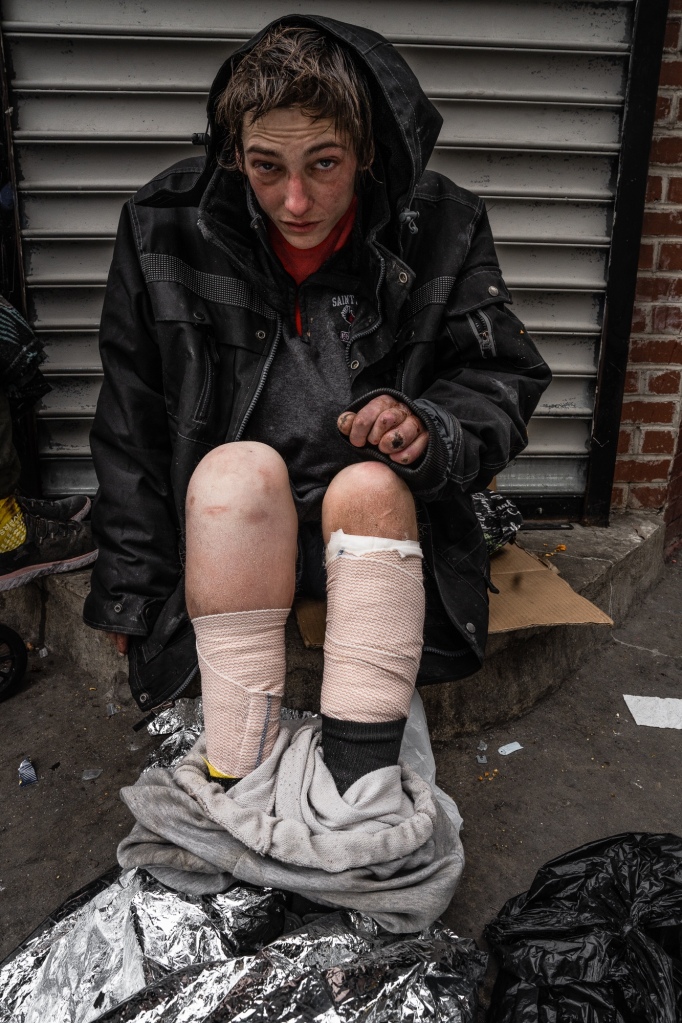
Tranq wounds smell bad. That means people who have lesions advanced enough to have a noticeable odor suffer more than just the physical pain of having them, or the emotional reaction to seeing them on one’s body. In warmer weather, they are often on public display without the camouflage of winter clothing. The shock of the injury can be very hard to look at, especially when there’s deep tissue exposure. Kensington and the surrounding area is rough, and not known for being a sensitive, warm place to call home. Gun violence, gang activity, random assaults, and daily cruelties leveled at the population of people on the street is the context in which those with tranq wounds exist.

Mike with his clothes, Cambria Street, Kensington
Struggling to remove clothes from the surface of the wound before complete adherence occurs as a result of the weeping tissue.

Entering a store with a wound can be more than just a casual act. It’s an ordeal, an event to be endured if someone in the store, customer or employee, decides to verbally attack the person with the wound. If the odor is noticeable, it gets very embarrassing and difficult to make simple purchases, to obtain necessities in the drugstore or food items before getting thrown out. Riding the subway can result in anger and cruelly abusive words, turning a quick ride into an experience of humiliation.

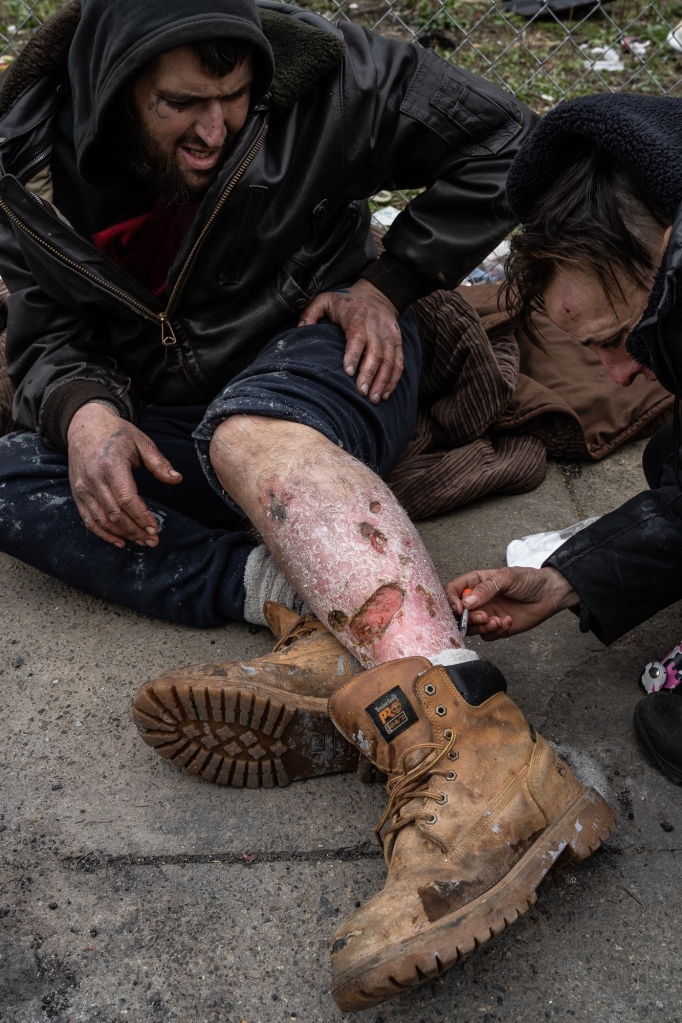
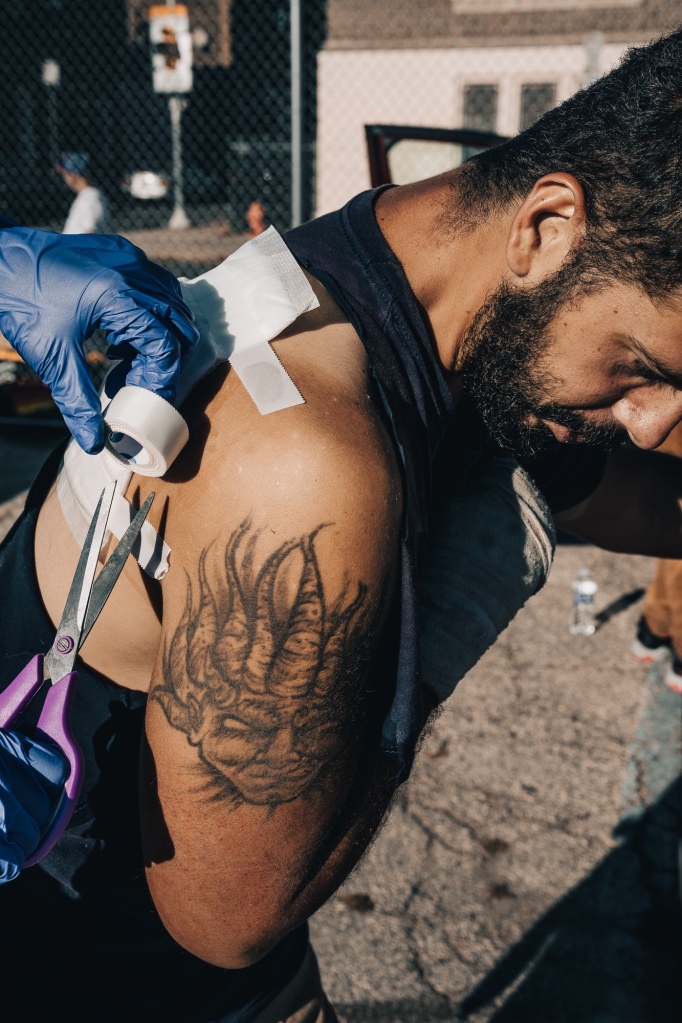
T uses a needle to exfoliate Mike’s skin and remove dead cells. Some people do not like to have their wounds covered, especially if they don’t feel that the practitioner understands how to properly care for the lesions. People pick at the injury, scratch….and sometimes allow others to help on the street in ways that can cause further damage.

Not everyone is eager to have their wounds dressed, bandaged or otherwise looked after. I’m told that sometimes things get much worse, and more fluid builds up when air cannot reach the skin and tissues. Some people have had ineffective wraps or felt that those trying to care for the wounds don’t really possess the skill to address the situation medically, despite having the best intentions. The lesions are tricky to care for, and require expertise to effectively treat. The real problem is the need to get well….a trip to the hospital means that a person cannot use during time spent in the emergency room. This is huge, and a massive roadblock, insurmountable for most. Additionally, hospital nurses and doctors can display insensitivity and create more stress, as well as not practice addiction management techniques. With all of this on his mind, Mike’s contemplation of a trip to get desperately needed care resulted in dismissal of the option. Even the fear of sepsis wasn’t enough to propel Mike into the hospital on this overcast Saturday afternoon.

Whose fault is the wound? Assigning blame is irrelevant. The cause, Xylazine, is in the drug supply. The cessation of use is not an option for most…no amount of straight, factual talk with the most heartfelt delivery will change the trajectory of someone else’s life. Just listening is sometimes proactive, even though it feels totally insufficient. I’m recording my observations and what other people relate to me about their experience. The complexities of addiction and choice and self determination aren’t part of my work. The obvious penalties of addiction unfortunately in these situations often include being the subject of ridicule or recklessly insensitive behavior. People in this intractable addiction trap on the street in Kensington often depend on the help they receive from strangers, strangers who sometimes become familiar and dependable, and strangers who appear only once to give a quick gift. Outreach personnel, private individuals who show up in the neighborhood with food, well intentioned church groups, or an empathetic troupe of friends who get together and head to Kensington to give out cups of coffee, or a few cookies with hot chocolate on a brutally cold day.

From a distance….the dilemma and pain of Mike’s situation blending into the mundane in this view of Kensington.

Tranq.

Graphic Content

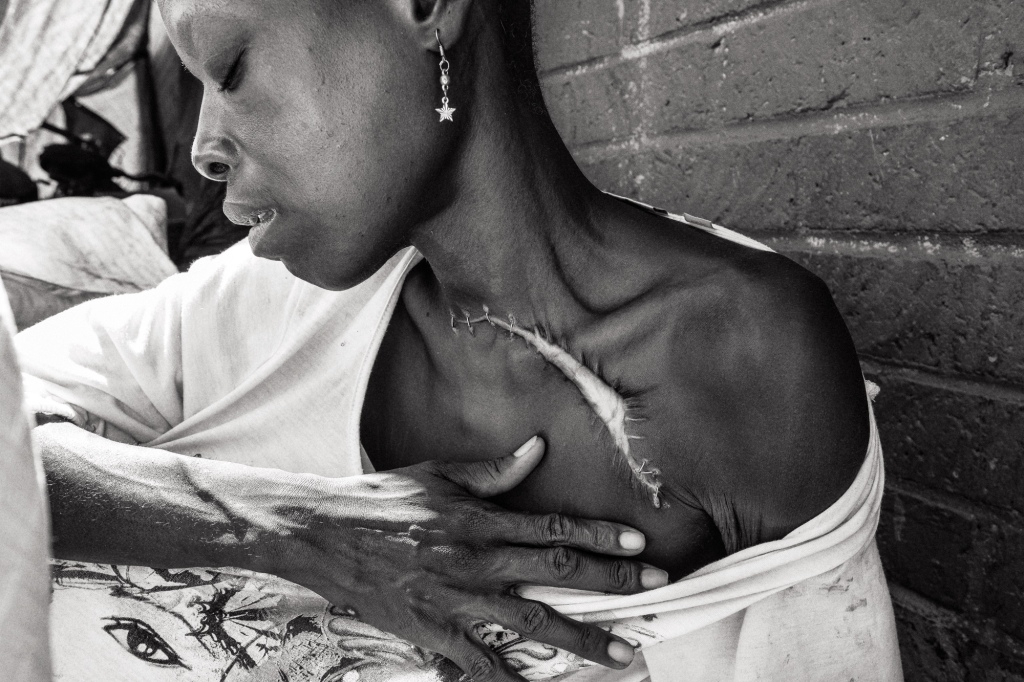
Alexandra, Kensington Avenue, Philadelphia….Alexandra’s arm was lost to a medically necessary amputation resulting from a devastating Tranq wound.

Kari, Cambria Street, Kensington, Philadelphia

I returned to Philadelphia on September 20, 2022. I had been in New York City since 2017, and before that, Southern California, Austin, Texas and very briefly in Charleston, South Carolina. Living in different places during various phases of my life as a single parent, trying to find a place to call home where I actually felt at peace with my son. I had fled Philadelphia originally because of bad memories growing up, and rough, Philly-style experiences on the street that made me think twice about raising a small child in the City of Brotherly Love. During the time I was in New York City, I spent a month in the Summer of 2018 in Philadelphia. One day I visited an area located on the fringes of Kensington. I had read of the neighborhood, and I knew that I needed to see it for myself. I photographed a few people on the outskirts, near York Street and Aramingo Avenue. But I didn’t have the courage to head in to the heart of the chaos….so I did not. I didn’t go, and I regretted not having done so. I spent four years thinking about Philadelphia. My life in New York finally came to an end after I had Covid. I decided that whatever time I had left was going to be spent elsewhere, and the very first place I needed to be in was Kensington.

Kensington and Allegheny Avenue
Margie, Clearfield and Emerald Street, Kensington, Philadelphia
Kensington Avenue and E. Schiller Street, Kensington
C, Allegheny Avenue, Kensington, Philadelphia

As soon as I arrived in Kensington I began to learn about the ravages of Xylazine, or Tranq, as it’s nicknamed, combined with fentanyl. Read: https://time.com/6164652/xylazine-overdose-crisis/

The necrotic lesions can show up anywhere on the body, far from the injection site. Xylazine causes vasoconstriction, which interrupts blood supply to the skin. The lesions are not always infected, but when infection does occur it can be catastrophic, sometimes resistant bacteria strains that colonize deep tissue and even bone, resulting in amputation and disfigurement.

Brooke, on Kensington Avenue near Clearfield Street

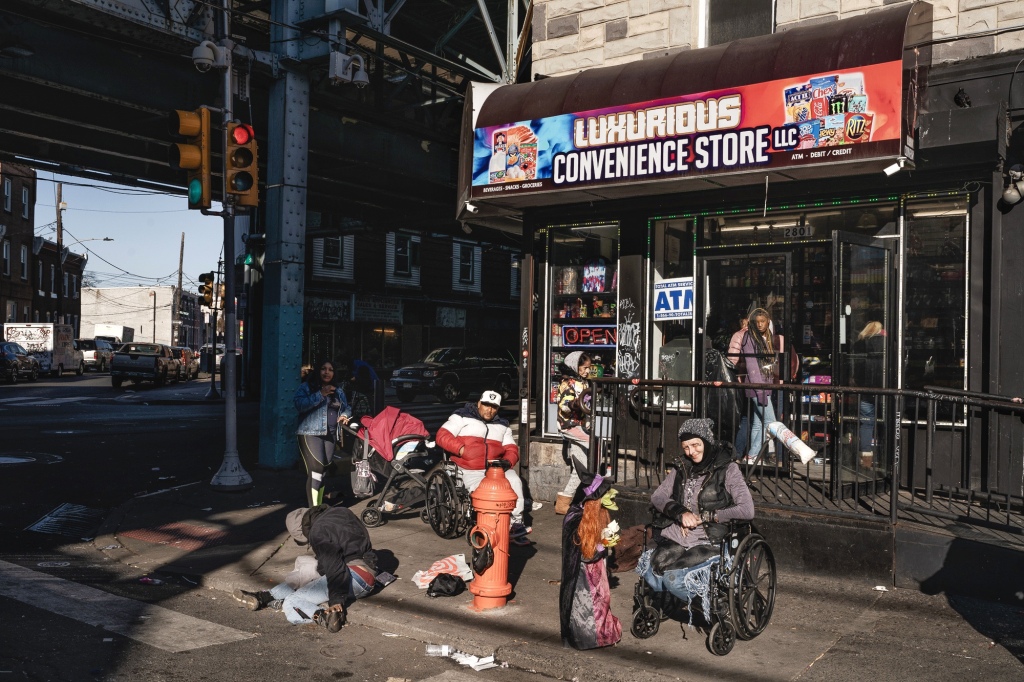
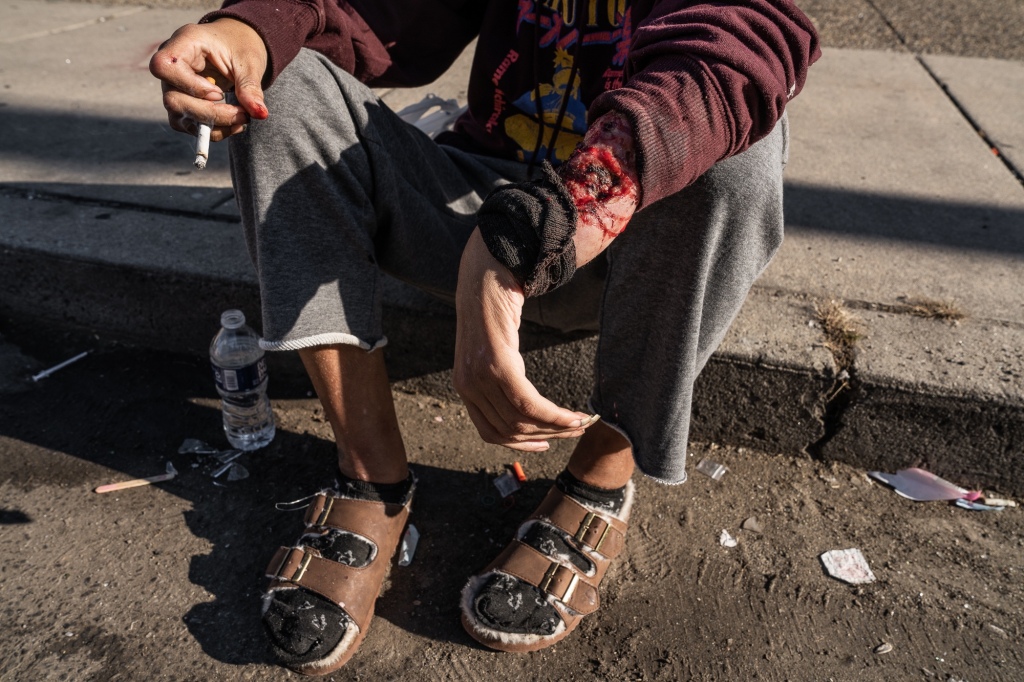
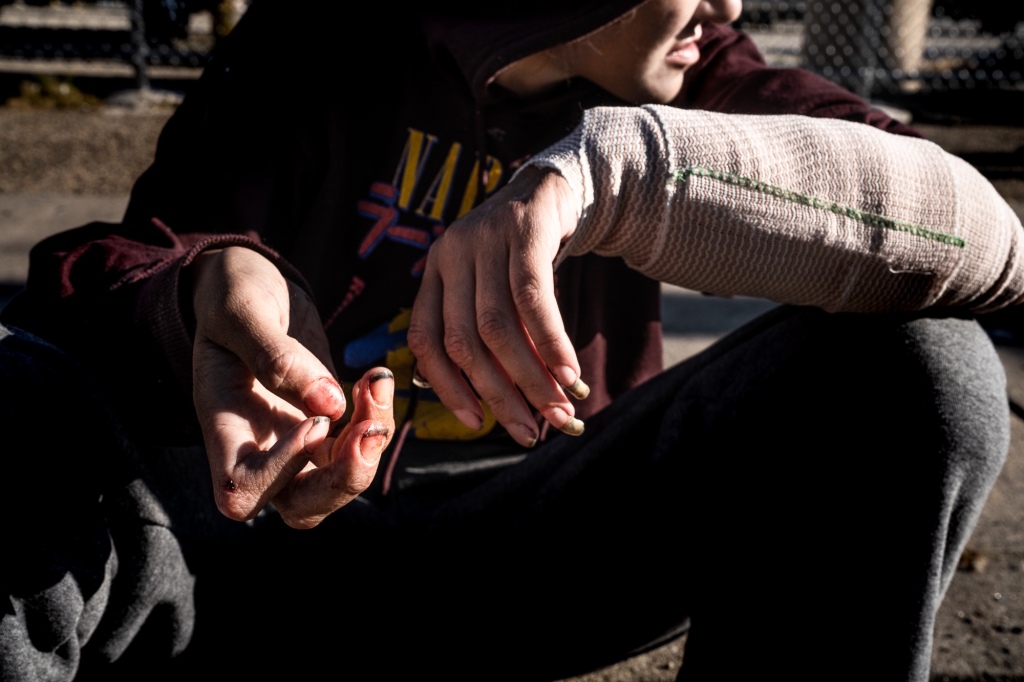
Brooke is a beautiful person to photograph. I was in a state of shock on the day I made these images with her. She explained how she manages her massive forearm injury created by Xylazine/Tranq. She has already lost a leg to Tranq, and is very careful about her wound management. Unfortunately, the addiction and all of the related issues that she grapples with daily create an impossible situation for her. The injectable drug that causes the wound she has is in the supply of fentanyl that she depends on…and so the wound never heals. Sometimes there is healing, often requiring a hospital stay, surgery, intravenous antibiotics….not always an option for most people, who are often resistant to going to the hospital. Some hospitals are not compassionate, or well versed in medical addiction management techniques to make patients comfortably able to tolerate a hospital stay without a supply of fentanyl obtained from the street. So many don’t go to the hospital, and the situation deteriorates madly. There are many amputations that result from these massive lesions, young people without legs, hands, feet and arms. People sometimes inject directly into the wound, as Brooke is doing on Kensington Avenue.

Brooke with witch at Somerset and Kensington Avenue, Kensington

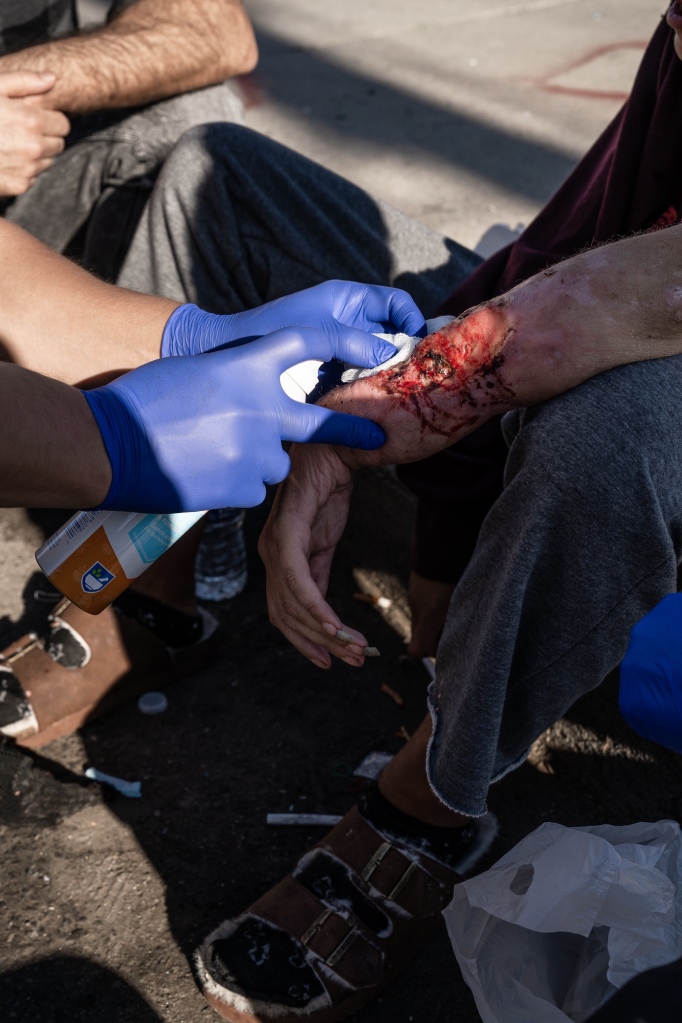
Not everyone is able to properly care for their injured skin, and find themselves in horrible, nearly impossible situations with clothing that binds to the wound, requiring one of the incredibly devoted outreach wound specialists that set up in the area periodically to painstakingly correct these situations as best they can. I was with one such group of devoted nurses and social workers who patiently explained to me the history of the problem, and the practicalities involved with on the street wound management techniques.

This man had multiple lesions on both legs. He also had a switchblade knife in one hand, and was intoxicated. He was somewhat articulate, and was able to tolerate being cleaned and bandaged.
Painstaking work removing dried, adherent shirt fabric from an advancing lesion
A young woman waits for a team of nurses on the street to care for a deep lesion on her forearm
Wound specialist cleans and bandages on Ruth Street in Kensington

It was one of the first days I spent on Kensington Avenue, openly photographing, and it was only the second time I had ever seen the inexplicable wounds generated by the use of Xylazine. Because the people who are suffering with the catastrophic, disabling lesions are often high on opioids, they do not feel as much of the agonizing pain and discomfort as they would if they were not using fentanyl and Xylazine. But when the effects of the opioids wear off, the pain becomes much more intense and even removing basic clothing is nearly impossible, especially if the wounds are not dressed. Many people do not go to get their lesions cared for for logistical reasons or because they just cannot get there. The longer a wound goes uncovered—sometimes adhering to clothing— the easier it is to put care into the distant future.

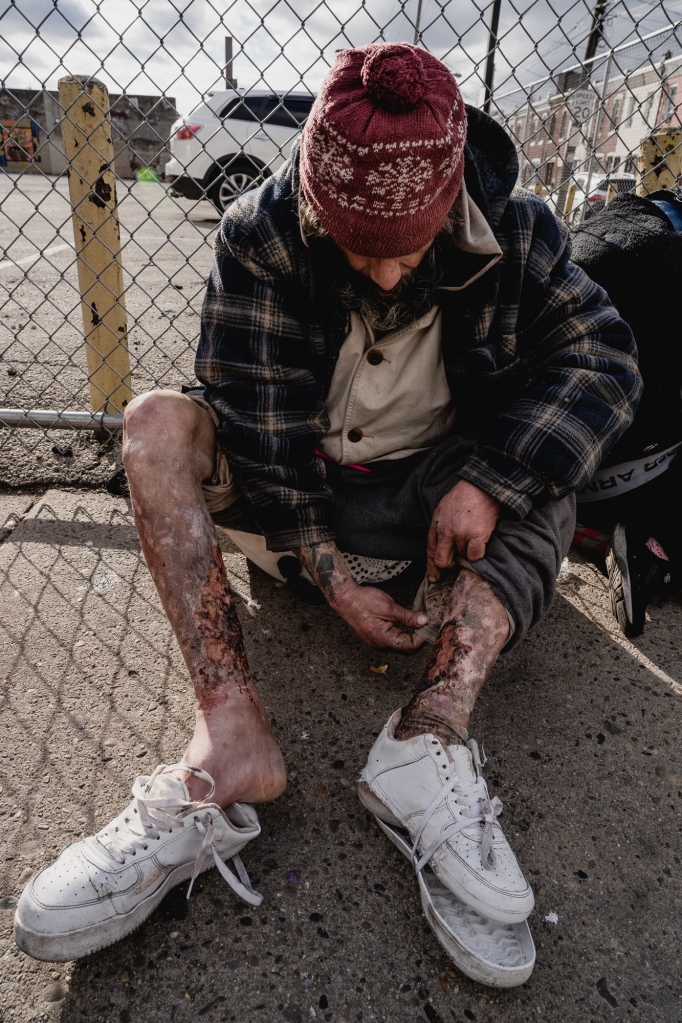
Man examines his leg while waiting for an assessment on Clearfield Street in Kensington
Extremely advanced and necrotic wound, showing deep tissue involvement. This man did not wait for treatment, and left abruptly. This lesion was populated by maggots, and he was in a critical situation that required hospital care. Outreach patiently explained the seriousness of the situation, but were unable to persuade him to go to the hospital.

Some of these images are from warmer days last fall. Colder months mean more clothing, more restrictive fabric and less air able to circulate, more fabric that complicates the potential to heal.

Areas of healing and scarring as well as newer lesions cause intense discomfort under winter clothes
Sometimes caring for severe lesions is complicated by the effects of a drug mixture that causes people to remain in awkward body positions for long periods of time, restricting circulation. Sometimes no matter how imperative immediate attention is, intoxication makes effective treatment impossible.
Not everyone in the area of Kensington Avenue has knowledge of or access to one of the wound care pop-ups in Kensington. This man has little mobility. He is mostly hidden from view, as the image below illustrates. People like this need mobile wound care that winds through the area, seeking out those who are unable to gain access to necessary care.
Unseen, Kensington Avenue
Because the intense withdrawal from opiods/tranq tends to set in very quickly, many people struggling with severely advanced wounds are unable to muster the will necessary to make the trip to the hospital. Brandon’s arm is infected and severely swollen, possibly necrotic, and he was only able to have his wound dressed on an occasional basis because of the devastating effects of addiction on his ability to manage his health on a daily basis. The physical need to get high combined with the time required to obtain sufficient funds to buy the necessary amount of five dollar bags to offset agonizing withdrawal is the only daily activity that is meaningful.
J, right, compares his newly emerging tranq lesion with Brandon’s. Although small, the wounds can advance with great speed. Some people never get lesions that become problematic, and others are able to recover. It’s unknown why some people seem to be able to recover on their own, or why some don’t ever suffer from this pathology at all, while so many others battle grave disfigurement and poor outcomes.

A safe drug supply would effectively eliminate the contamination by Xylazine. Not one user on the street I’ve spoken to wants Tranq mixed in, although that doesn’t mean that nobody objects….I just haven’t found anyone. They dislike Tranq immensely but have absolutely no control over the situation. Since there’s no availability of test kits to determine the amount of Tranq adulterating purchases of fentanyl, it’s impossible to gauge its effect. Ratios change hourly, and dealers often give out free samples to eager users willing to test the supply as it becomes available on the street. I’ve witnessed large groups of people almost running en masse to pop up sample spots buried on side streets. Overdoses involving Tranq and fentanyl have opposing effects. Fentanyl requires Narcan. Narcan is readily available but has absolutely no effect on an overdose caused by Tranq. Tranq excess requires breathing support and resuscitation and, because the drugs are mixed, Narcan and rescue breathing are often necessary.

Sample, Allegheny Avenue

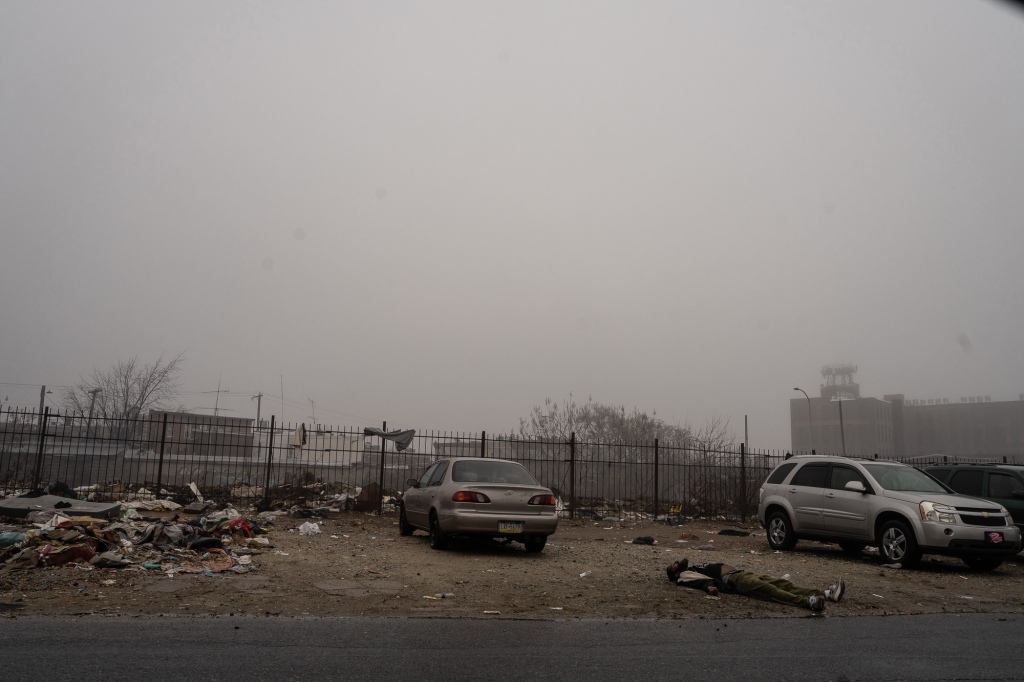
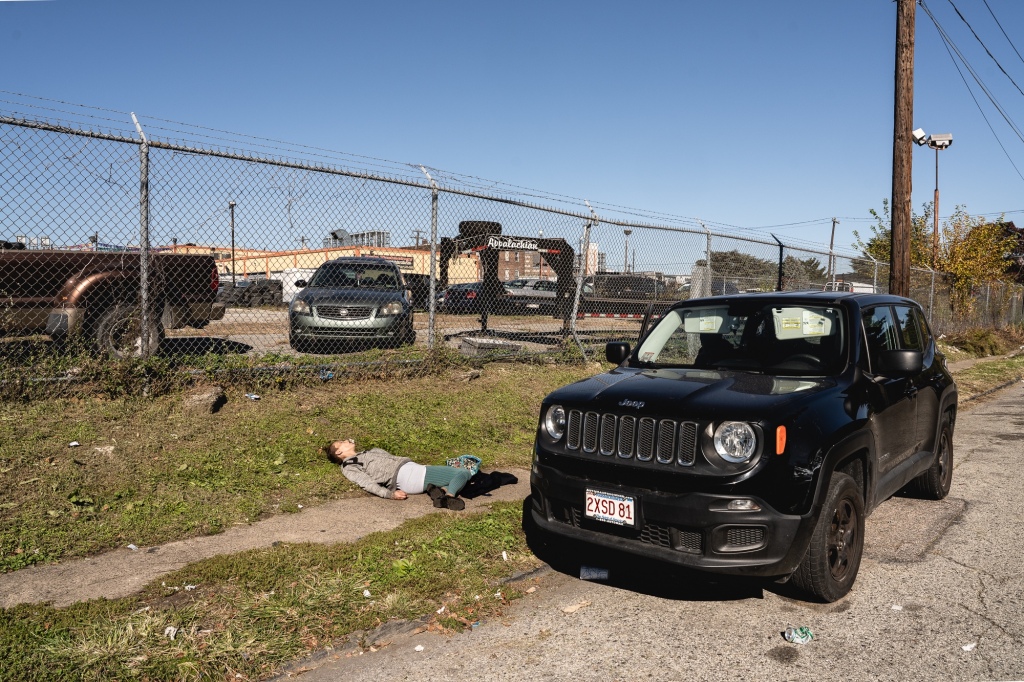
Overdose happens every day, in inaccessible areas. The ratio of drugs in the supply of dope is not predictable. One person described the situation as one in which he felt as though the population of users was being experimented on by those in control of the drug supply. Trying to find that magic combination of substances that will create a desirable high that’s reliable, fast and cheap enough to be profitable. Not everyone buying is unhoused….teenagers are dying in their bedrooms, suburban dads can be seen in parked cars, blacked out in the parking lot of the Walgreens drug store on Kensington and Allegheny Avenues. It happens everywhere, just much more visibly on the streets of Kensington.

Gurney Street, Kensington
Near Torresdale avenue, Kensington
Kensington Avenue near Somerset

There are a lot of issues surrounding these images. Privacy, documentary image making practices, various people and their sometimes dogmatic views aren’t always a terrific combination. Documentary work in other countries, Ukraine for example, is well tolerated generally. But images made in America of this catastrophe do not always bring people together harmoniously. It is critically important to take pictures that convey absolutely what is happening. It means that faces, places, and circumstance are on display. Corporate media outlets need to consistently address the issue as graphically as is necessary to effectively illustrate the problem, as done here: https://time.com/james-nachtwey-opioid-addiction-america/

Kari, Cambria Street

The graphic and intolerably despairing images in this post should be considered in the context of a problem that is killing, maiming or otherwise causing grave dysfunction to hundreds of people each day in the United States, adding up to many, many thousands each year. Images like these are necessary and should not be omitted or eliminated by social media and news outlets. Mainstream media and social media platforms inability to risk offense to describe distressing situations that are clearly visible in the community do nothing to forcefully and properly illuminate social issues. Dilemmas that require reflection, sensitivity and societal admissions of guilt need to be examined without reservation. Issues such as the one described in this post will continue to fester and ravage masses of people every day unless enough of us are sufficiently angry to start vehemently demanding immediate solutions. That’s how I justify my work on this particular subject. I wish I didn’t feel the need to justify and explain and persuade….but I do.

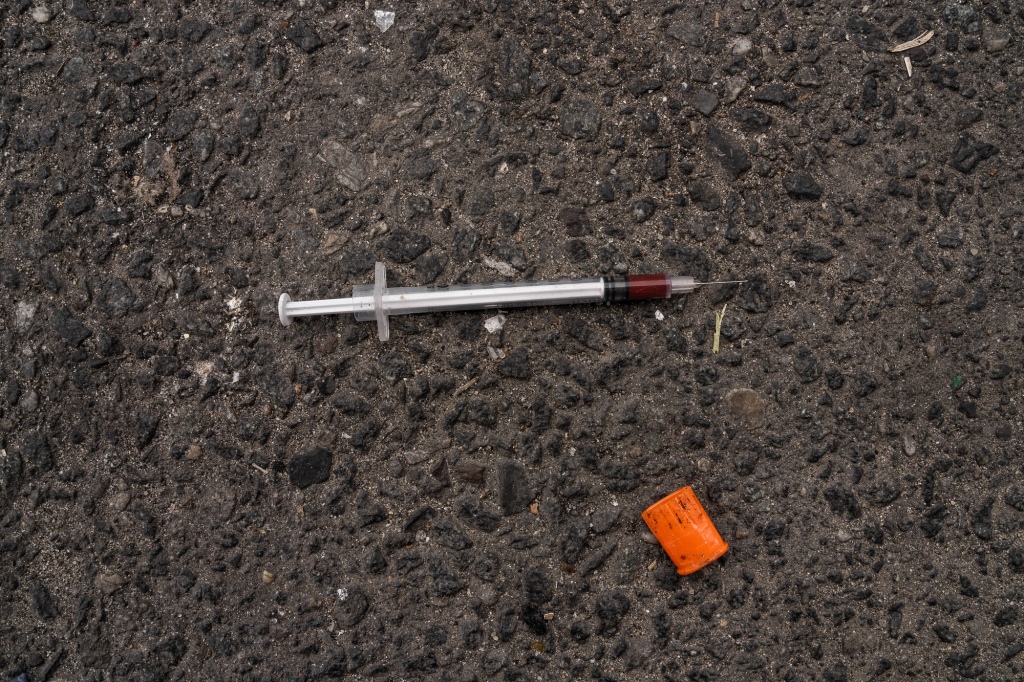
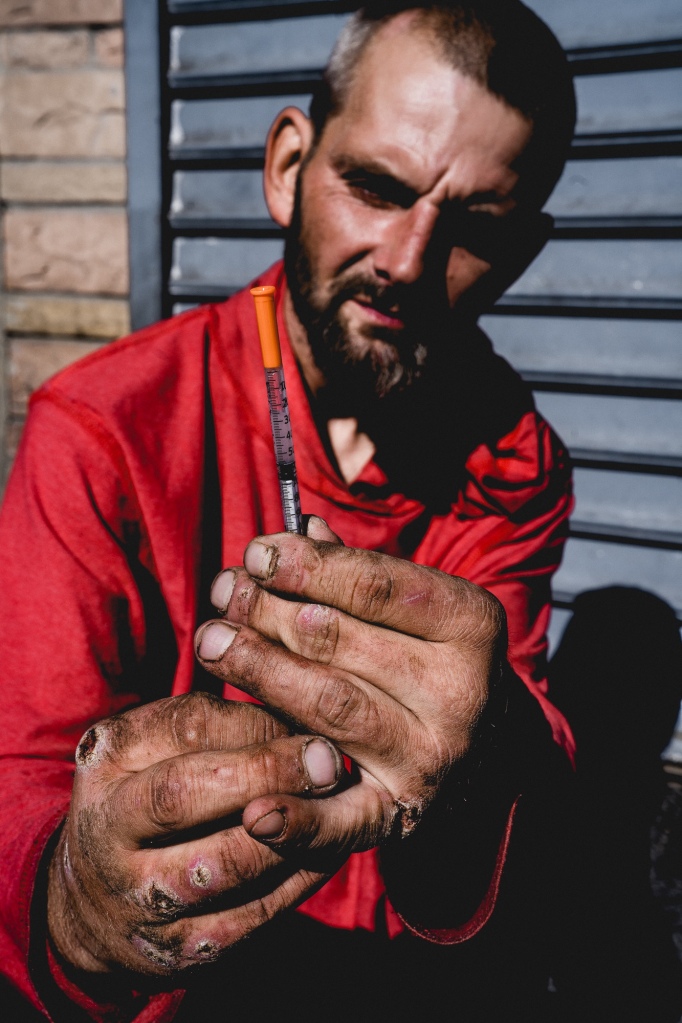
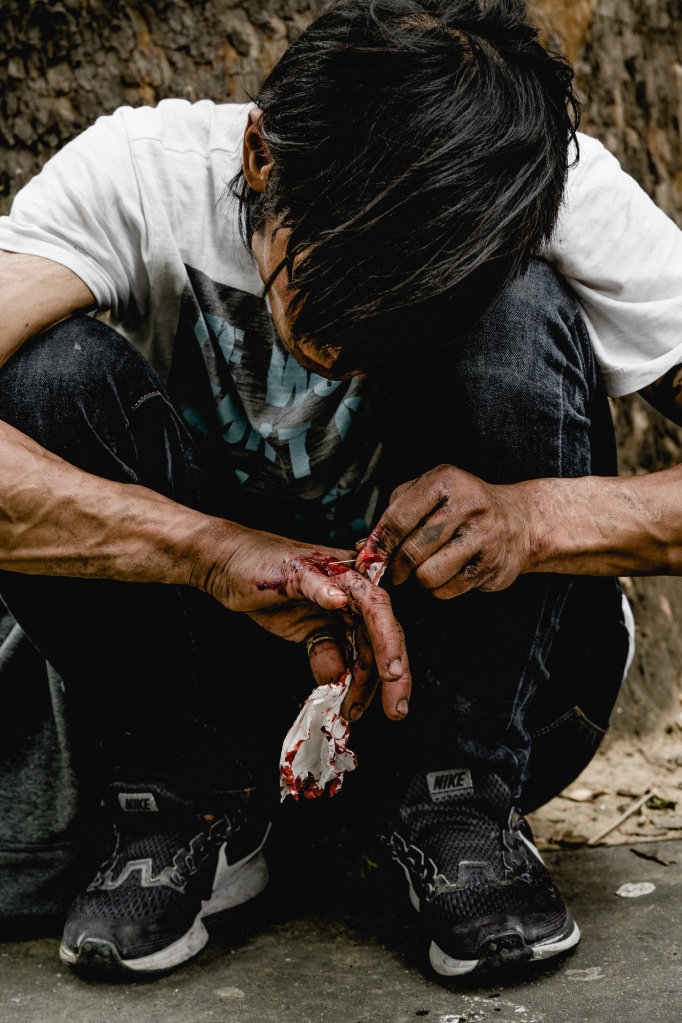
Clearfield Street near Ruth Street….Mike helps K hit after K was unable to find a vein in her arm. It all starts with injection. Some people are unable to hit themselves, and require help from someone more facile with injection techniques. People are blindsided by addiction, and many are unable to find good veins, some are uneasy using needles…not the usual stereotype. The process of injecting is immensely stressful and sometimes extremely uncomfortable. There are people on the street that are known to be excellent injectors, and people quite literally become agonizingly dope sick without their assistance.
Mike, left, at Clearfield and Ruth Streets, Kensington
After assisting the woman above, Mike shows his most difficult to manage leg wounds.
Mike, left, sits while Bud plays guitar on Kensington Avenue near Clearfield Street

I am grateful to every person that allowed me to photograph. I am also thankful to those in my candid images done on the street, taken without permission. In Kensington permission is often necessary, but in some cases I use street photography techniques which are equally important for me as an artist and photojournalist.

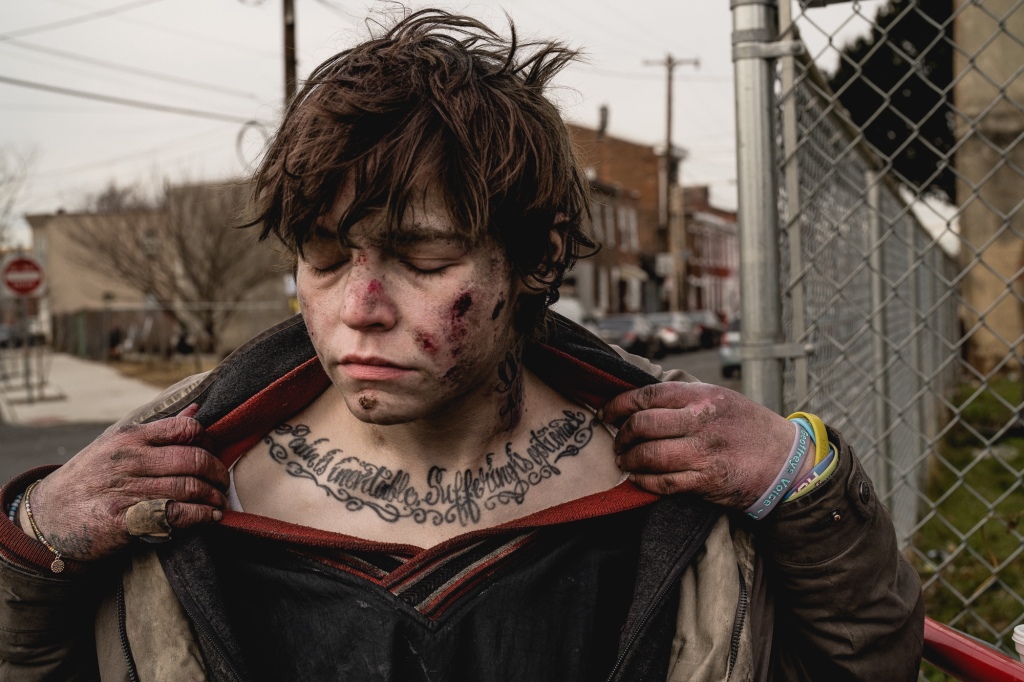
Pain is Inevitable, Suffering is Optional, Cambria Street, Kensington
Kensington Avenue near Clearfield, Kensington
Danielle, Clearfield Street and Kensington Avenue
Shaggy, Indiana Avenue, Kensington, Philadelphia
Noah on his Birthday, March 17, 2023

https://www.instagram.com/suzanne_stein?igsh=NmQweDhqODMxM3Fw&utm_source=qr

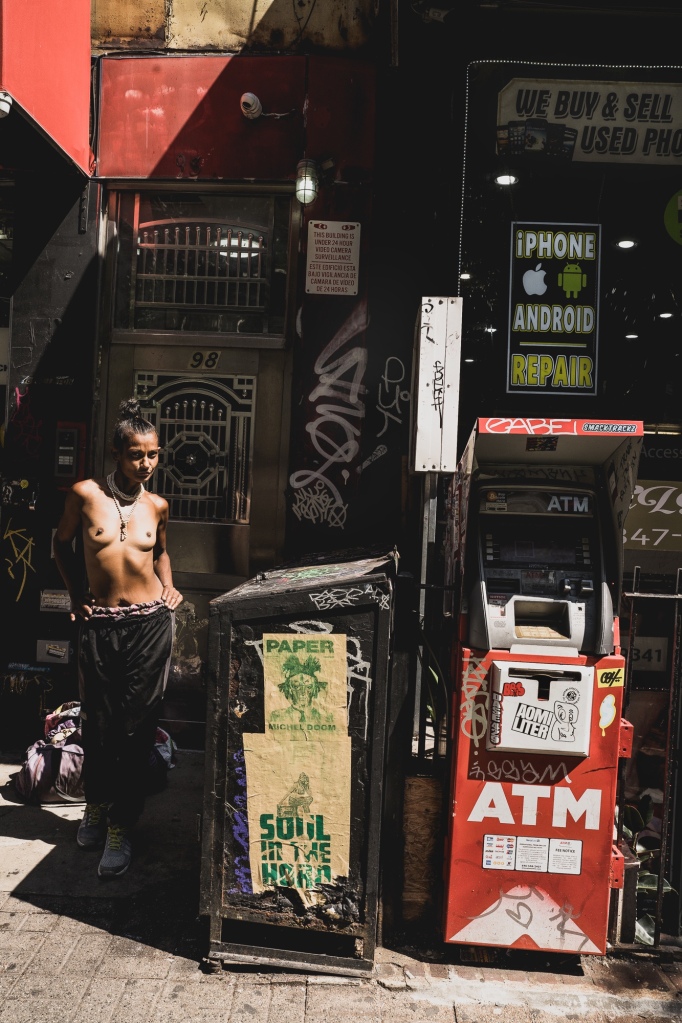
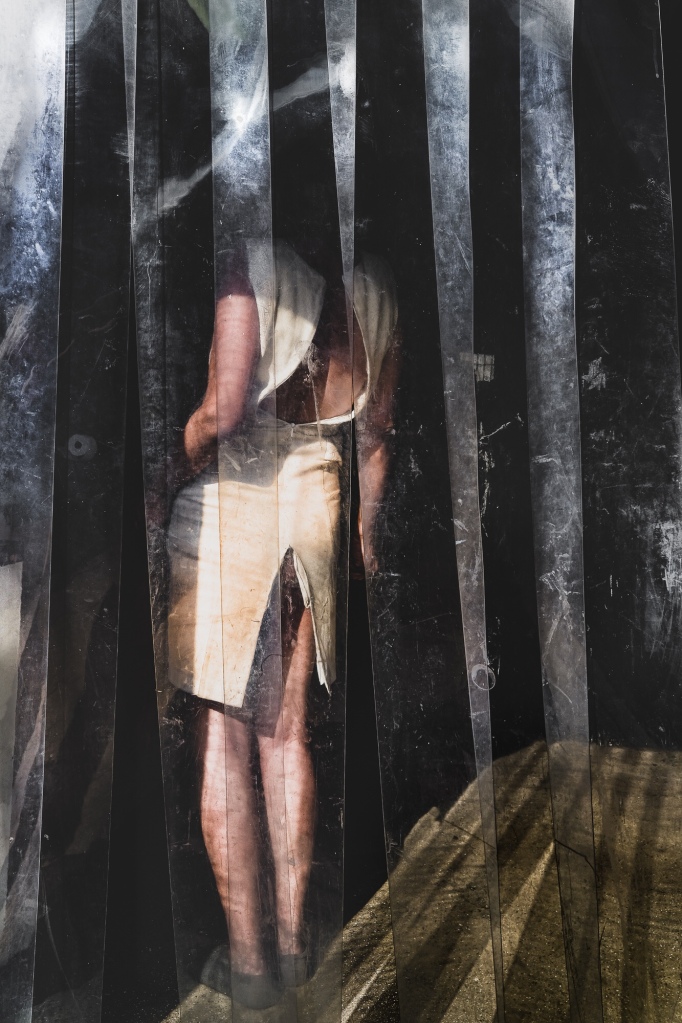
Clinton Street, New York City….Mariska

Mariska, late afternoon on Clinton Street near Delancey, August 2022

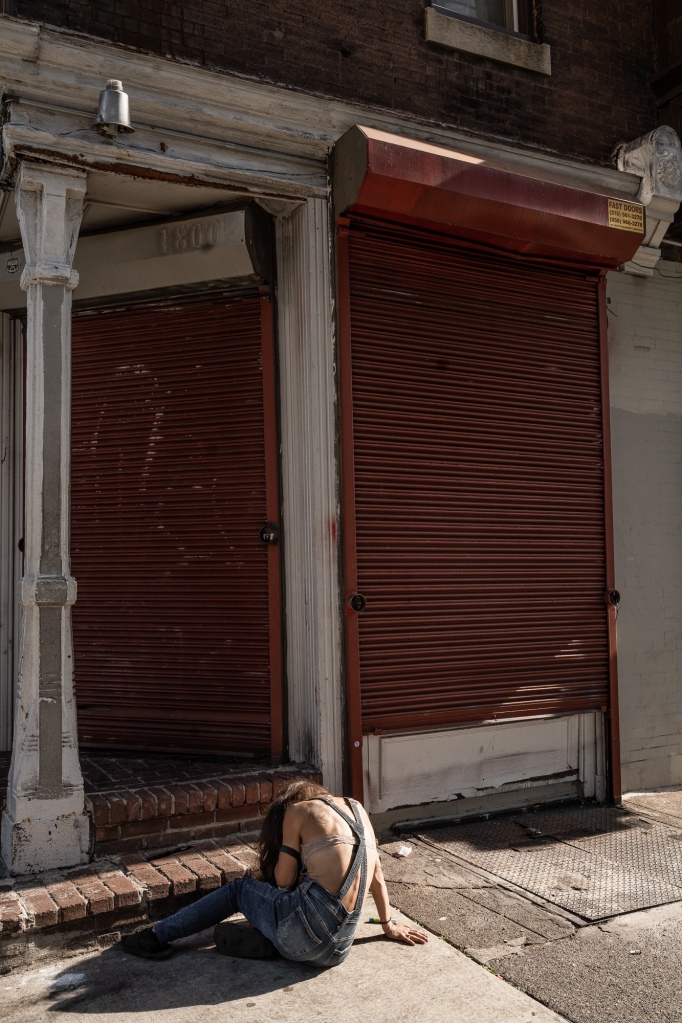
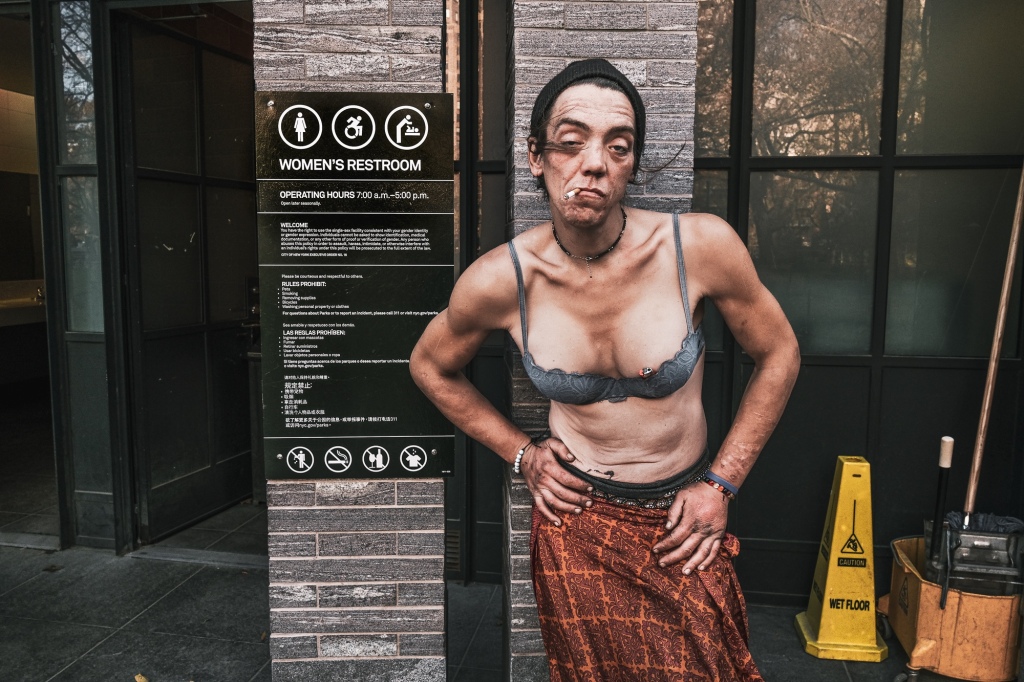
I tried to grab a few pictures one afternoon when I saw a half nude woman, her figure partially lit by the dappled sunlight as she stood, partially hidden between two old storefronts on the Lower East Side. New York City has changed…and it isn’t often that I run across anything highly unusual on the streets of a Lower East Side that has undergone a radical, transformative rebirth. In modern New York City, many old neighborhoods have lost the old guard that gave the run down city blocks so much life and character. As a street photographer, I felt the loss acutely.

Brian Rose
Peter Bennett
Meryl Meisler

For me, there’s always the question of asking permission vs. candid photography. Sometimes asking creates self awareness, ruining the initial visual experience, and turning what was once a natural moment into a stilted reenactment. I needed to take the risk involved with photographing the woman candidly….not to exploit, but to record the beauty and eccentricity , a kind of ghostly remnant of a Lower East Side that was long dead. I stepped into the street but just as I did, a crazy white delivery truck, oversized and too large for the spot, pulled in front of me, almost hitting me. This was infuriating because my ability to take a beautiful candid image was completely blocked. So I tried as best I could, weaving around traffic, trying not to get run over or verbally assaulted by passerby for photographing a nearly nude woman on the street. Because people are so unstable and every substance imaginable is readily available causing further instability, I was very concerned about the woman becoming agitated if she saw me. Safety issues are a fact of life while out shooting and cannot be overstated.

As it turned out, she observed me. And it was ok….I got the photographs that were necessary, albeit images that I didn’t immediately visualize. Initially I thought that candid was the way to go, a partial nude, lit with shadowy sunlight, quiet and beautiful. But that would have failed to record her confidence and disregard for what other people on the street thought of her, and her rejection of social folkways and all the other assorted trivialities of daily life.

Mariska had recently had a baby, but because she struggles with mental illness and homelessness, she does not have access to the infant.

She was beautiful in the light, and wanted to be photographed, noticed. I have found this many times in situations where most would assume there’d be a fair amount of danger photographing someone on in an urban setting. I find that people want very much to be seen sometimes, and these super fast, pop-up portrait sessions with enchanting strangers that I meet are the most satisfying work that I do. And no longer strangers, they can become people whose lives I’m privileged to follow for years.

Before I left Mariska, I asked her to put something on. I don’t know how long she’d been undressed before I saw her, but I wanted to leave her with more clothes on her body. I hope to photograph her again.

Bethany

Bethany, NYU campus near Washington Square, June 2022
Bethany, Washington Square, 2019

I avoided Bethany for nearly six months, from Christmas 2021 to late May 2022. I had a lot of legitimate personal reasons to do so. My life was becoming unmanageable because of the need to monitor a deteriorating health situation within my family, as well as a newfound obligation to help care for someone who I had been photographing and who became temporarily completely incapacitated. Balancing all of this while remaining active photographically was a challenging situation and one that I met with great energy most days, at least enough to drag myself through the long and bleak New York City post Covid winter, struggling through, remaining reasonably productive artistically. There was no energy left for Bethany. Being around her can be very difficult and challenging, and I just didn’t have it to spare. Occasionally I would stop nearby, and observe her from a distance, to be sure she was still alive. But I did not allow her to see me.

Bethany on Christopher Street, West Village, New York City June 2022
Christopher Street, 2022
Bethany at 6th Avenue and 8th Street, June 2022
Bethany, 7th Avenue in Chelsea, 2019

I felt increasingly uncomfortable every time I thought of how long it had been. I knew that it was time to face the disastrously changing person that I had gotten to know very well, and who I had allowed to know things about me. Bethany was my friend in many ways, and I had let her down by disappearing. Her health was severely impacted by scabies and multiple drug resistant bacterial abscesses. This extreme situation, and her inability to address it and get treated, was stressful for me. The need for a constant flow of drugs was and is the primary reason why Bethany and many, many others on the street often refuse desperately necessary hospitalizations for life threatening health problems.

I had gotten her medication at one point, expensive for me but worth it to try to save her life. She had gone to the hospital but with no insurance had to pay out of pocket for her antibiotic prescription. She was was unwilling to put her limited funds toward medication, because every cent she procures goes towards purchasing heroin, fentanyl, crack or meth.

Bethany, Late June 2022

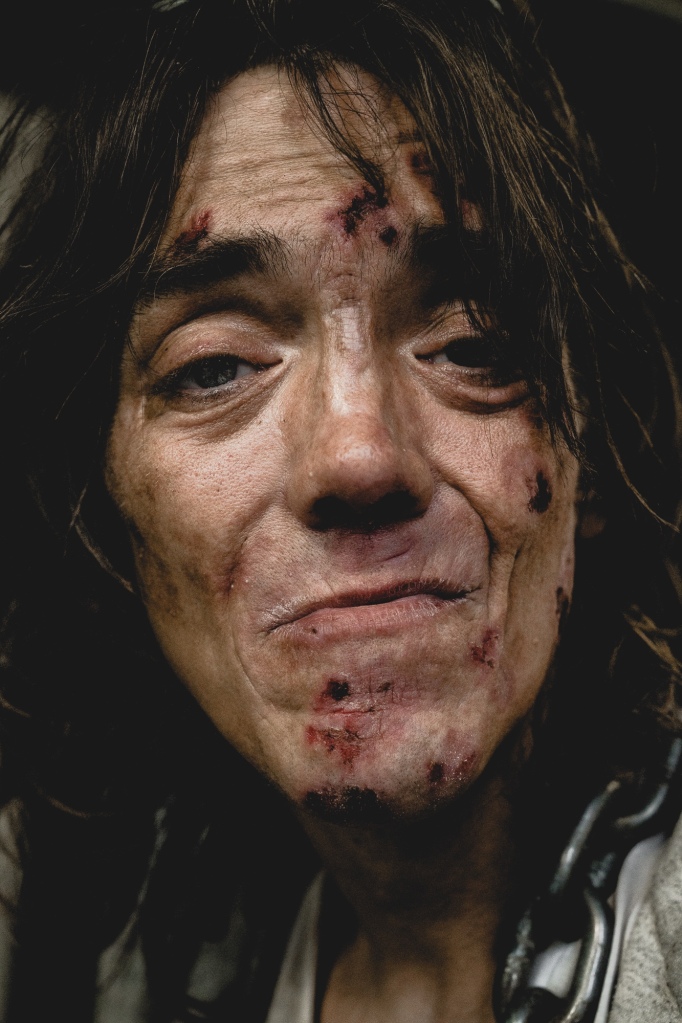
When I felt it was no longer an option to go any longer without contacting her, I headed over to her part of the West Village and started searching. Her old spot at the corner of 8th street and 6th Avenue was reimagined and now occupied by an expensive take out restaurant. No sign of Bethany. A long time later, and still no sign. She could be anywhere, from Tompkins Square in the East Village to Bowery…..impossible to know. Just as I was ready to give it up for the day, she magically popped into view outside the subway station at West 4th. I was shocked by her condition. Covered in scabs, swollen feet and hands, limping and dressed in raggedy, blood stained clothing. Not the cocky transgendered style she had so carefully cultivated when she was more fully in control. Except for her augmented breasts, there was no outward sign that she identifies as a woman. It was hard to fully take in the extent of her physical collapse and I was struck hard, and almost unable to speak naturally with her at the beginning. Many people stopped, gaped, grimaced, sneered….the expressions of passerby ran a full spectrum of revulsion and displeasure.

In the affluent West Village, a woman takes a long look at Bethany as she lay in an improvised restaurant shed. June 2022
Bethany as she appeared to passerby around the time I found her again in June 2022.

We agreed that a hospital stay was necessary. Bethany may or may not have scabies, as well as some deeply imbedded abscesses that were surely infected. Infection is very dangerous, as MRSA and other resistant bacterial overgrowths can present a public health problem. Bethany was no longer able to panhandle due to people being unwilling to get close enough to drop a dollar into her hand, or even get within a few feet voluntarily.

Washington Square, June 2022

Bugs

Bethany had become convinced that the scabies she was sure she was infected with was a menacing, omnipotent presence within her. The bugs had a mind, and were deceitfully strategic, planning their moves within her. The scabs were the result of her digging and tearing into her skin, in an attempt to extract them. She used a lit cigarette to razor her flesh, ostensibly to pull them out.

She showed me numerous bits and pieces, telling me that it was the bugs, their bodies….but every time it was a piece of herself, her skin, changed in her mind to a insect, to be pulled out or burned to death on her skin.

When I met Bethany I had no idea that what seemed like a one-off photograph of her holding a crucifix and a cigarette would become a long term endeavor, full of so many contradictions. That I would alternately need to abandon her to her demons when it became unsafe for me, returning when she was more stable and I was no longer tapped out.

First image with Bethany, late Summer 2019, Union Square, NYC

I watched Bethany peel her scabs, pull her skin apart, using specific tools to puncture holes in order to extract the “bugs”.

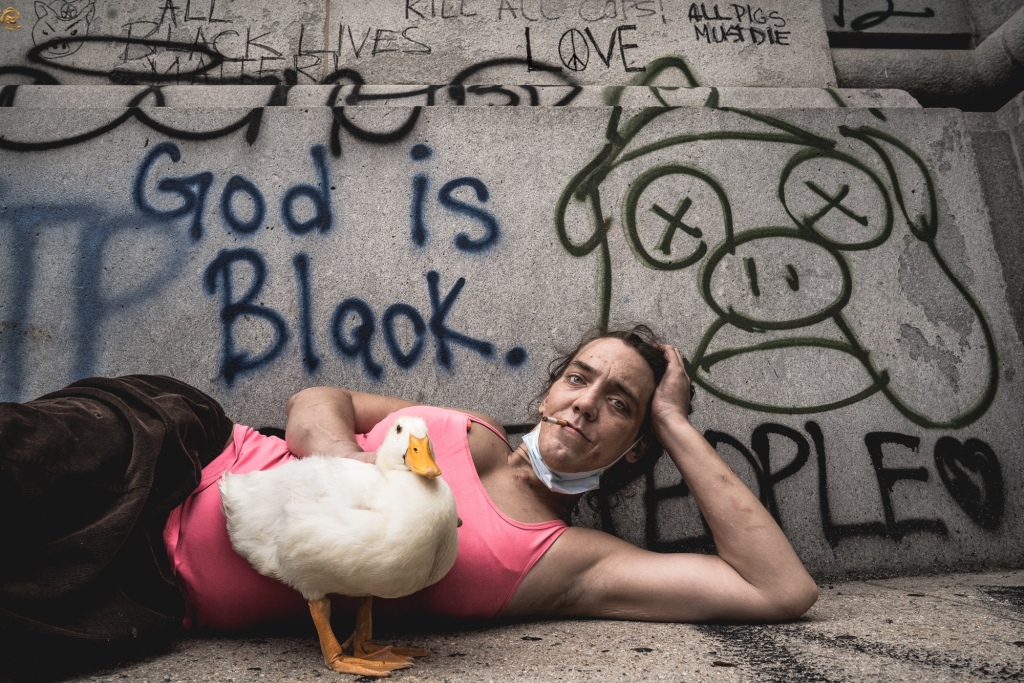
The holes and flat, scarred over areas cover the surfaces of her arms, legs and face. I watched and couldn’t imagine the discomfort she must be causing herself. She showed me what she thought were bugs, but I could see that the chosen specimens were pieces of skin or scab or random flecks of dirt. I remembered a Bethany I photographed during the Black Lives Matter transformation of New York City when she had a place to live in upstate New York, and even had pet ducks. That Bethany had a phone and the use of a car and the help of a friend. But now, I know that there is no way forward down a path towards health and restitution. I know, and she knows, that her hatred of herself was causing her to literally skin herself alive. I have known for a long time that it was her way of slow suicide. I can be there, I can listen, but I will never be able to give Bethany a much needed hug again. I cannot allow her to hold my puppy, and I cannot handle her possessions. Multiple infections and eruptions of pus and blood and self loathing stand between Bethany and the rest of us.

2020

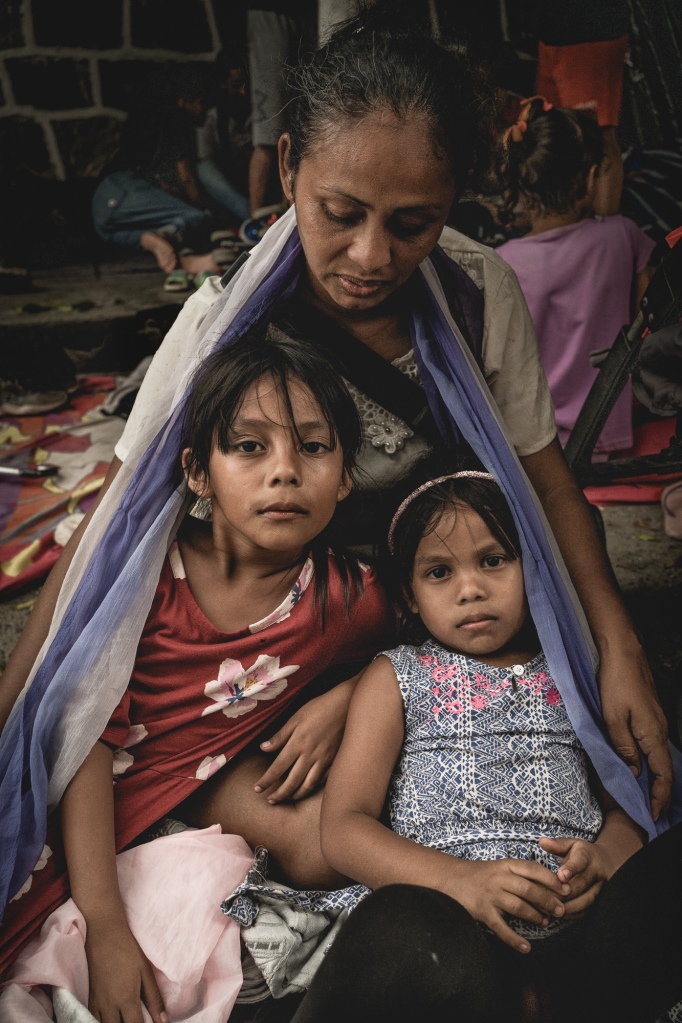
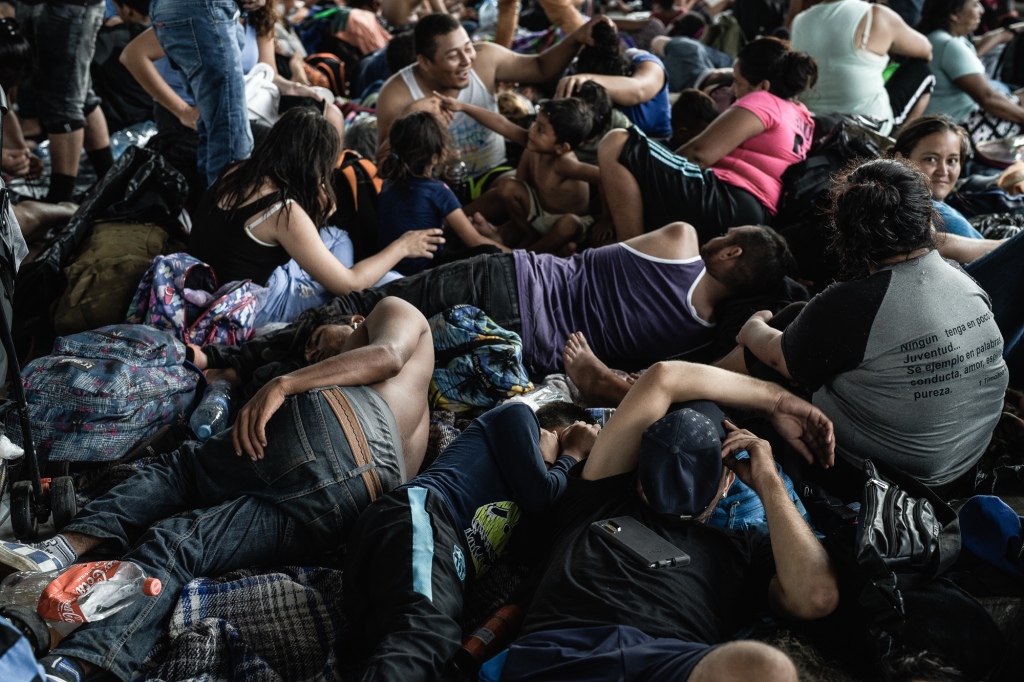
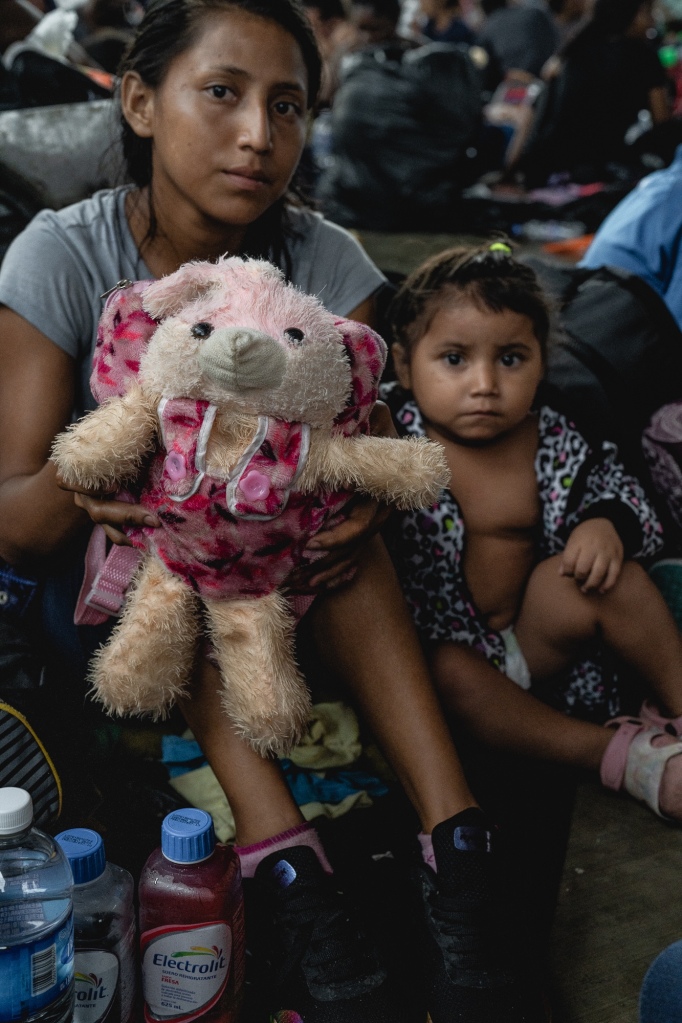
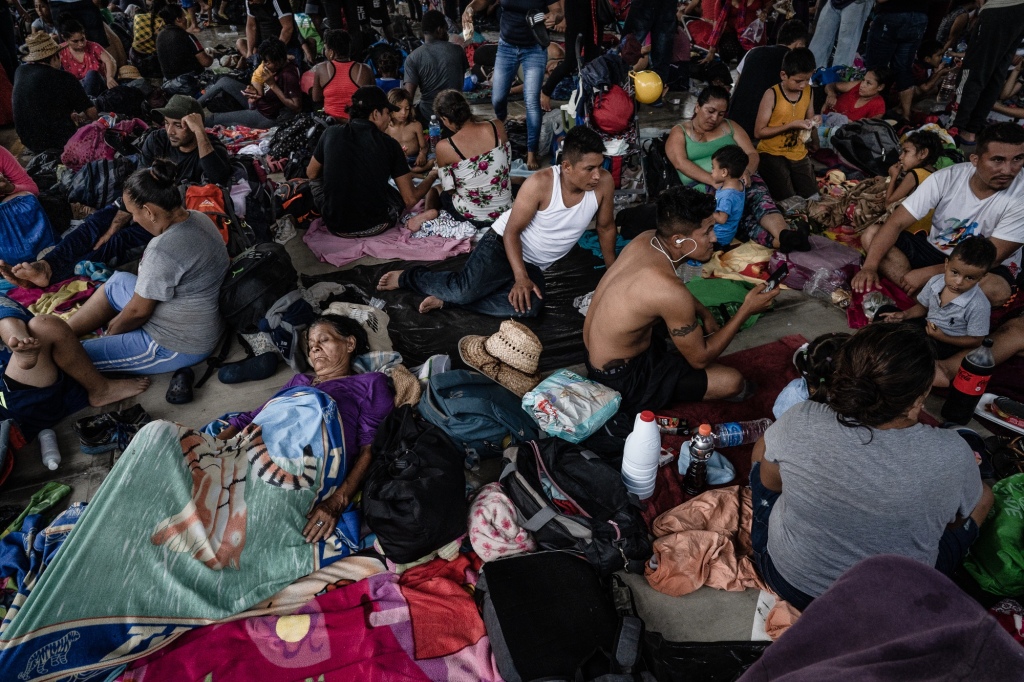
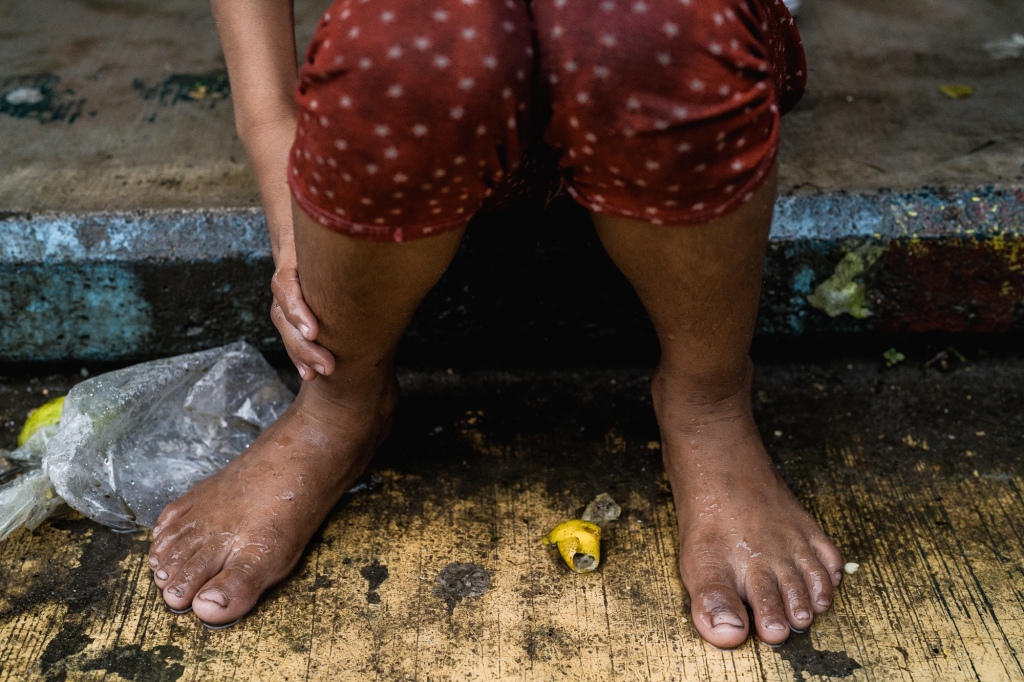
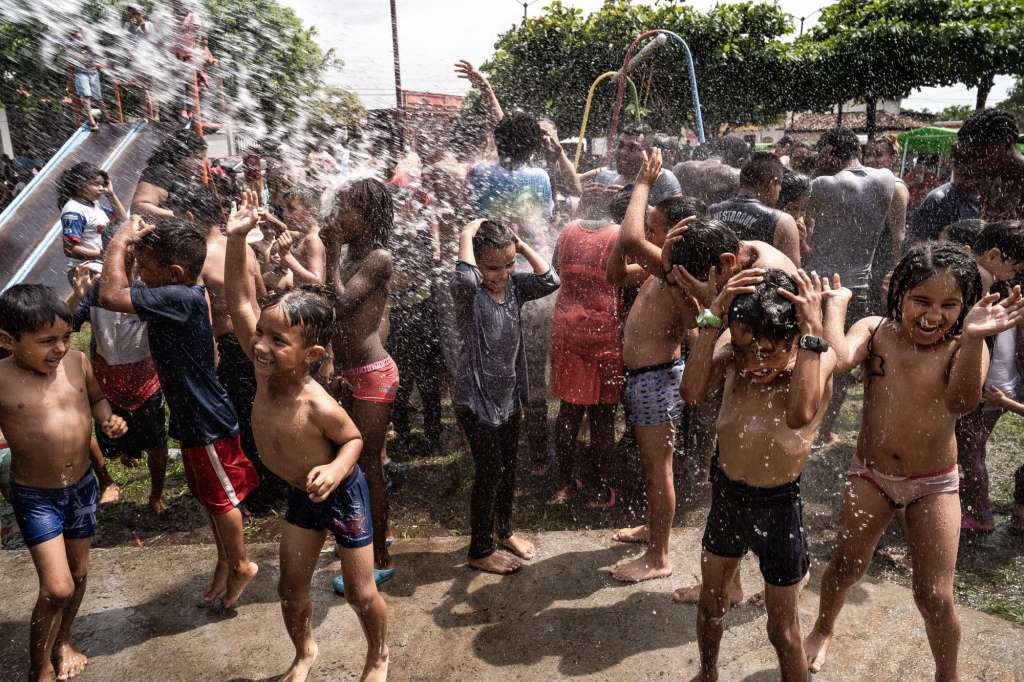
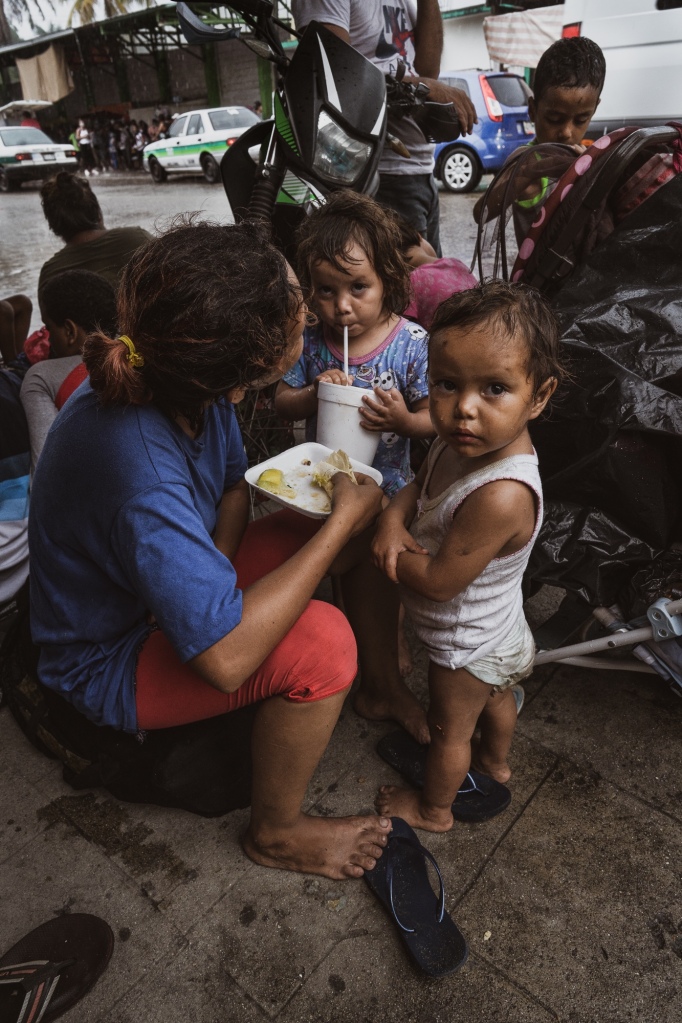
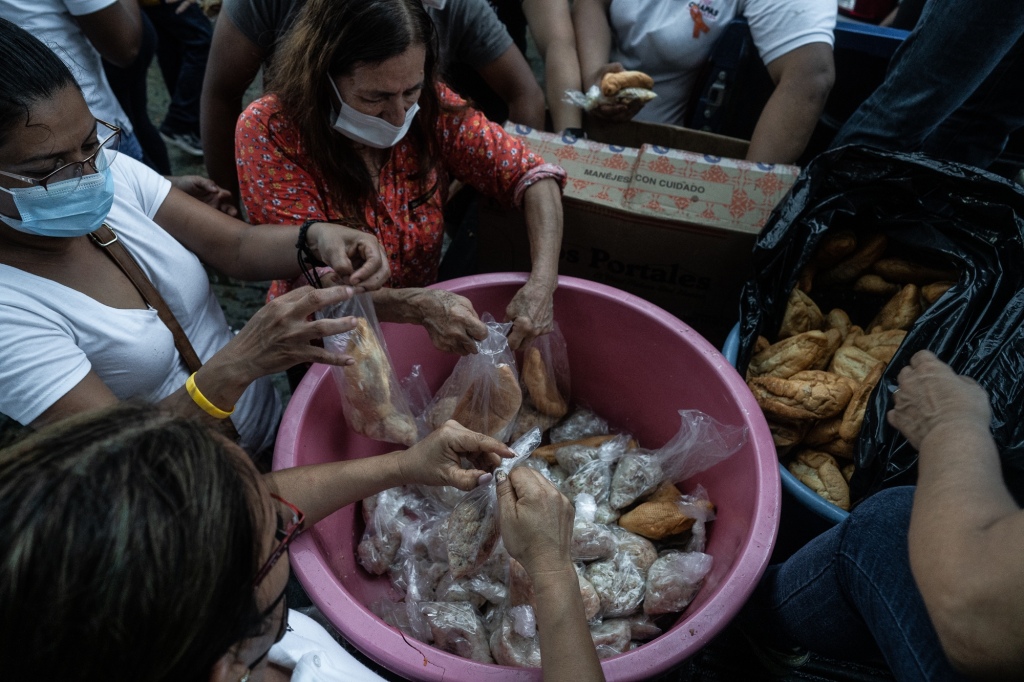
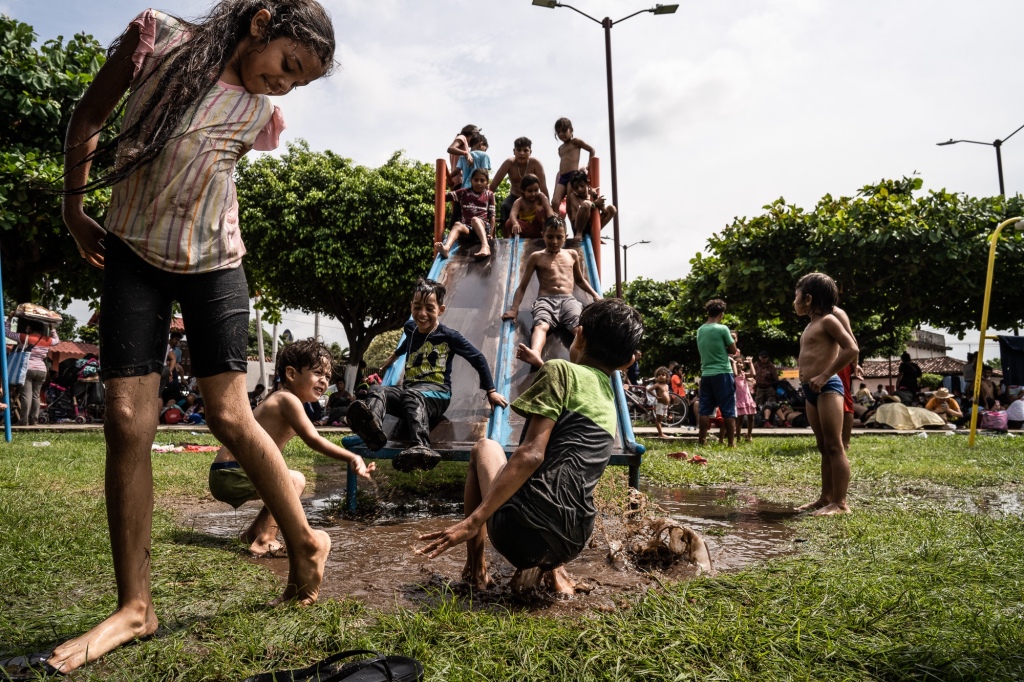
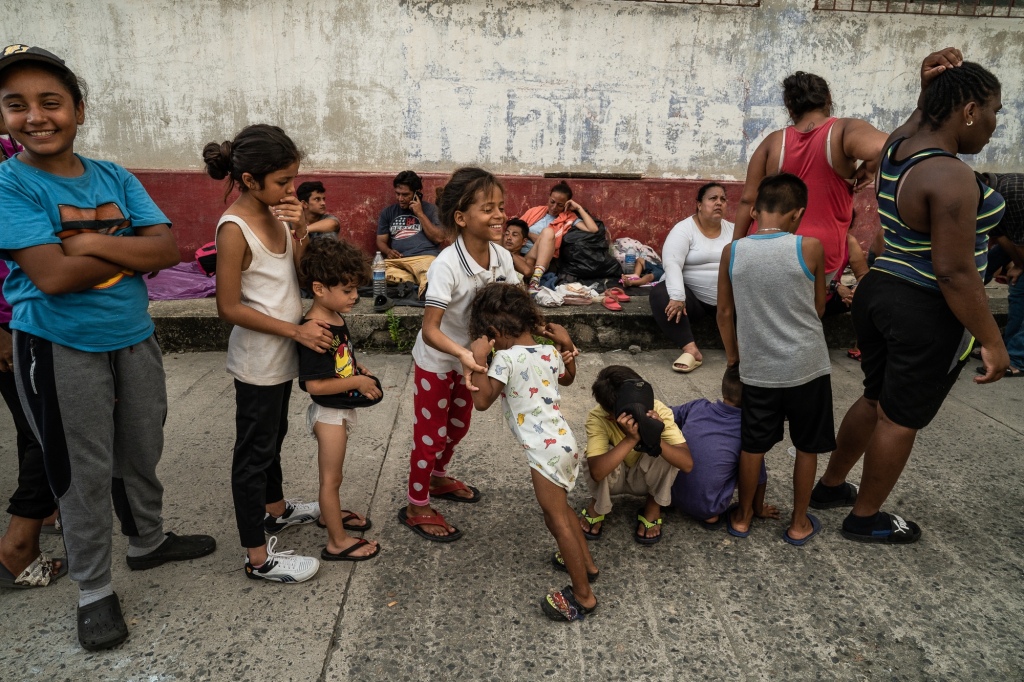
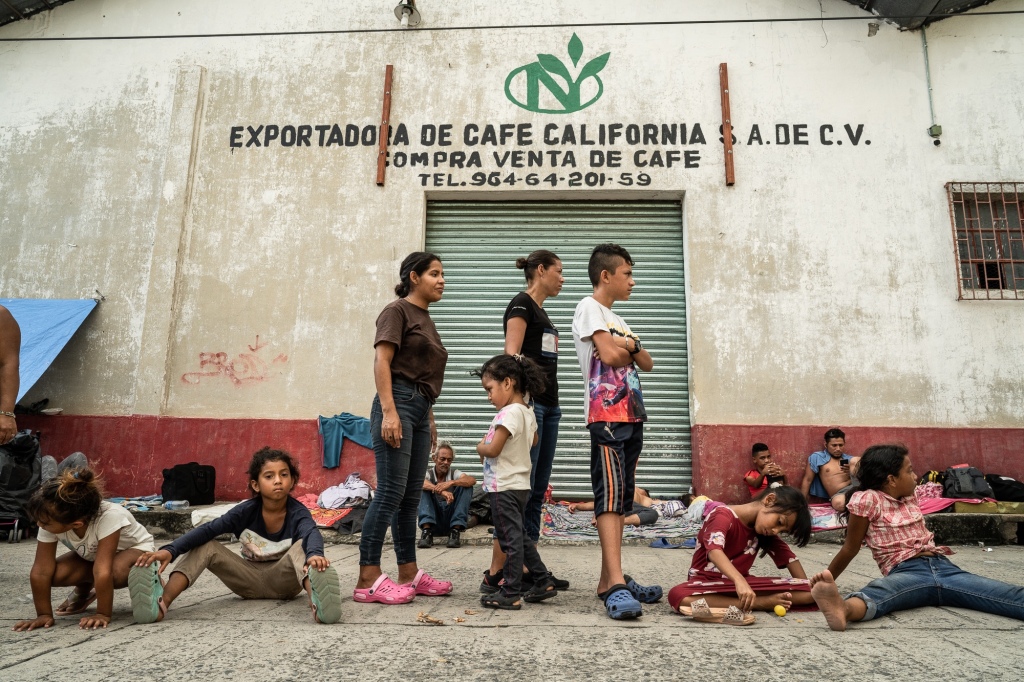
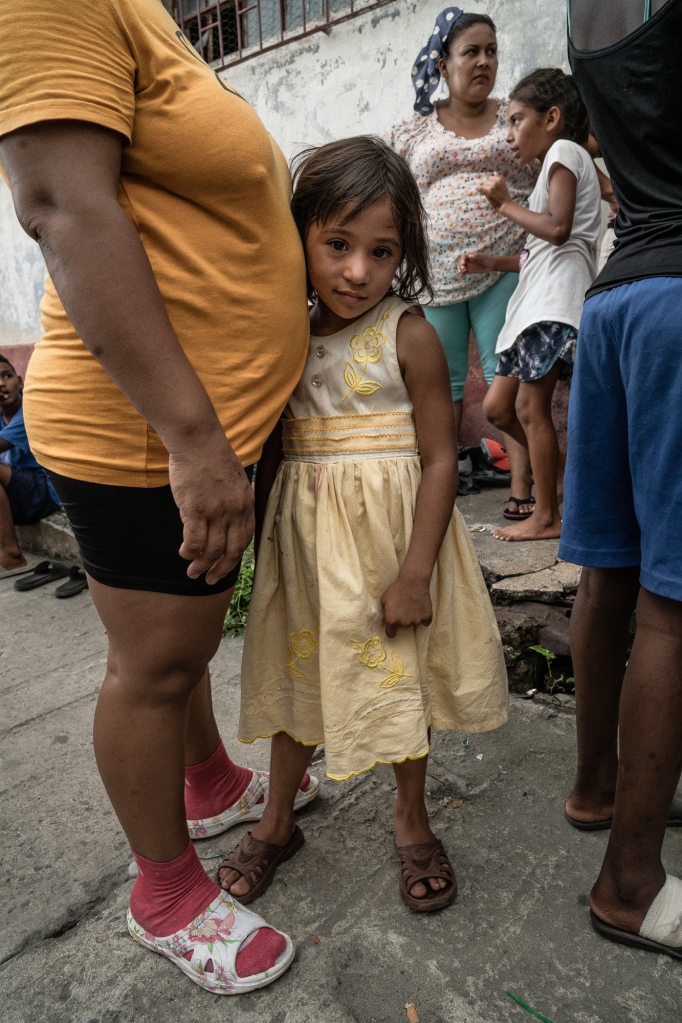
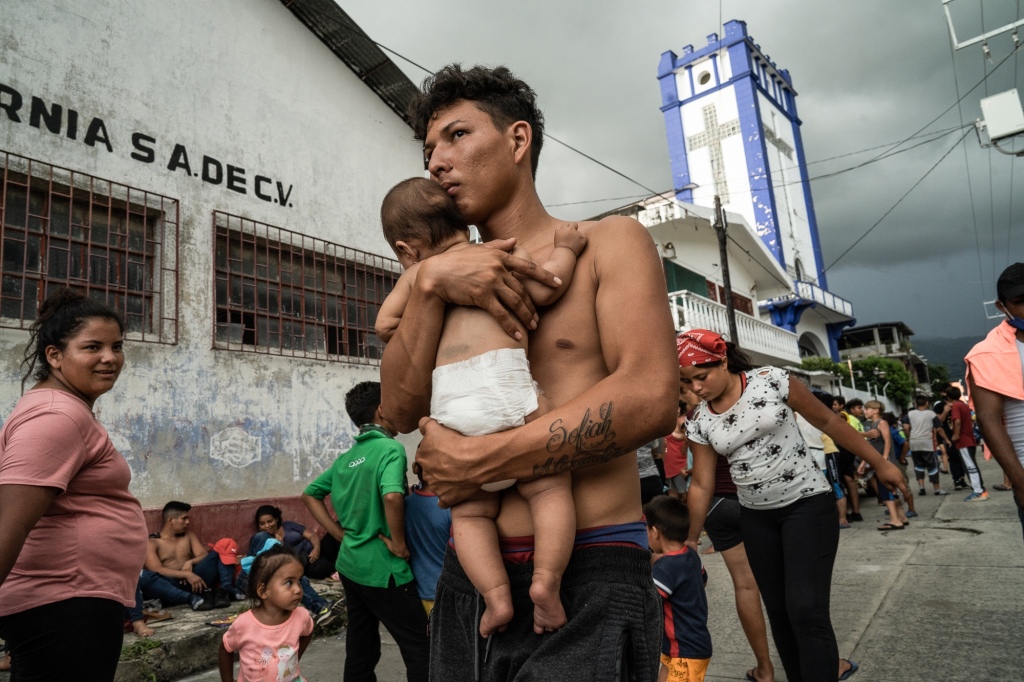
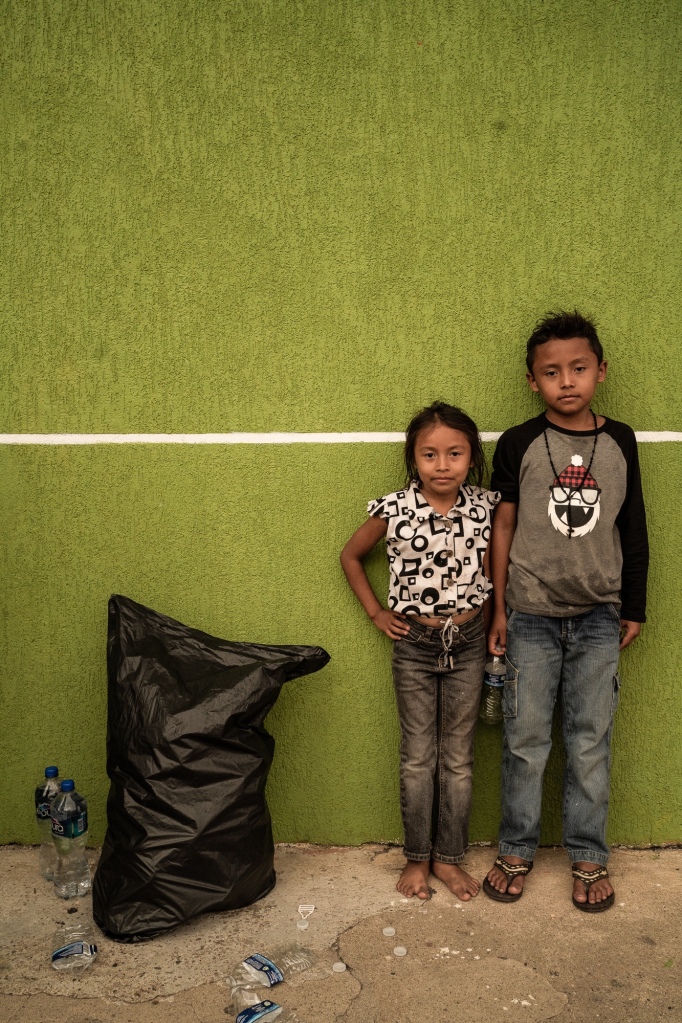
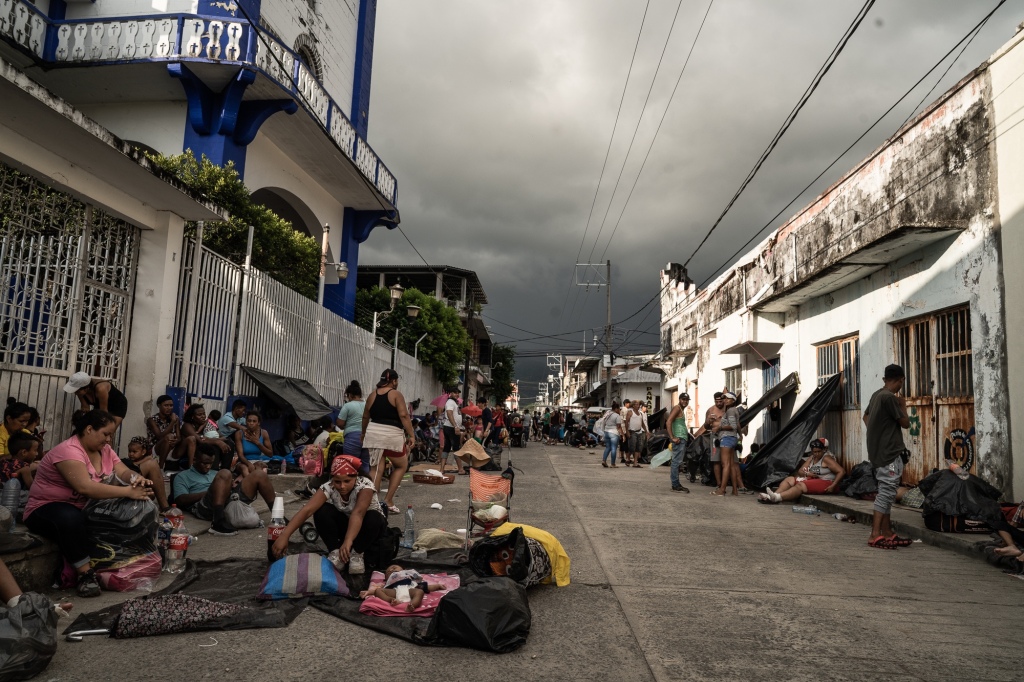
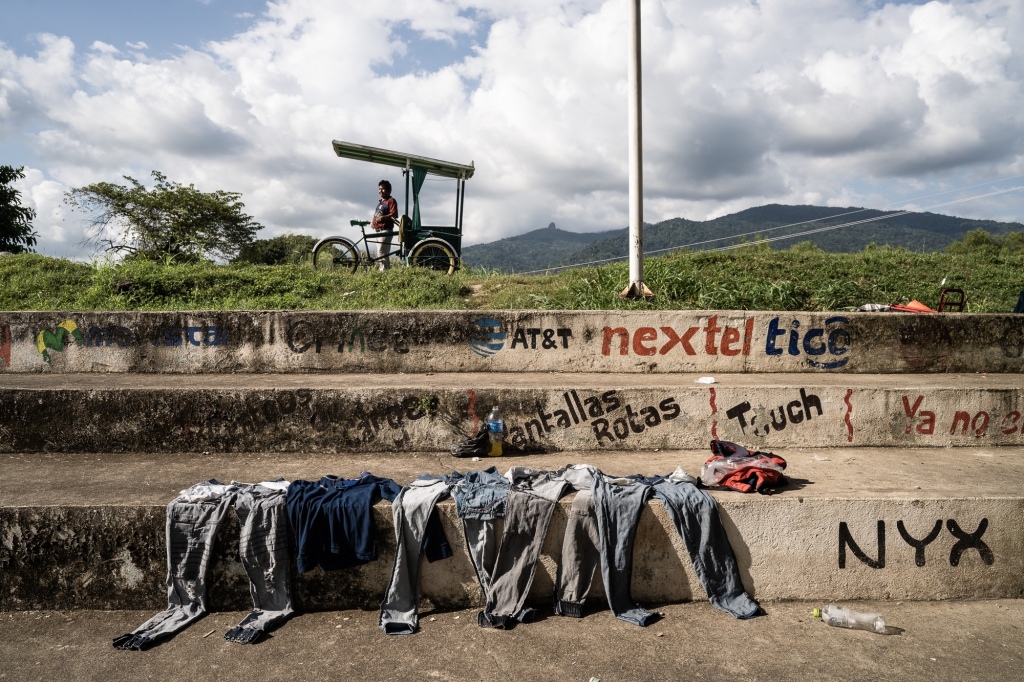
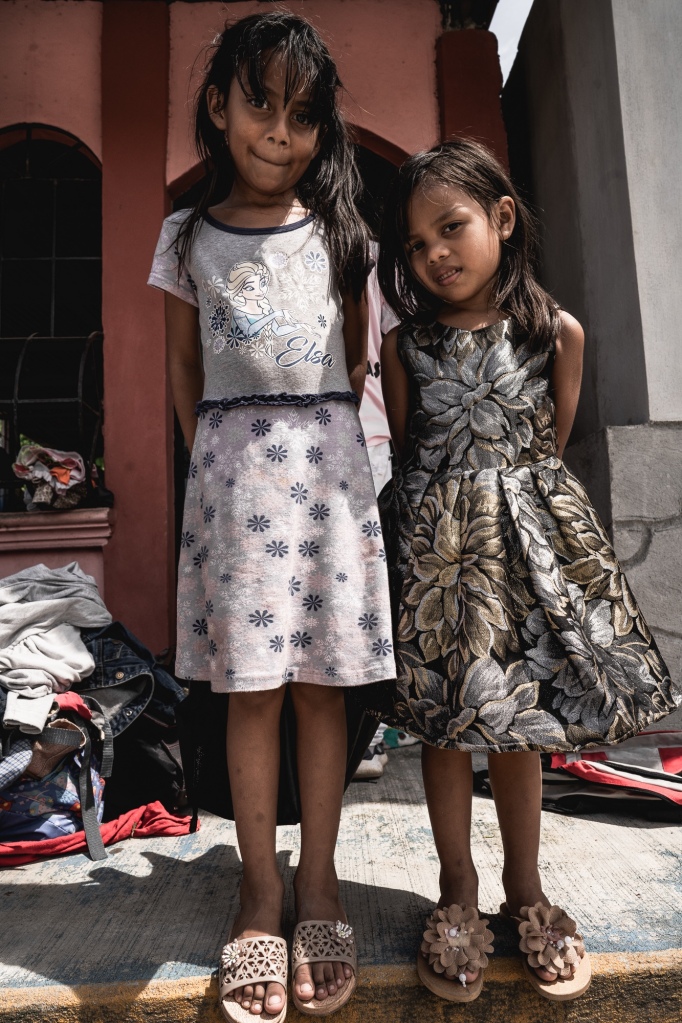
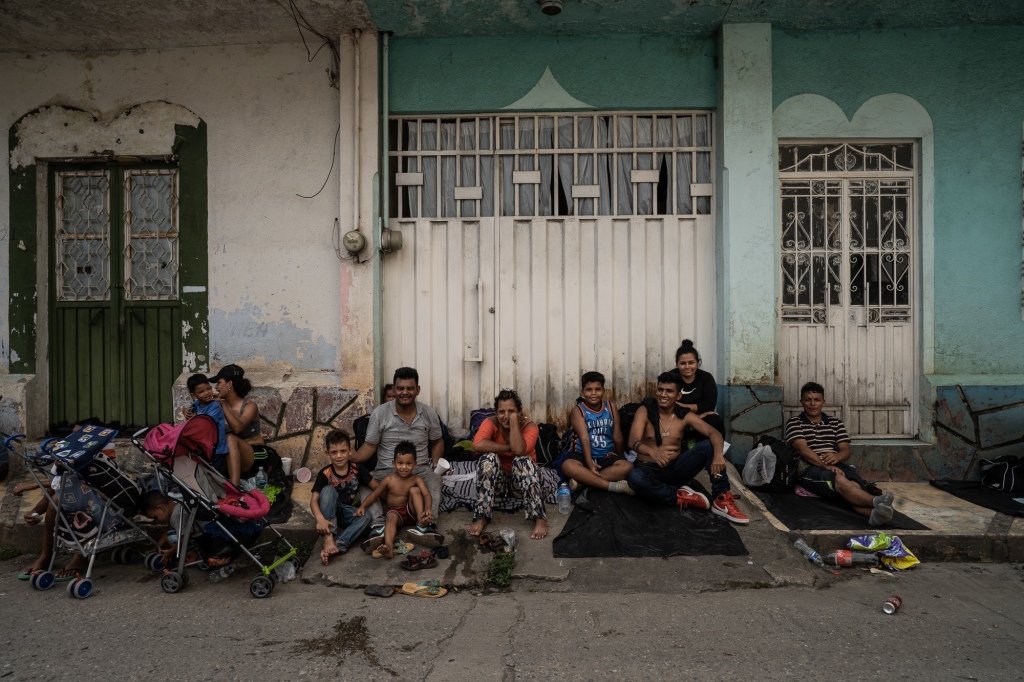
Migrant Caravan Mexico 2021

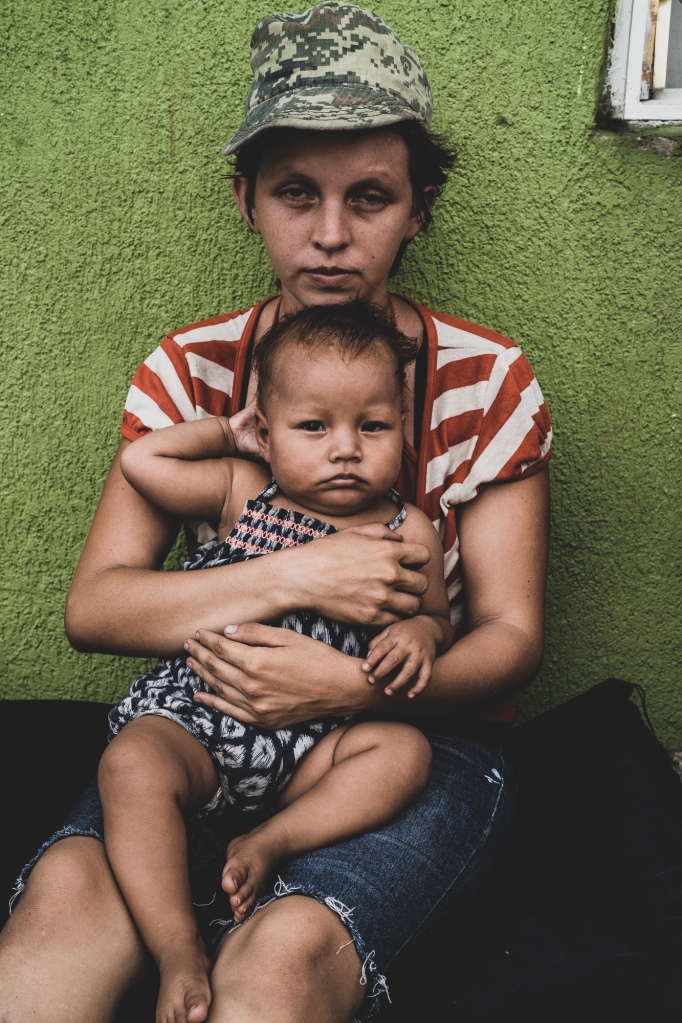
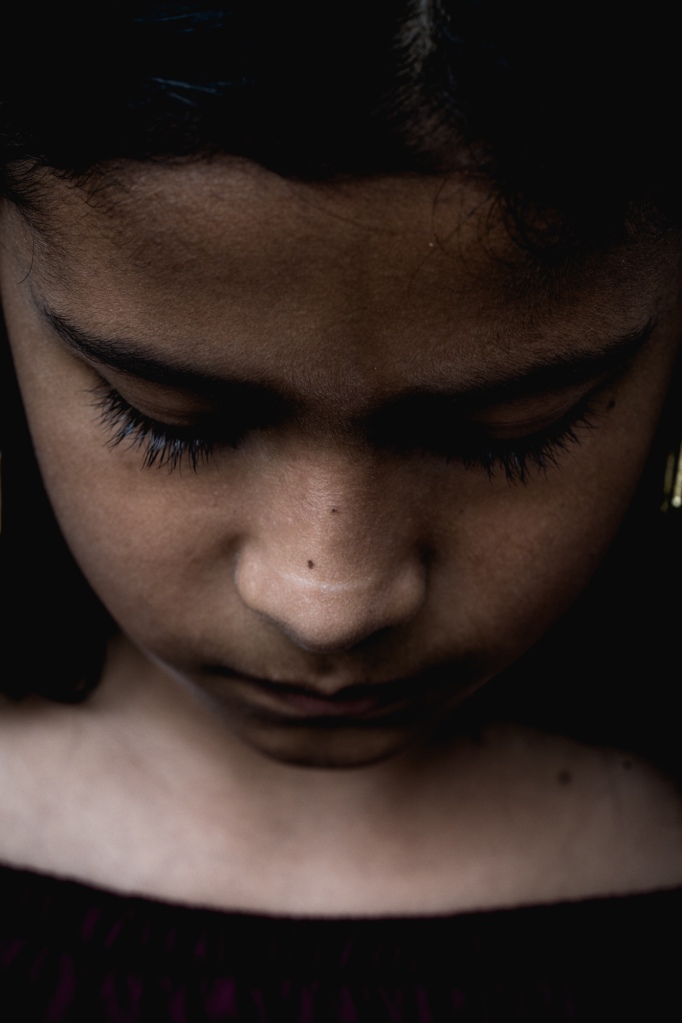
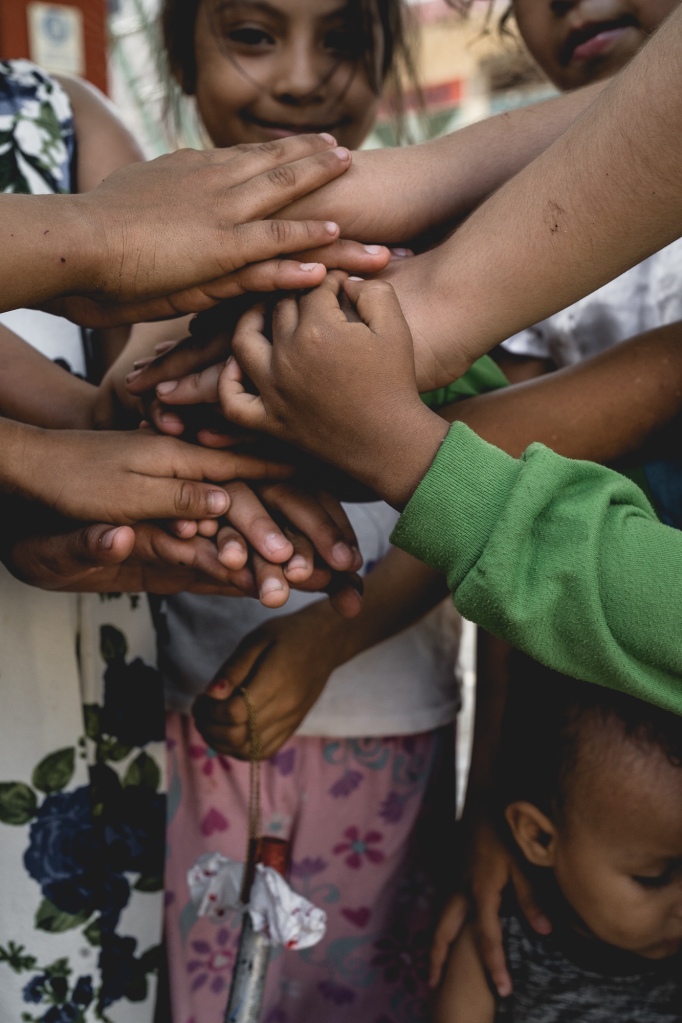
Single woman with children, before rainfall at night, Chiapas Mexico
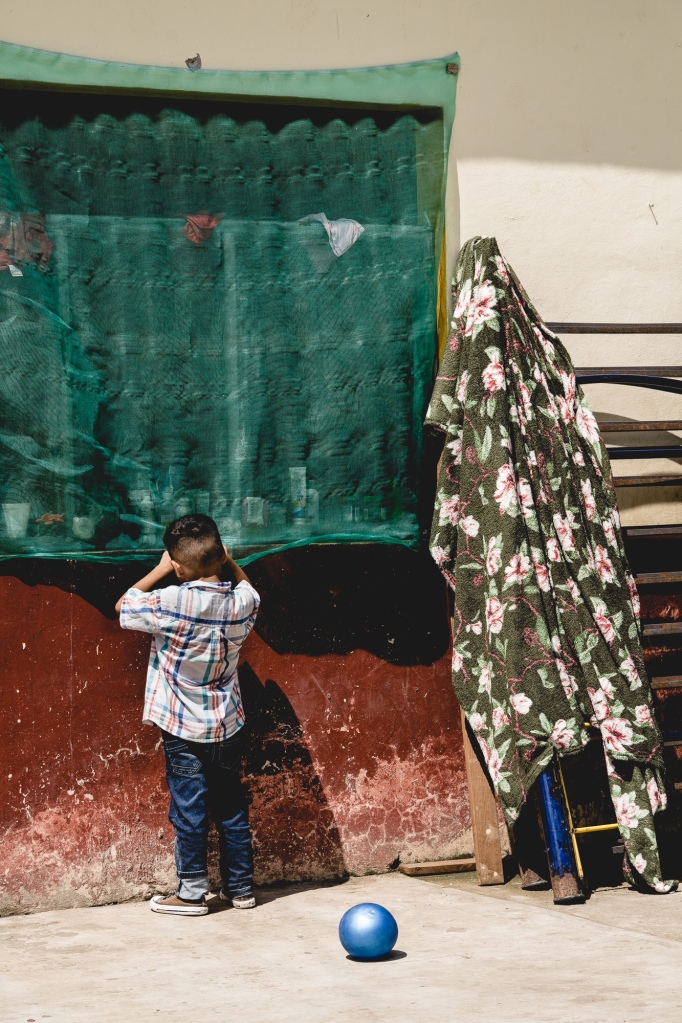
Resting in a small town recreational space after a long March in the rain.
Children wait in line as local church prepares a donated meal
Children with their belongings
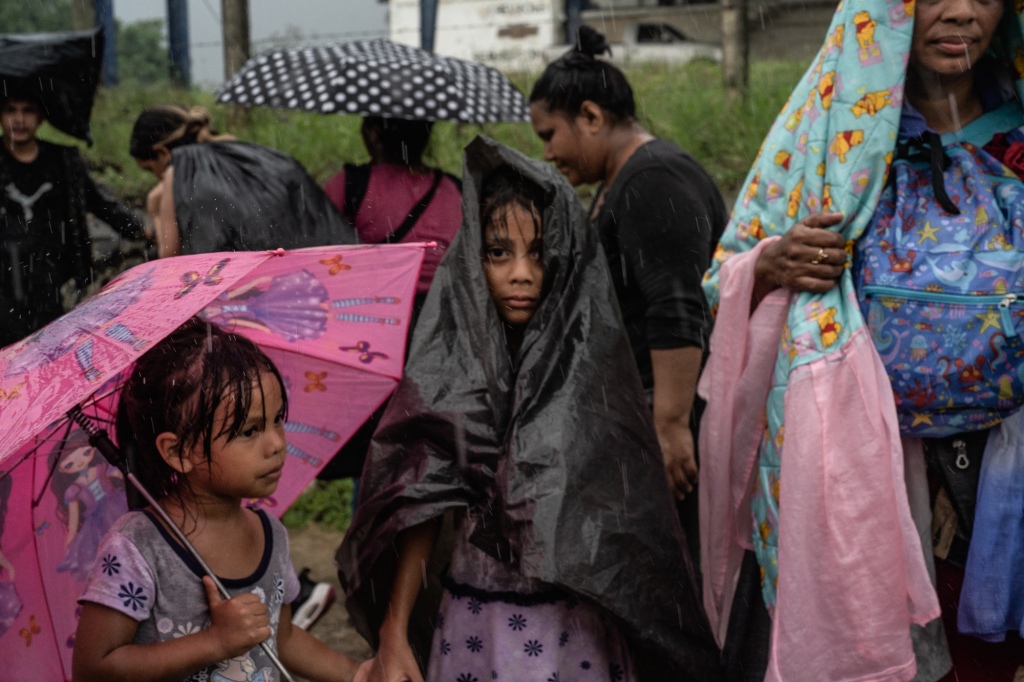
More rain approaches….Chiapas gets incredibly heavy downpours almost every day which thoroughly soak anything not completely secured in plastic.

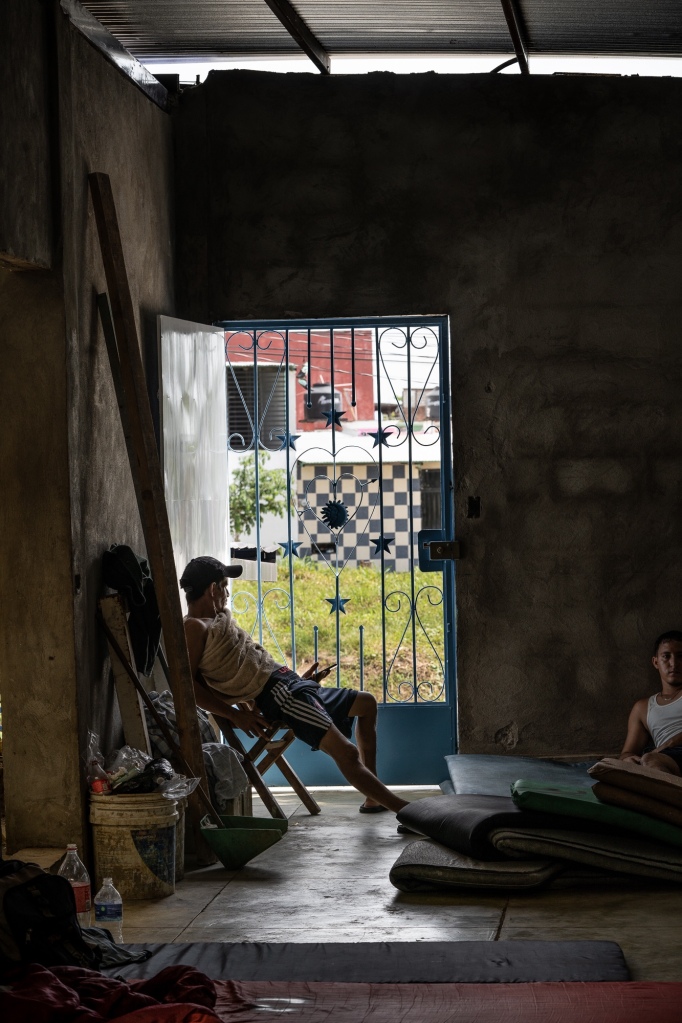
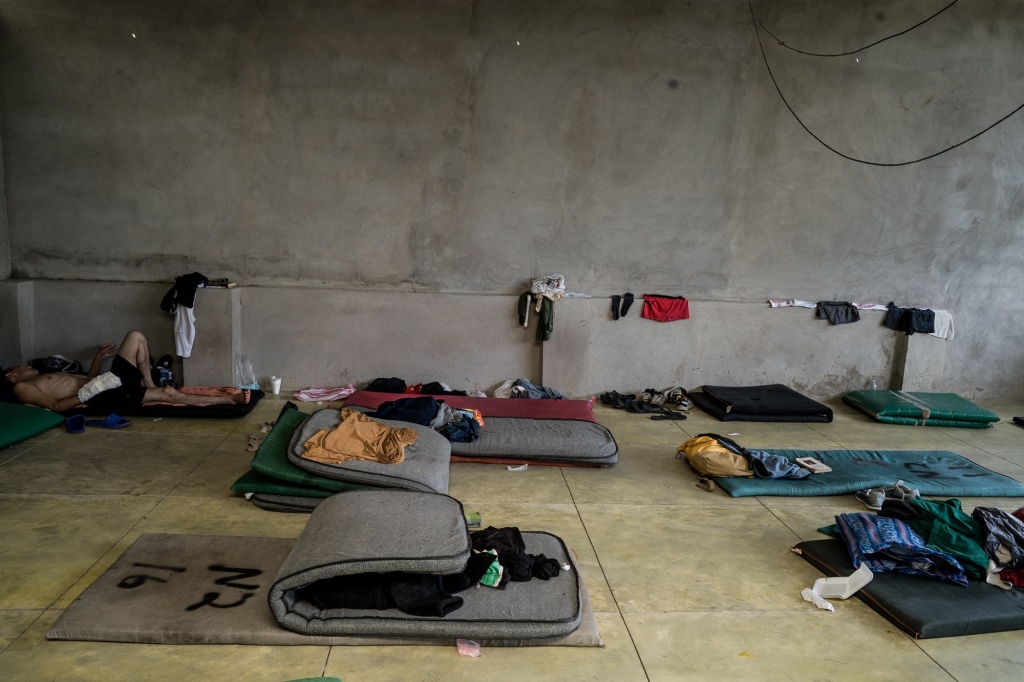
Migrant Shelter, Tapachula. Privacy is an issue in the shelter for both psychological and safety reasons, so many images were made with some restrictions.

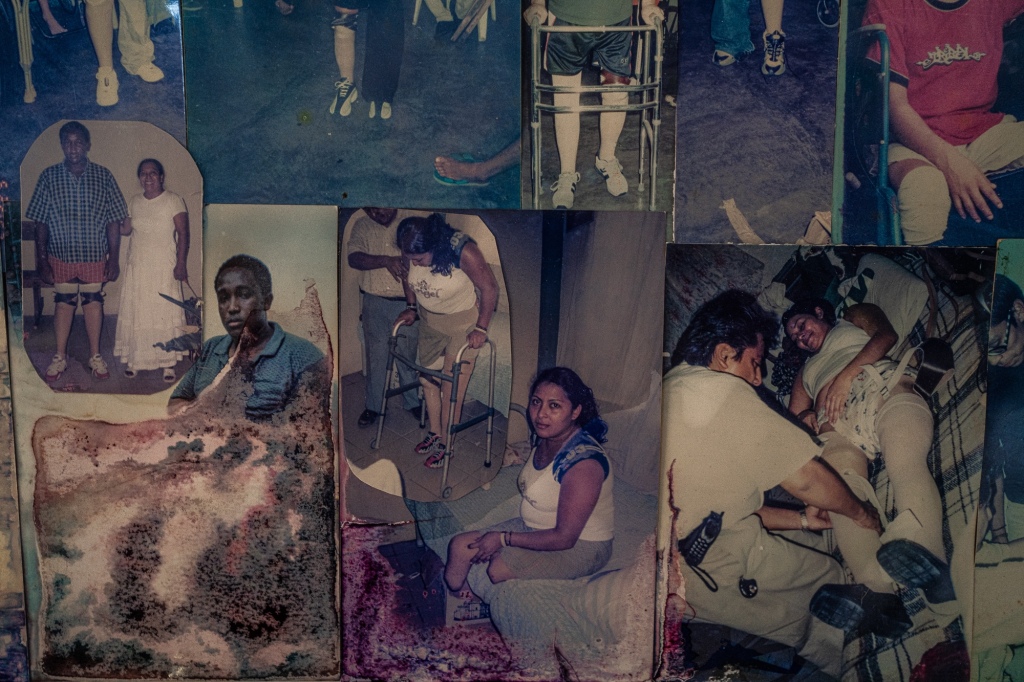
The shelter cares for people who have sustained traumatic amputation as a result of jumping on and off trains during desperate migration attempts.

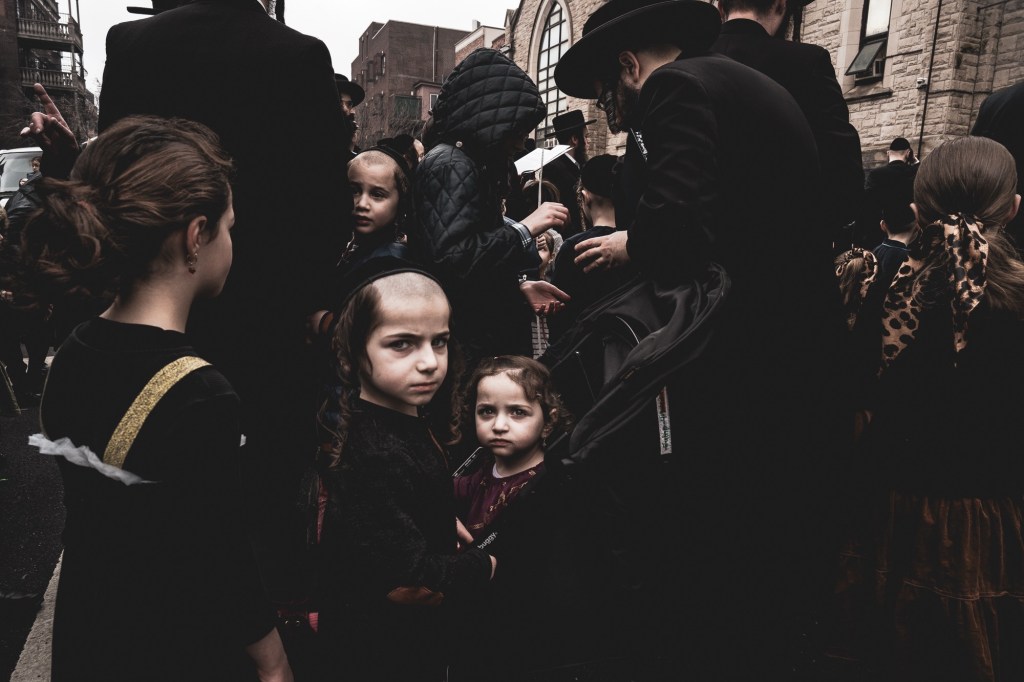
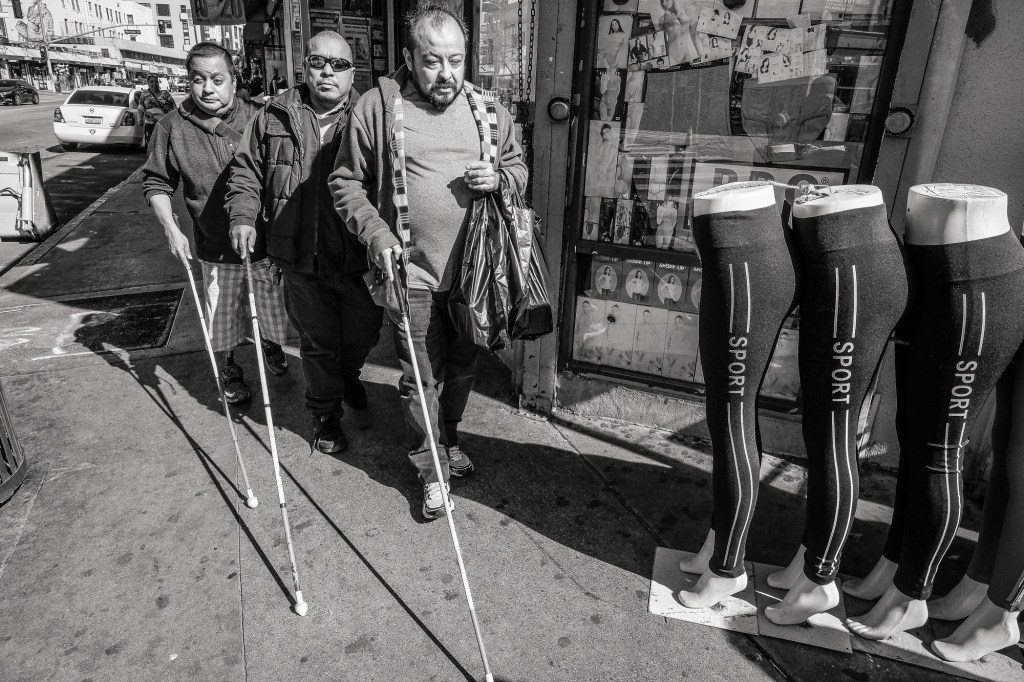
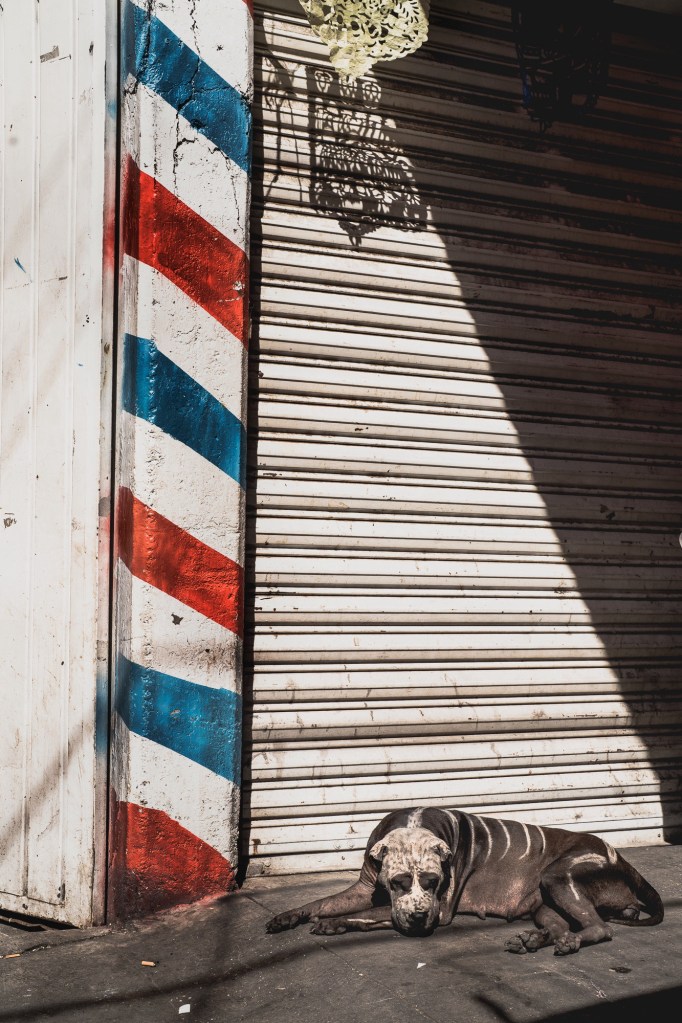
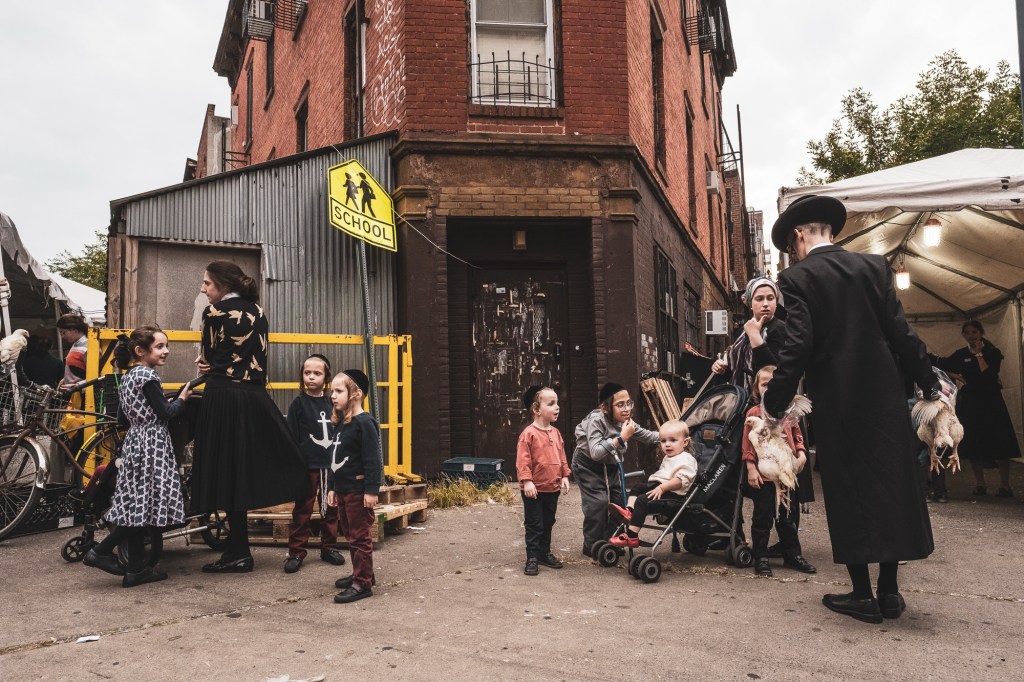
Portfolio Selects, Skid Row, Los Angeles, New York, Paris and Mexico

Kapporos

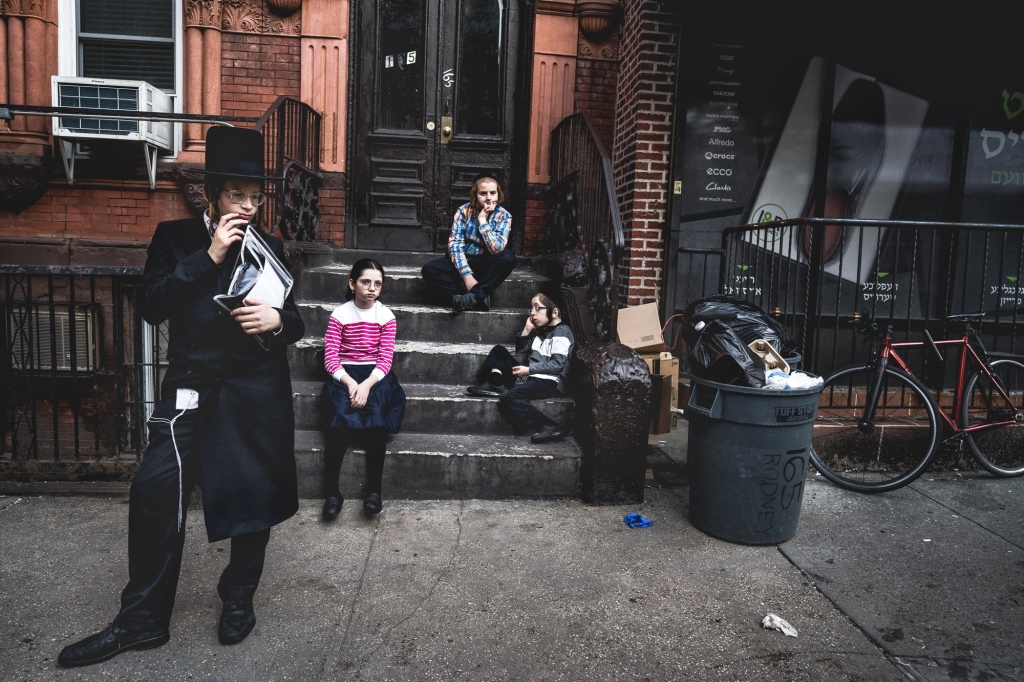
Kapporos,Williamsburg and Crown Heights, Brooklyn, New York City

Shochet in Williamsburg, Brooklyn

Evening before the start of Yom Kippur in Crown Heights, Brooklyn
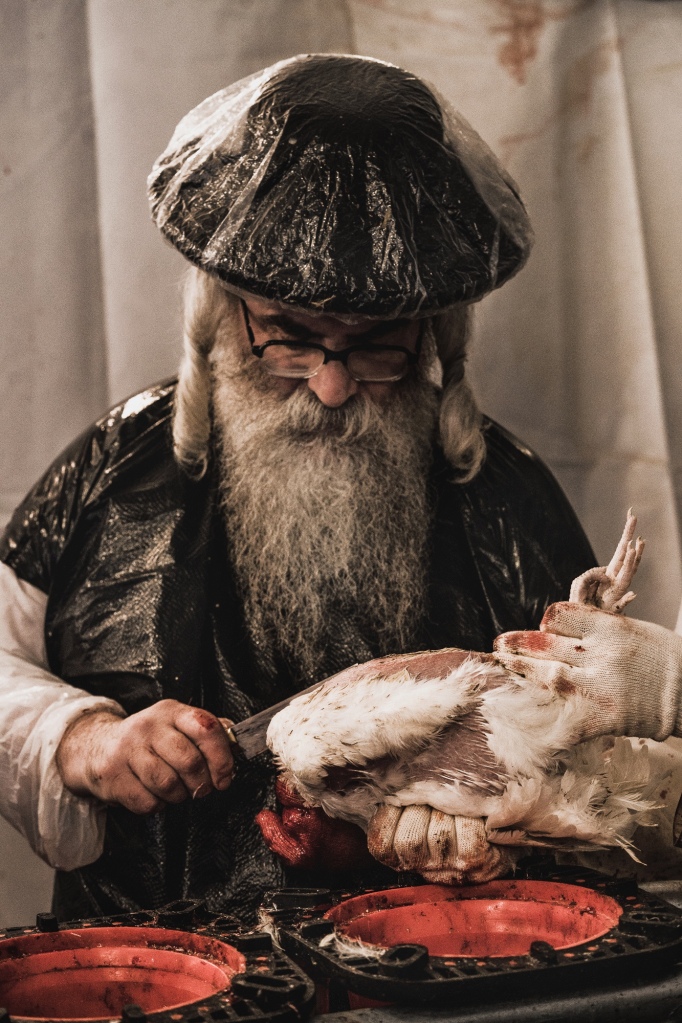
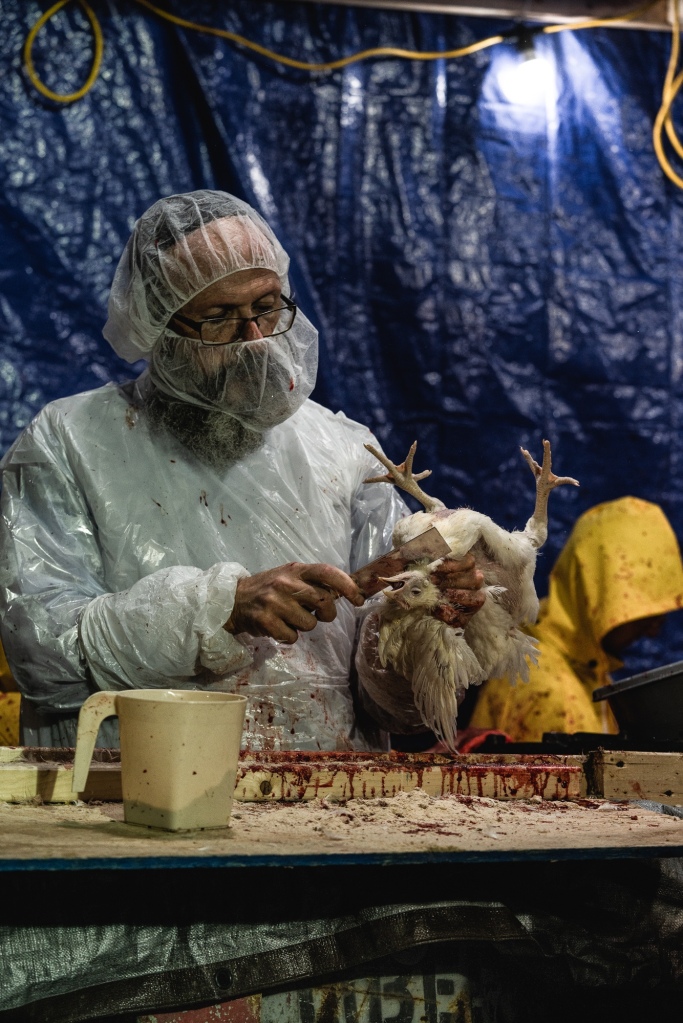
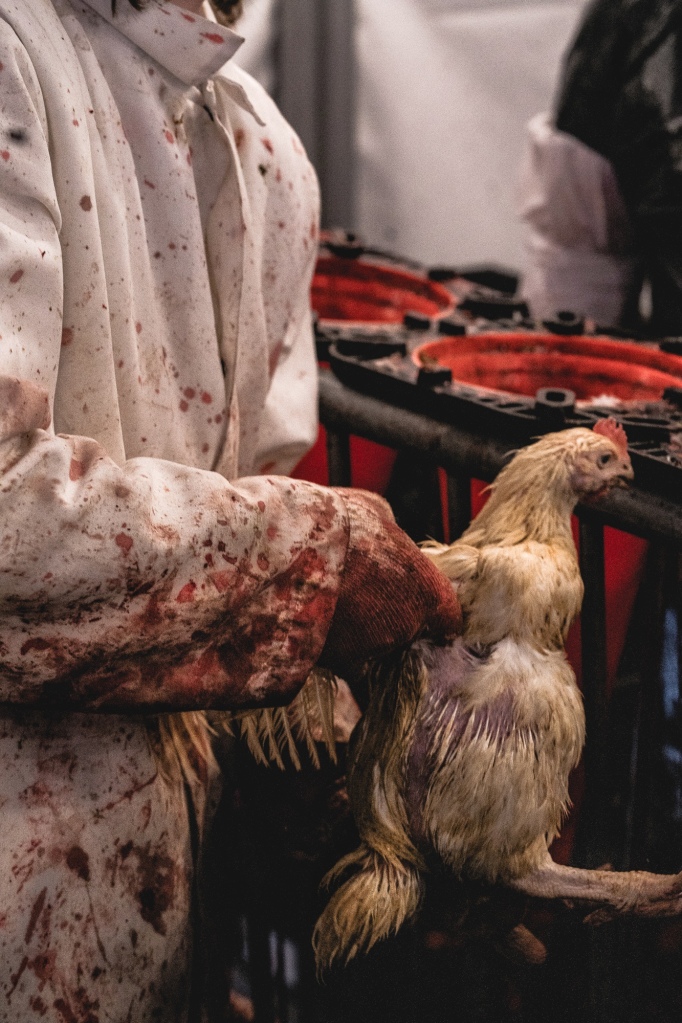
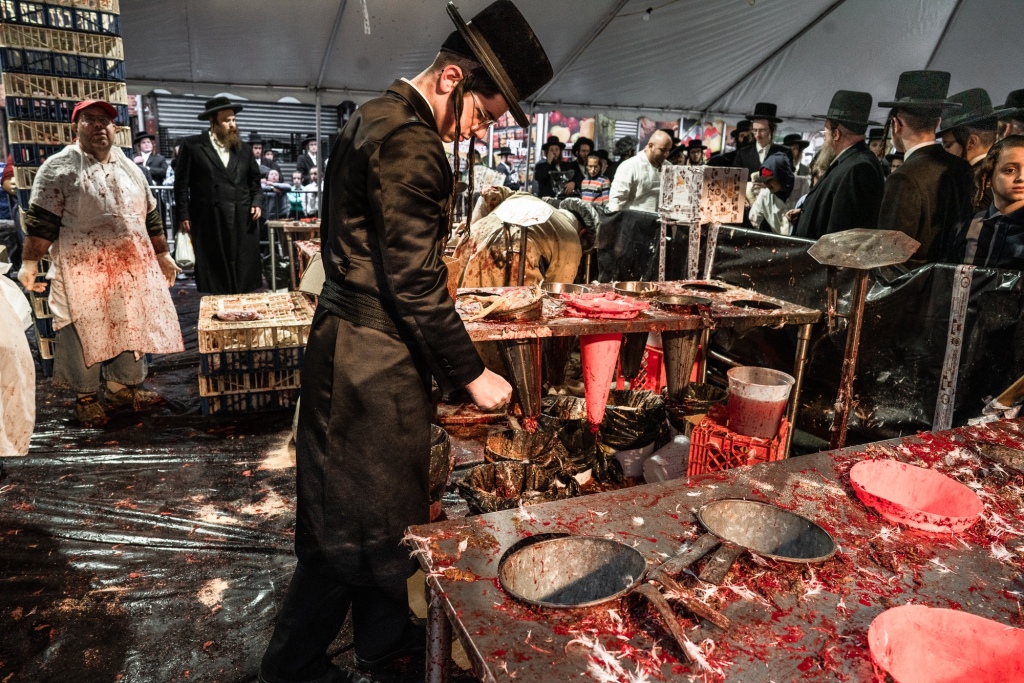
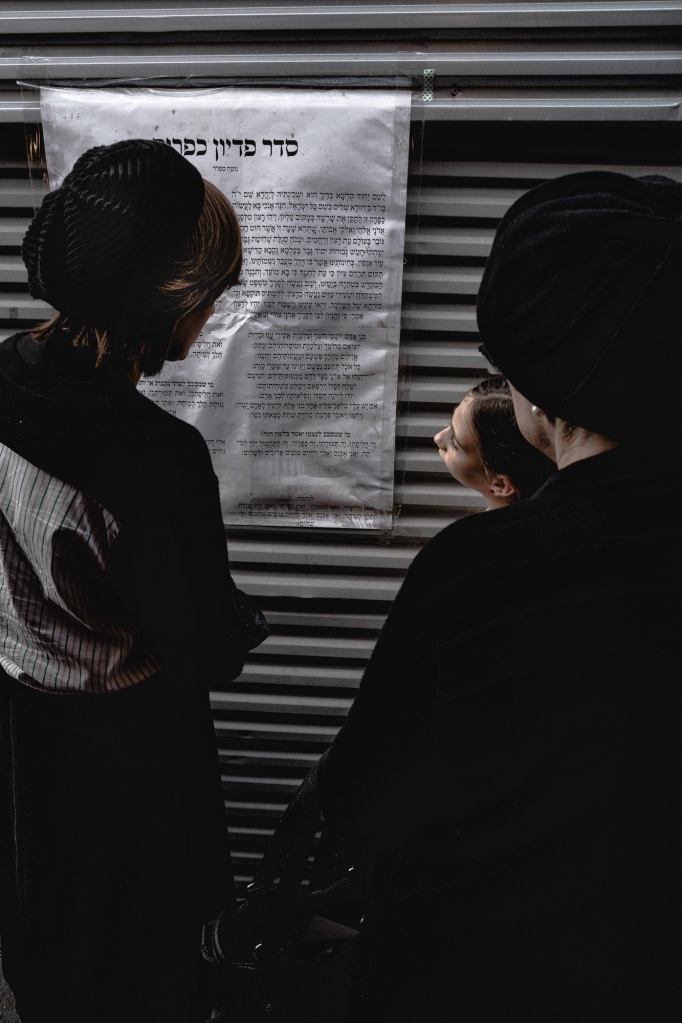
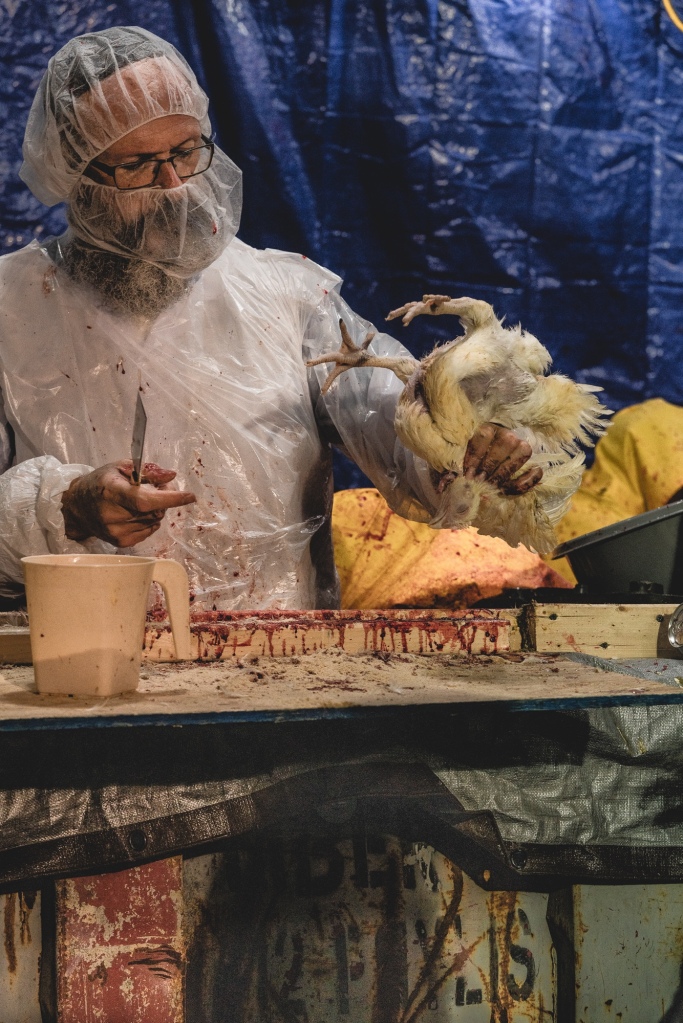
Shochet, Night, Kapporos on the eve of Yom Kippur, Crown Heights, Brooklyn. Birds are slaughtered by a certified practitioner who must abide by Kosher law in methodology as practiced during animal slaughter. Because of the volume of birds being killed, some locations do not adhere to established protocols. On this night in Crown Heights, I observed strict adherence with this particular Shochet. The Shochet must continually check his blade for sharpness and efficacy.

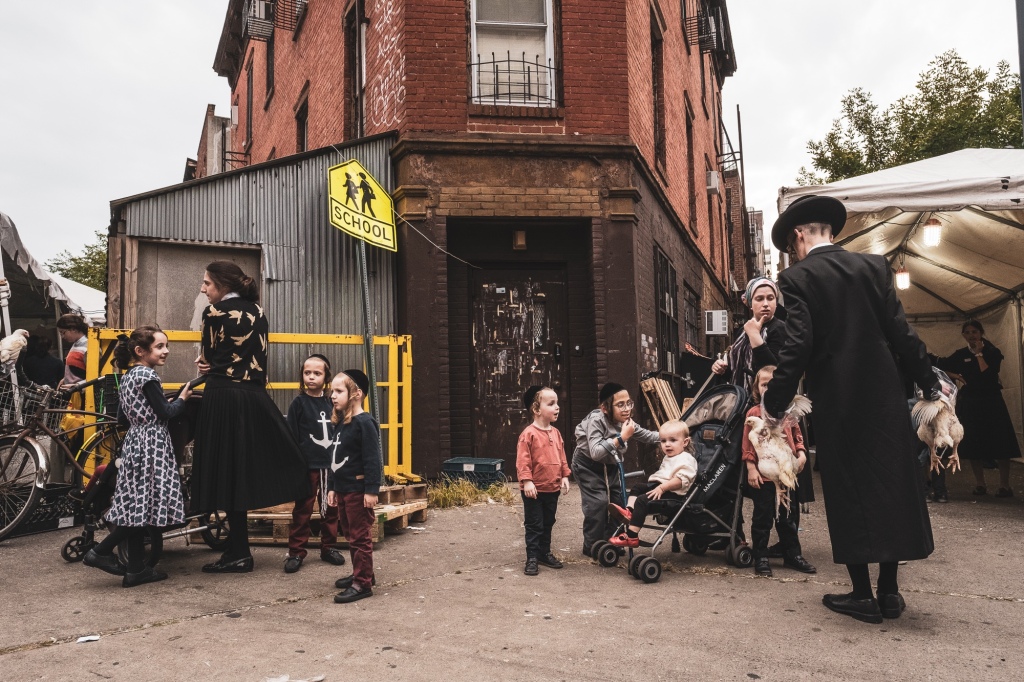
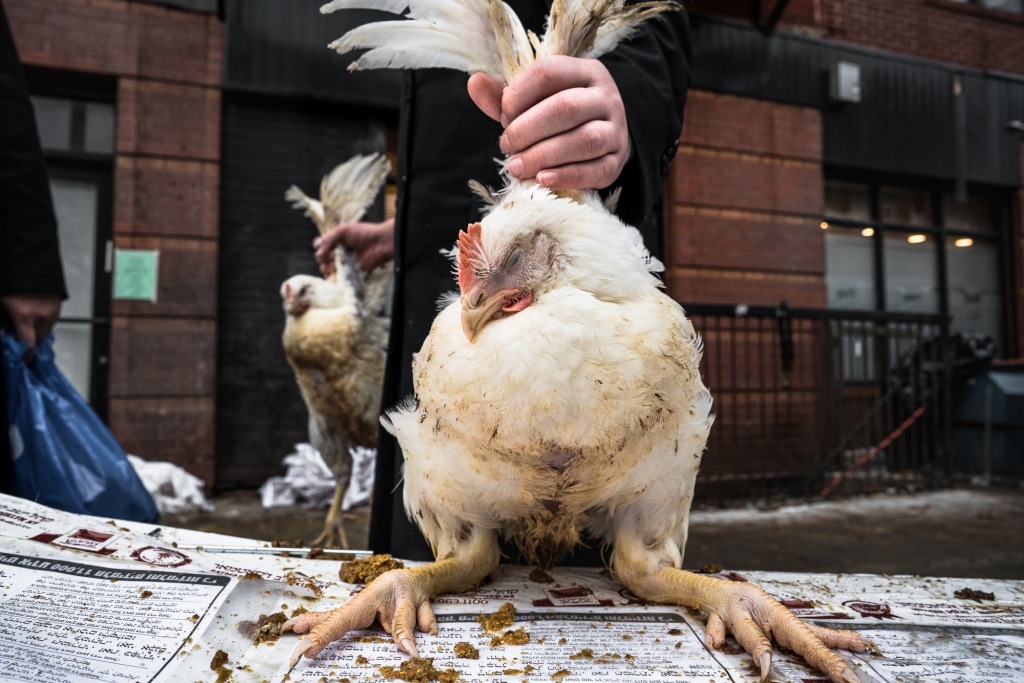
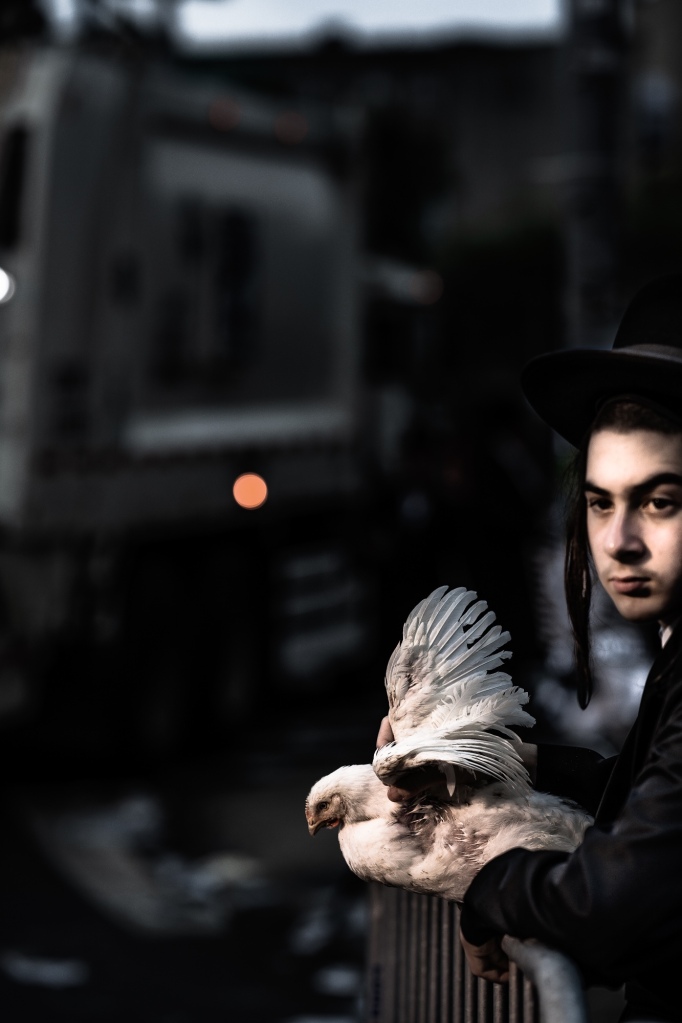
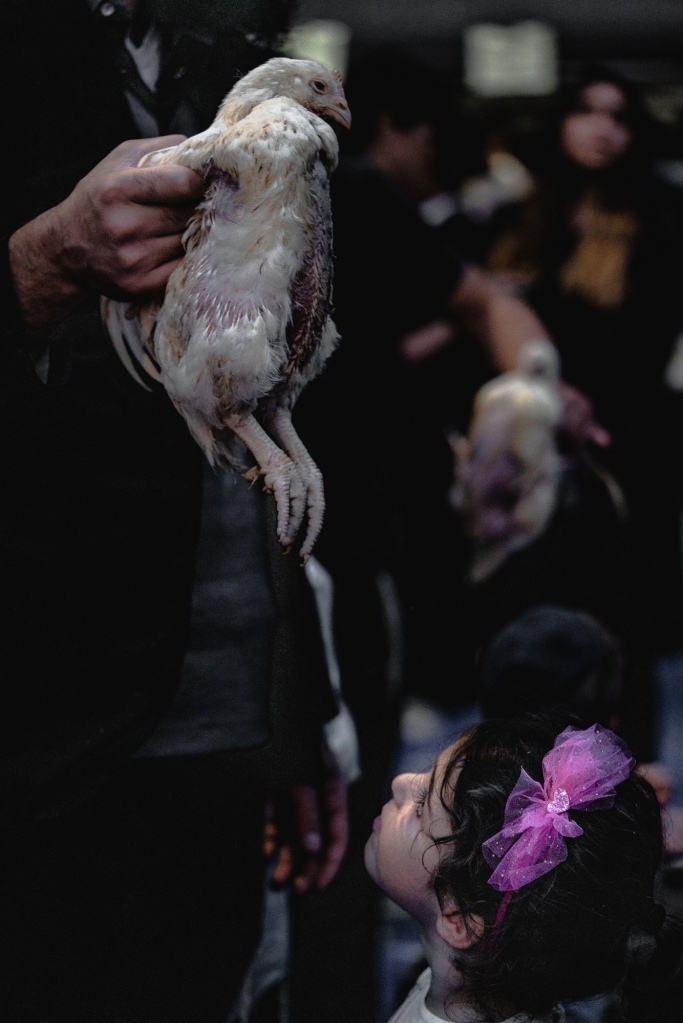
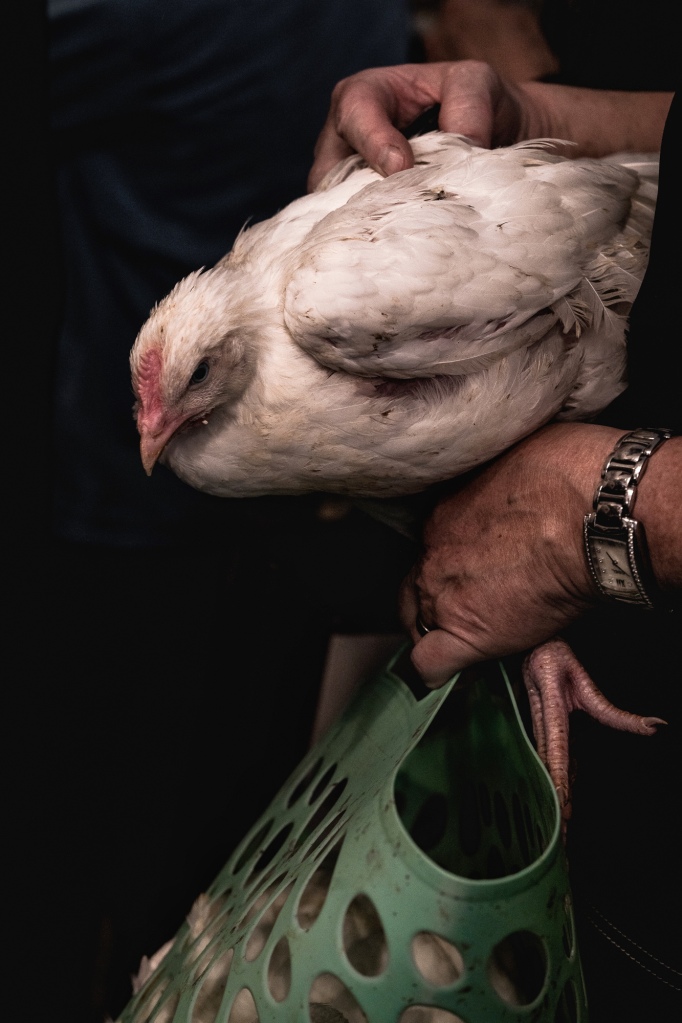
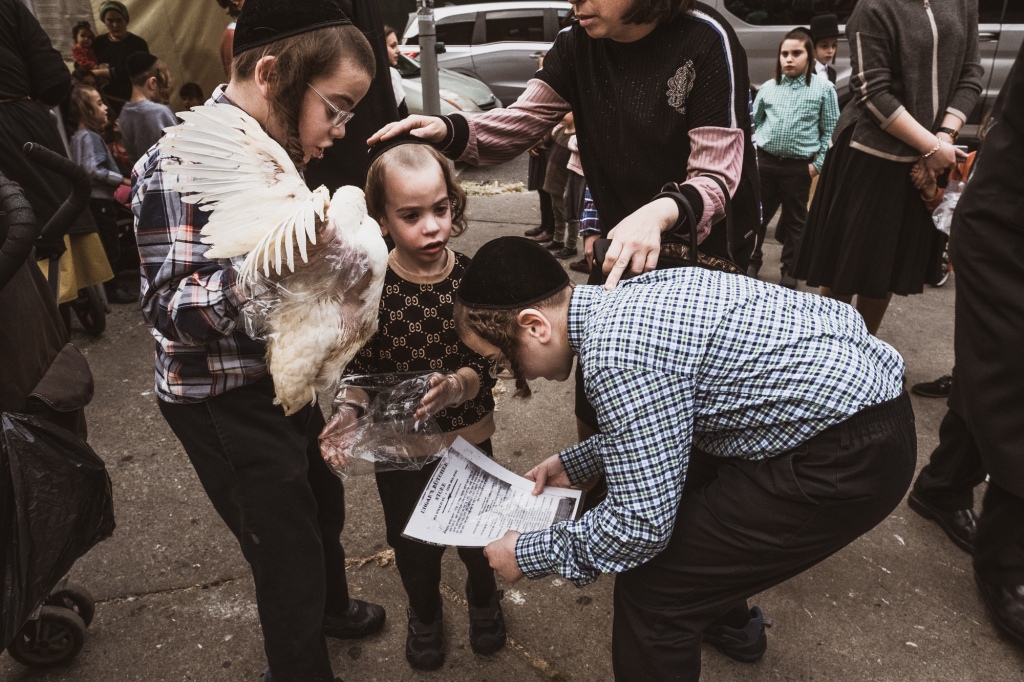
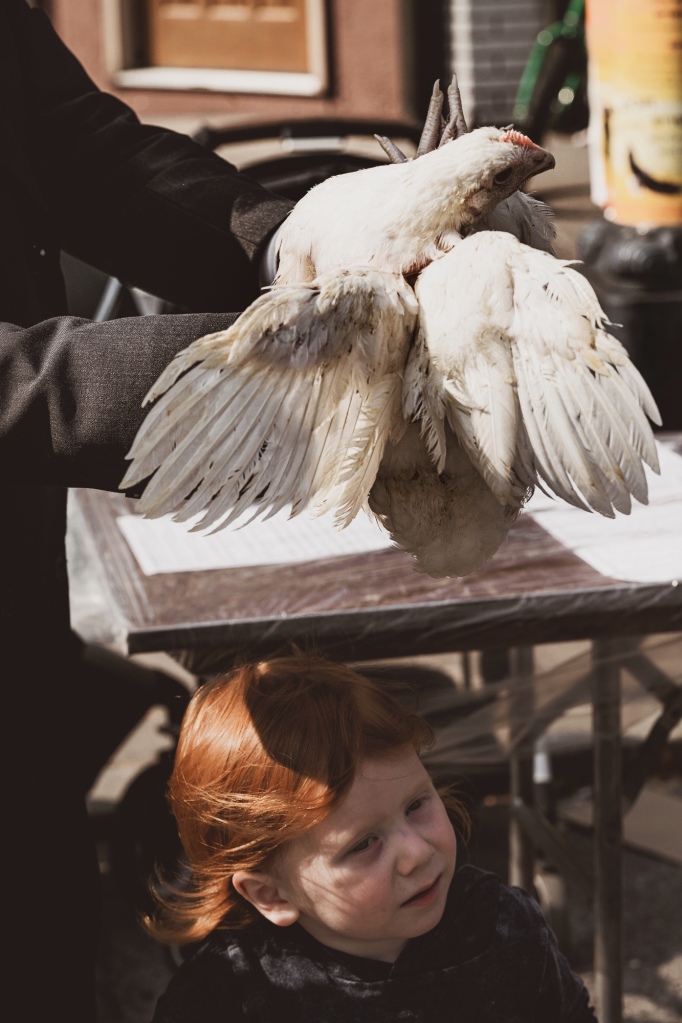
I’ve photographed Kapporos in Williamsburg three times, from 2018 until this year, 2021. Williamsburg has a very antiquated ambiance that I love to witness and photograph generally, and Kapporos is a time period that’s extremely provoking, despairing and captivating to photograph. Briefly, Kapporos is a ritual performed by a subset of ultra orthodox Jewish communities just before Yom Kippur. A special prayer is said, and a live chicken is waved over the head, in order to absorb the sins of the past year for the person reciting the prayer. Girls and women use female birds, and boys and men use male birds. The bird is then supposed to be slaughtered immediately, according to strict kosher law, and then processed for consumption and donated to charity.

Just before being handed to Shochet for slaughter.
Observers

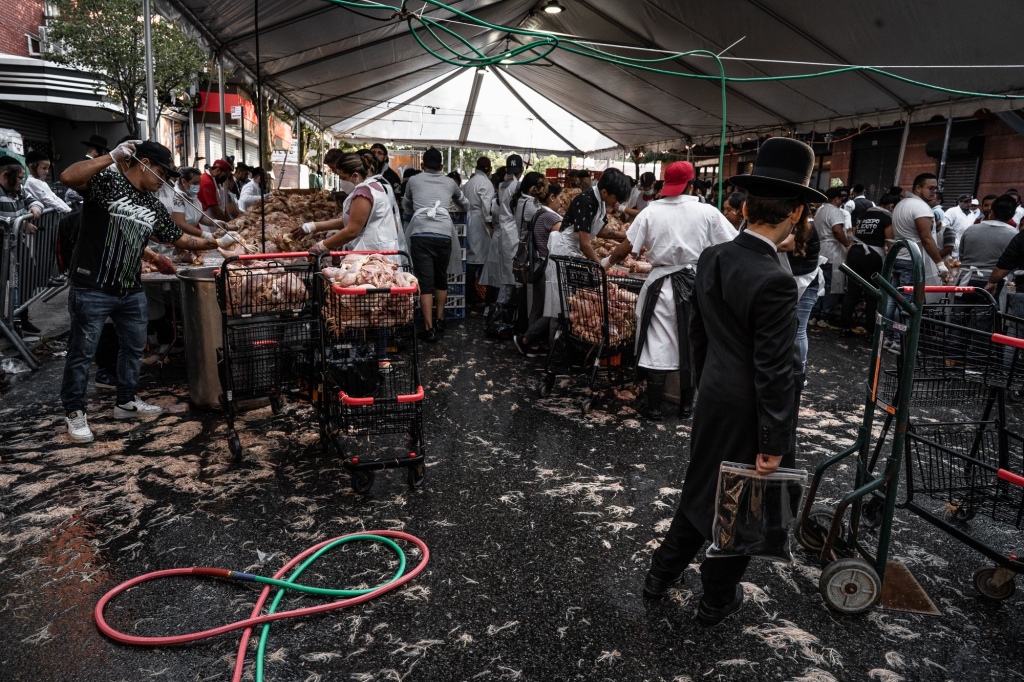
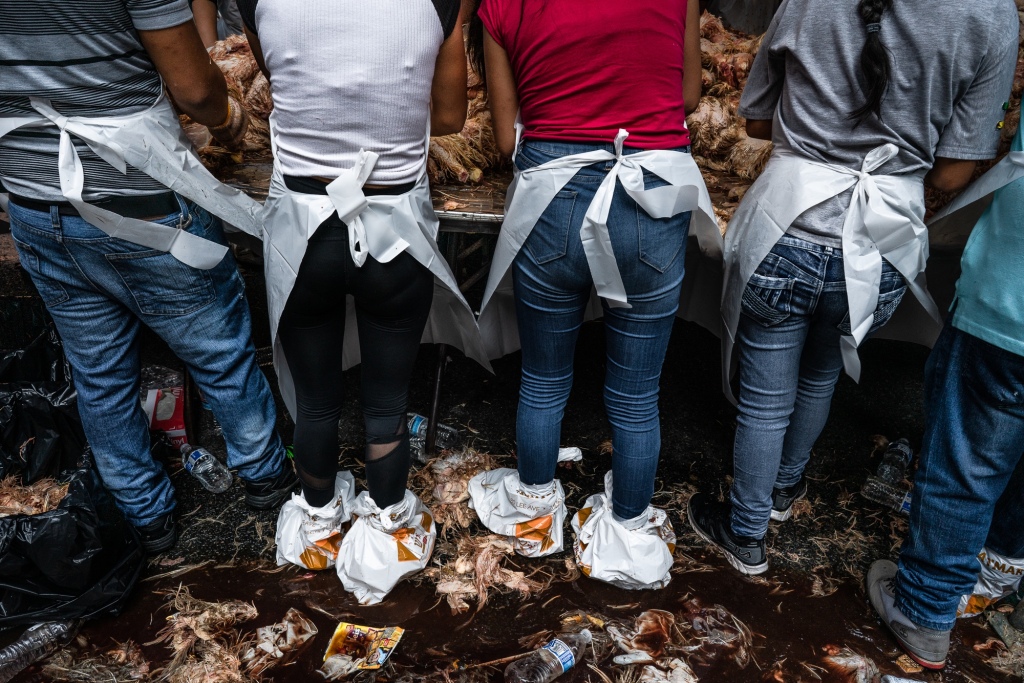
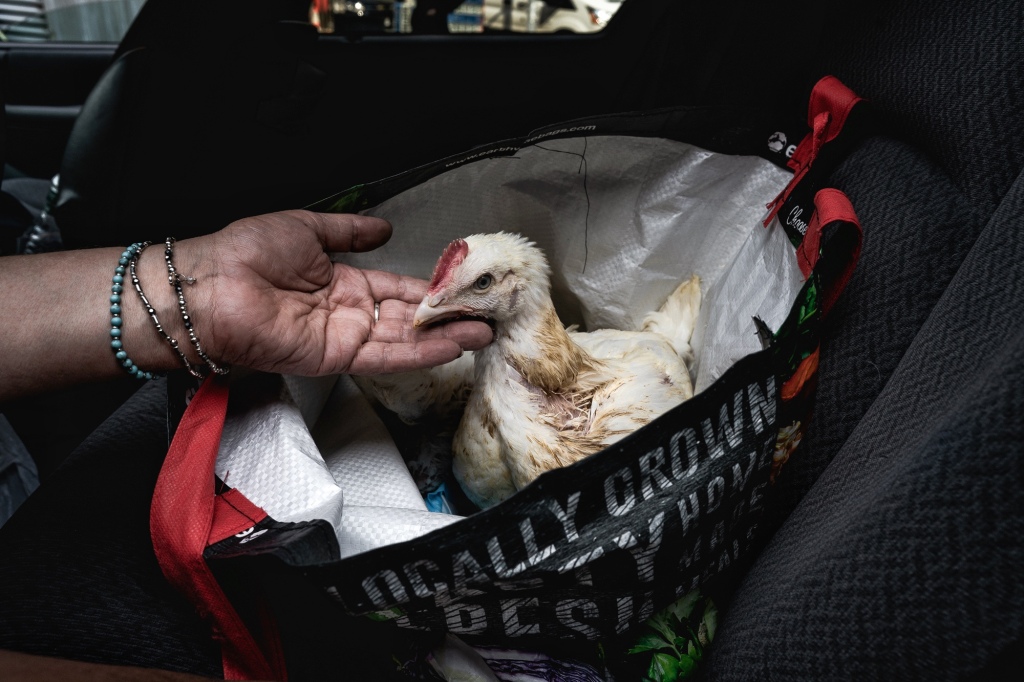
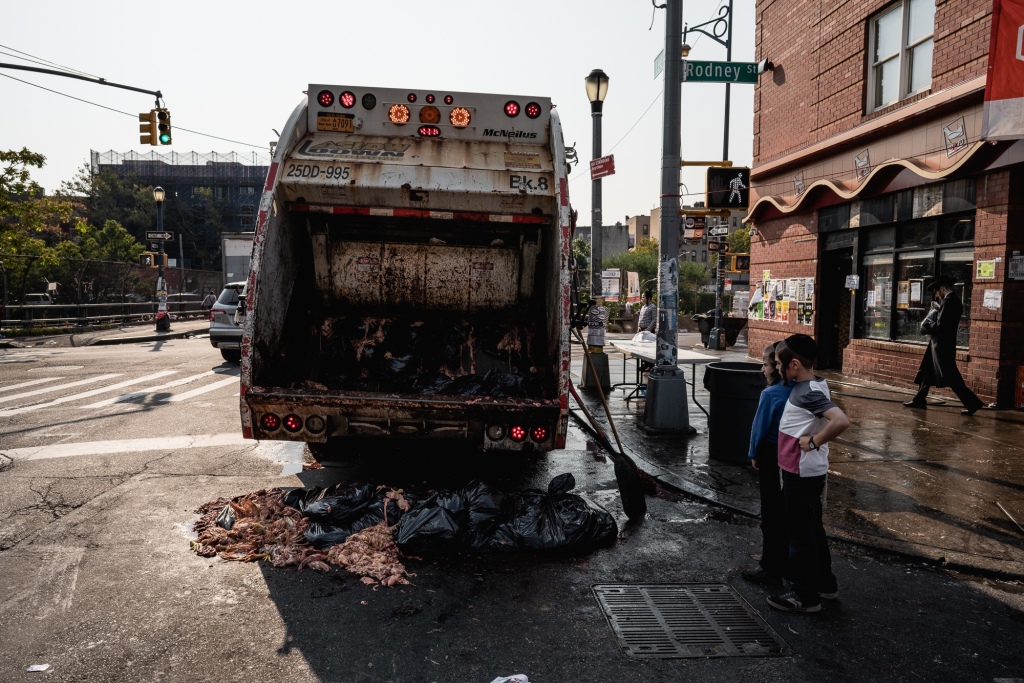
In practice, many birds wind up in the garbage. The largest sites in Williamsburg do butcher and donate, but unfortunately in Crown Heights some sources claim that the birds are put straight into the garbage afterwards. Sunrise in Crown Heights the morning before Yom Kippur finds rescue crews opening giant green garbage bags behind the staging area where most slaughter took place the night before. They painstakingly search for living birds who are stuffed haphazardly into the plastic bags, birds not used during the ritual but who must be removed before sanitation comes and hauls the garbage away forever.

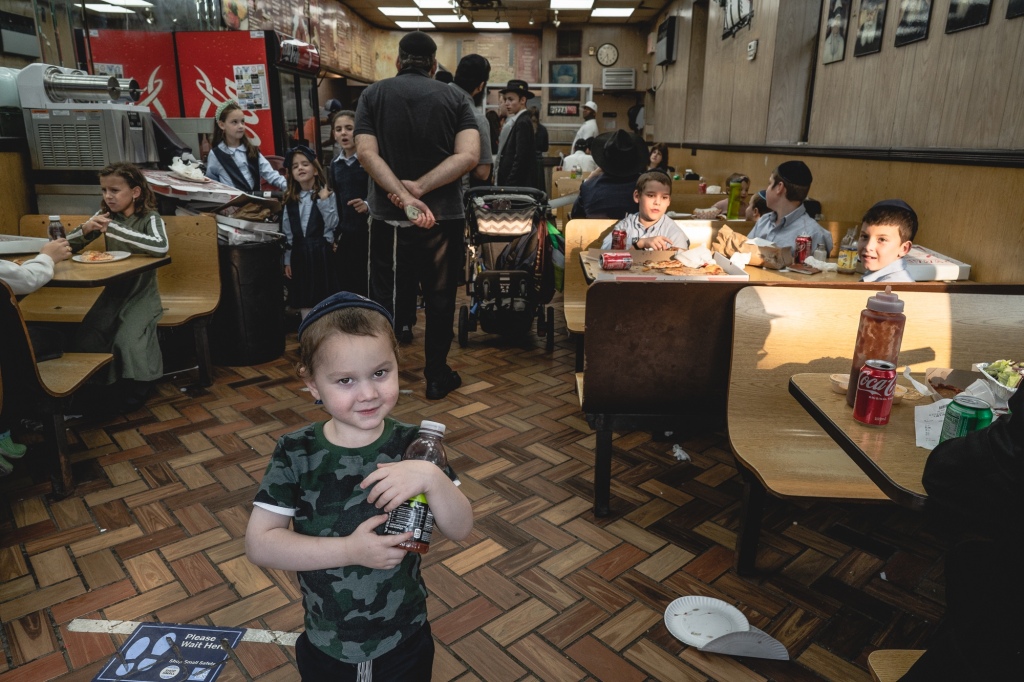
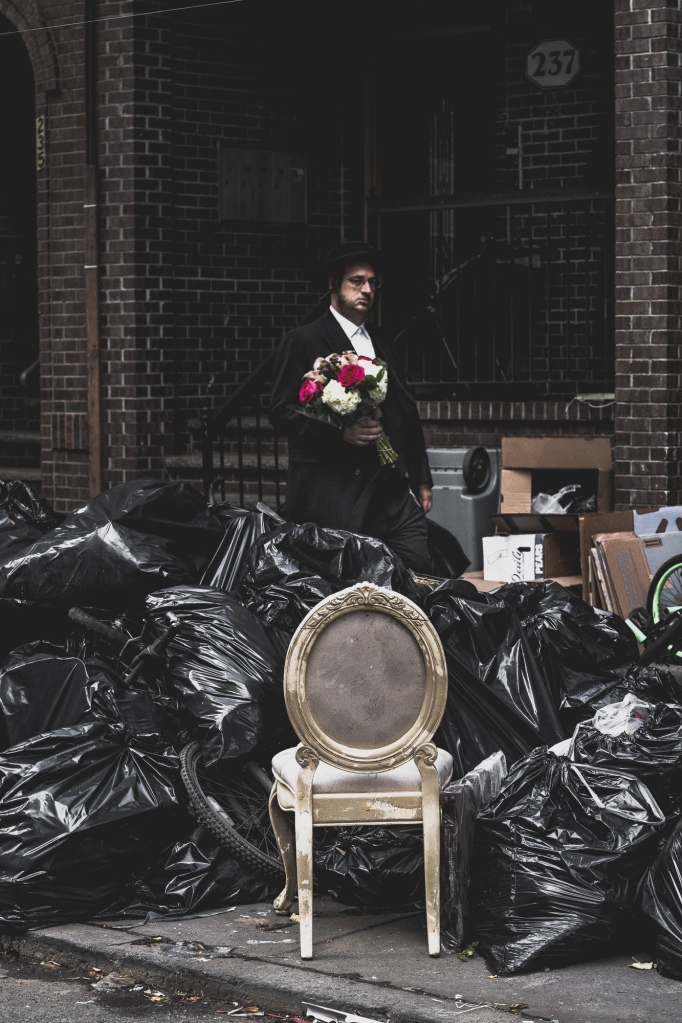
I had never seen the ritual in Crown Heights, but knew that it was a much bigger event there, and that it attracted visitors from all over the world, especially Israel. I went to Crown Heights late in the afternoon, in anticipation of a wildly active and vibrant neighborhood that was almost completely new to me. I didn’t know if my presence would be well tolerated because the event is extremely controversial and the presence of activists and their specific style of photographing and videoing would make it difficult for me to work independently, working to create natural images of the people and the event without my presence causing ripples of tension or anger. I wandered the neighborhood,eating pizza, talking with people, and feeling like I could understand why the neighborhood is so attractive to so many from around the world.

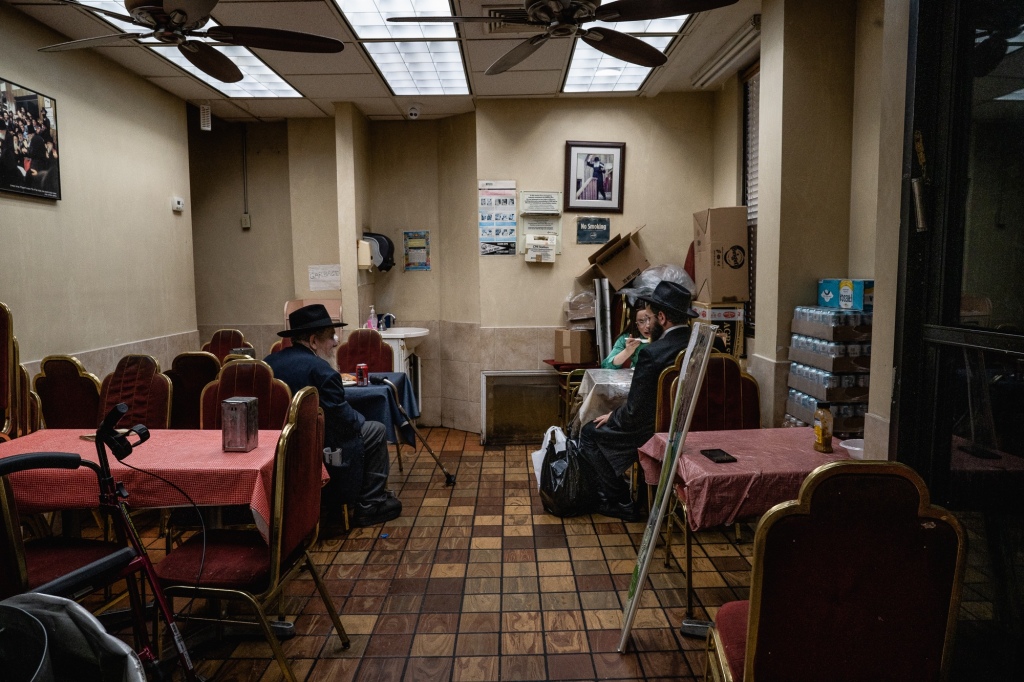
Pizzeria on Kingston Avenue in Crown Heights, Brooklyn

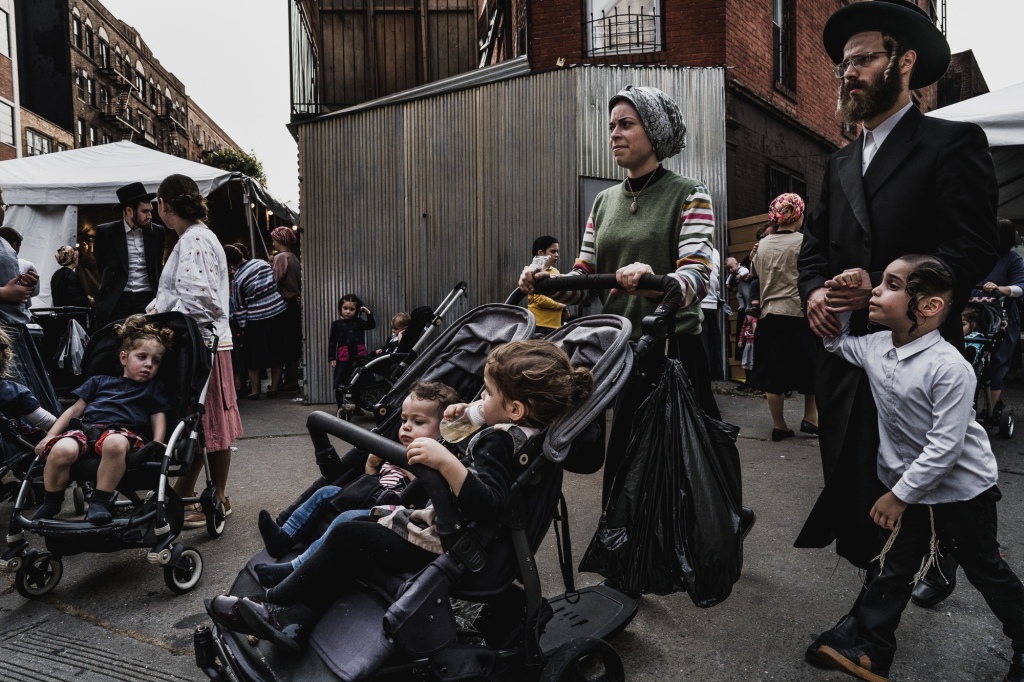
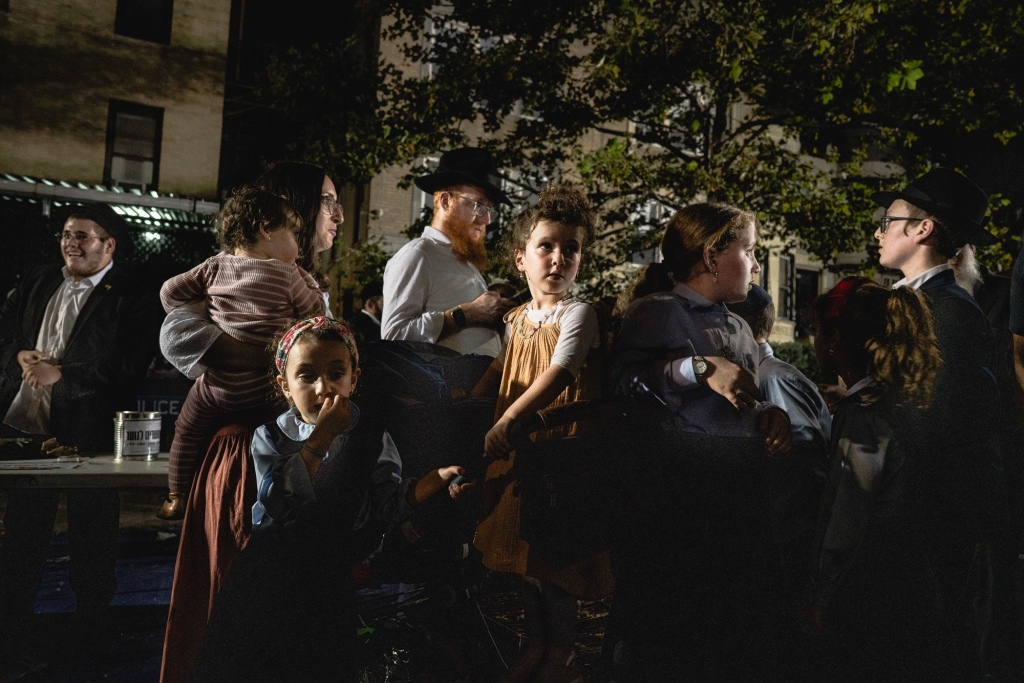
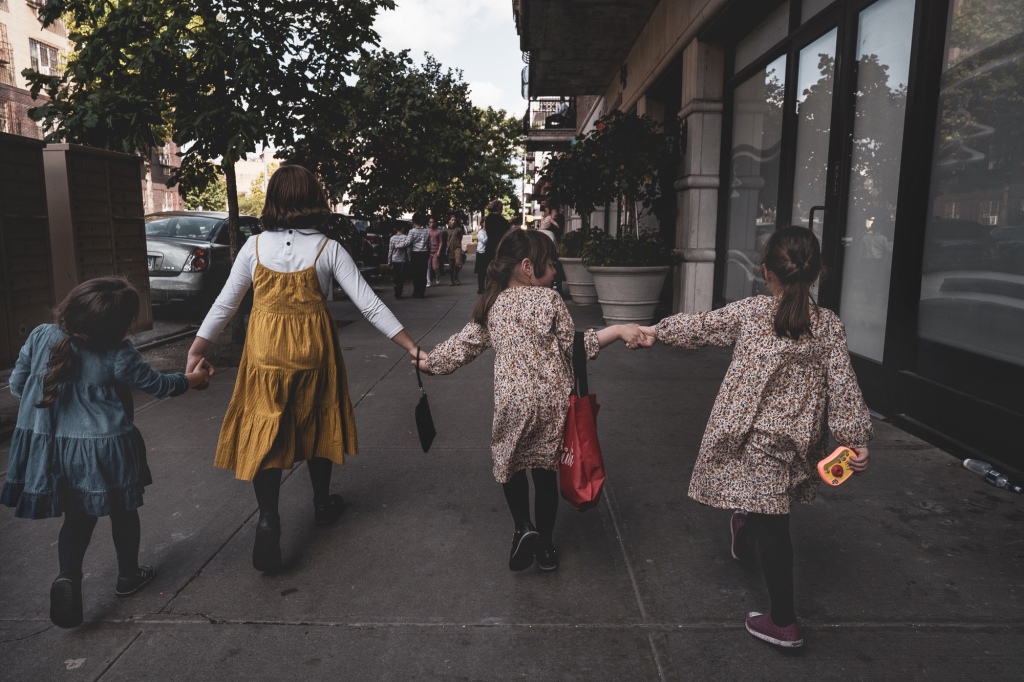
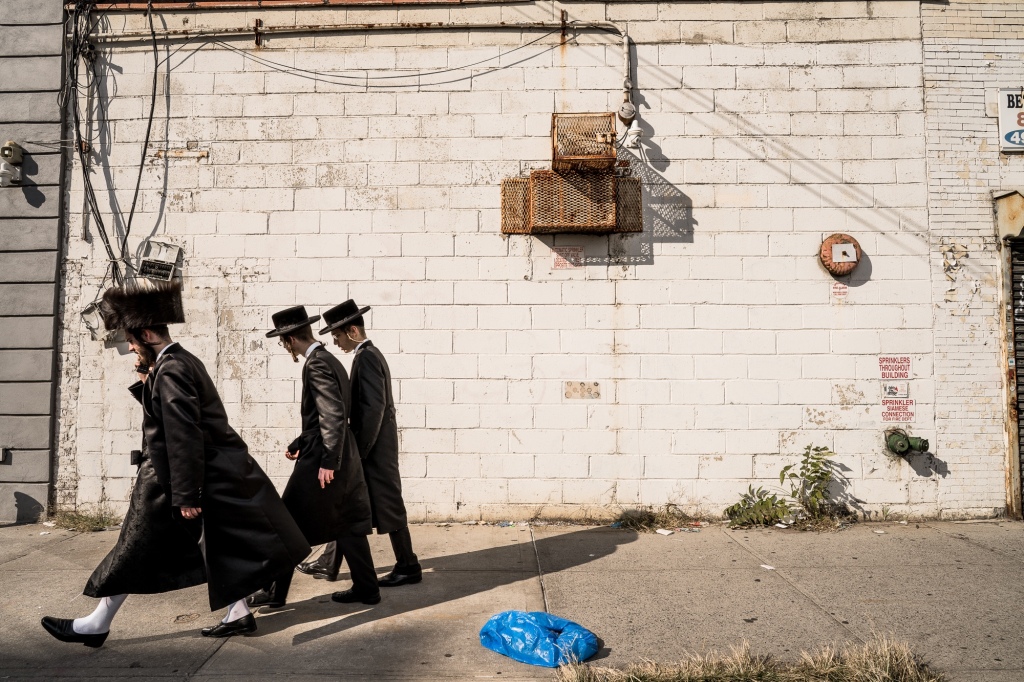
It reminded me a bit of parts of Jerusalem. It was like a giant block party, including the area near President Street getting ready to accommodate the slaughter of thousands of birds, with all of the accompanying odors and sights and sounds. I want very much to be able to photograph as naturally and honestly as possible. This ritual is highly charged and controversial because of the birds and the immense suffering they endure. The innocence of the children involved as well as fair practices regarding photographing a community with care and justice can become nearly impossible because of the immense distrust that is a direct result of the Hasidic Jewish community being vilified in the media at times, and by the public in the relative privacy of person-to-person negative encounters over the years. Anti Semitism is commonplace and in evidence daily, resulting in physical attacks, verbal harassment and a general sense of exclusion.
Family on President Street during Kapporos in Crown Heights

For me as a photographer it is still very important—despite accusations that the images may promote Anti Semitic commentary— that I include the images of the birds and the slaughter because it’s part of daily life. Although the slaughter is part of the ritual of Kapporos, the acts that cause death are performed millions of times each day all over the world in the worst, most unimaginable conditions. The birds themselves are engineered for consumption, a breed called the Cornish Cross that reaches slaughter weight at 6 weeks, an astonishingly short period. These birds are what feeds and powers the population of the United States and are universally consumed. Because this event takes place in the street and is public, accessible and highly visible, it is the first time most people have witnessed an animal dying during this process. My personal feelings have become separate from my drive to capture this complex and deeply rooted tradition. Most Jewish people have never heard of Kapporos, and most New Yorkers are unaware of the practice. It is an arcane and particular ritual, confined to a community of ultra orthodox people who must be carefully photographed in order to present the beautiful complexities that are visible on the street.
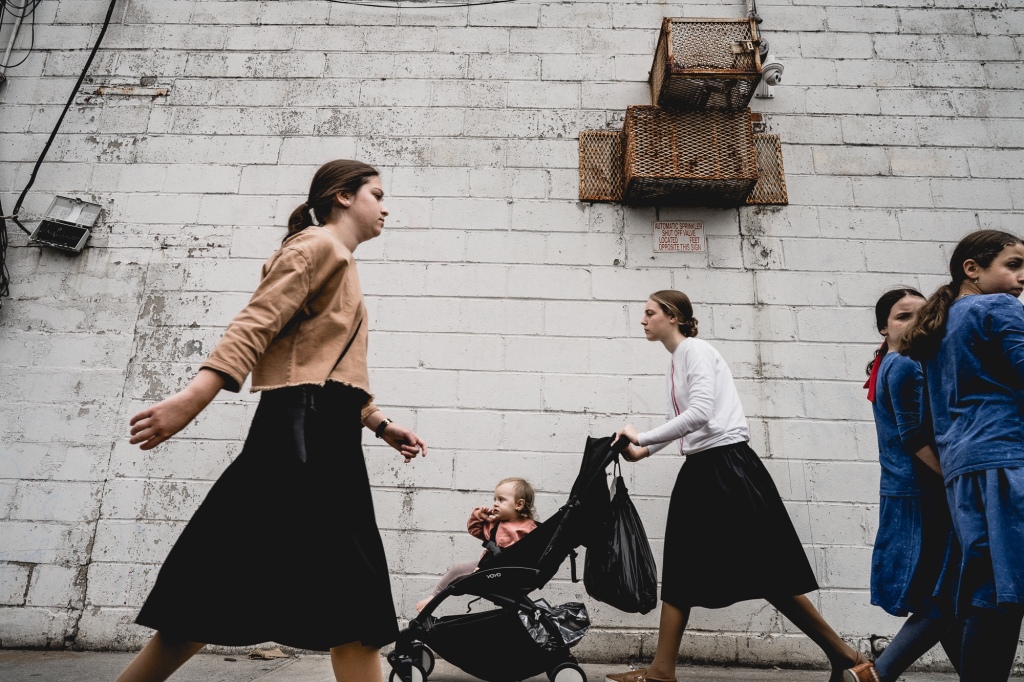
Williamsburg, Brooklyn

It would be unfair and totally inaccurate to present anything other than a wider perspective. I found the most beautiful and engaging people engaged in a horrific practice with little regard for the suffering of the birds who withstood intense heat, no food or water for days, and sometimes very haphazard and cruel treatment after slaughter. The families who participated did not have a window into the suffering for many reasons including the one we all have regarding animals we consume or otherwise use: the inability/refusal to perceive the sentience of animals, and the willingness to concede that even the smallest beings have the same rights as humanity expects for itself.

I found an incredibly engaging community and a sense of belonging and vitality that is just as important to photograph as the chaos of Kapporos and everything it entails for for every person who consumes animals or their products, including myself. During the night I spent photographing, I was asked if I wanted to do Kapporos. Young boys, around ten or eleven years old, startlingly mature and well-spoken, offered to help me with the prayer, hold the bird, make circles over my head, absolve me of sin for the coming year. I could feel a pull….and I almost wanted to say yes….if only there was no death involved. Although I have no regard for religious practices of any kind in my own life, I understood in those moments the intense feeling of belonging and warmth that people feel when they are doing something like Kapporos together. I felt tremendously conflicted on a personal level. My self-imposed role as a photographer trying to be as fair as possible in my representations means that I must photograph people in a way that not only represents objective reality, but also tries to capture how people feel about themselves, offering a faceted view as opposed to a monolithic judgement. I don’t feel judgements are my place. I found myself feeling disappointed that the people participating are not recognizing that the suffering and ill treatment of the birds can and should be acknowledged and rectified, and that the process of this particular observation of Kapporos methods represents a human failing. A deep flaw in an otherwise perfect gem that can be overlooked only at times when the light is just right.

Kapporos Bird, Williamsburg, Brooklyn

Traditional restaurant in Crown Heights, Brooklyn
Reading prayer in Williamsburg
Parent performing Kapporos ritual for child in Williamsburg, Brooklyn
In Crown Heights, the approach was different than what I have observed in Williamsburg. After the chicken has its throat cut, the Shochet pictured turns the bird upside down and squeezes a drop of blood onto a pile of sawdust directly in front of him. The person whose bird it was and who transferred his or her sins to that bird then takes a pinch of clean sawdust from the cup at left, and sprinkles it over the blood to cover it. This process is repeated thousands of times throughout the evening.
One bird, rescued by activist.